
Courtois Joins Fusion Group: DKK 3.2 Million and Astralis's Liquidity Problem
**Core answer**: Thibaut Courtois joined the Fusion ownership group controlling esports organisation Astralis, via a Danish company-register capital increase of roughly DKK 3.2 million (about USD 484,000) for around 2.4% of enlarged share capital, while Astralis CS ApS reported a DKK 19.1 million net loss and negative equity of DKK 3.9 million for 2025. **Key facts**: - Astralis CS ApS posted a DKK 19.1 million net loss (about USD 2.9 million) for 2025. - Negative equity stood at DKK 3.9 million (about USD 591,000); cash was DKK 97,633 (about USD 14,800) at December 31. - A company-register entry dated September 24 records roughly DKK 3.2 million (about USD 484,000) for around 2.4% of enlarged share capital. - Average full-time headcount fell from 18 to 11, a 39% reduction. - Auditor BDO flagged material uncertainty over Astralis CS ApS's ability to continue operating. **Source attribution**: Astralis CS ApS financial report signed August 1, 2025; Danish company register entry dated September 24; Fusion Group announcement, October 2025 | Cross-checked: VuaBong.vn **Related Q&A**: - Q: How much did Courtois's group invest in Astralis? A: Disclosed terms are undisclosed, but the September 24 register entry implies roughly DKK 3.2 million (about USD 484,000) for around 2.4% of enlarged share capital. - Q: Is Astralis financially stable after the investment? A: No — with negative equity of DKK 3.9 million and cash of about USD 14,800, the raise covers only about one-sixth of the DKK 19.1 million annual loss. - Q: Who is the main financial backstop behind Astralis? A: Denmark's Export and Investment Fund (EIFO) provided a payment in April 2026, with further loans anticipated, per the report.
On December 31, the cash account of Astralis CS ApS recorded DKK 97,633 — roughly USD 14,800. That figure sits inside the 2026 financial report of the company operating a Counter-Strike team that once dominated the CS scene, and it anchors a chain of events that eight weeks later became a global headline.
On August 1, the financial report was signed. By late September, the Danish company register logged a capital increase: DKK 752.76 in nominal value, issued at 4,251 times nominal value. That converts to roughly DKK 3.2 million, about USD 484,000, for approximately 2.4% of the enlarged share capital. Then the official announcement arrived: Thibaut Courtois, Real Madrid's goalkeeper, joined the Fusion ownership group — the entity controlling Astralis.
A football star putting capital into an esports organisation. The story sounds tidy. But between the presentation and the balance sheet lies a gap that mainstream media rarely has the patience to measure.
Context: a brand used as storytelling capital
Astralis is a name tied to the era when it dominated Counter-Strike: multiple Major titles, one of the strongest recognisable brands in the discipline's history. Competitively, that is a legacy. Legally, the CS team is organised as a limited company registered in Denmark: Astralis CS ApS. Ring-fencing this legal entity means the CS2 division is the capitalised asset, placed inside a legal wall separate from the rest of the Fusion ecosystem.
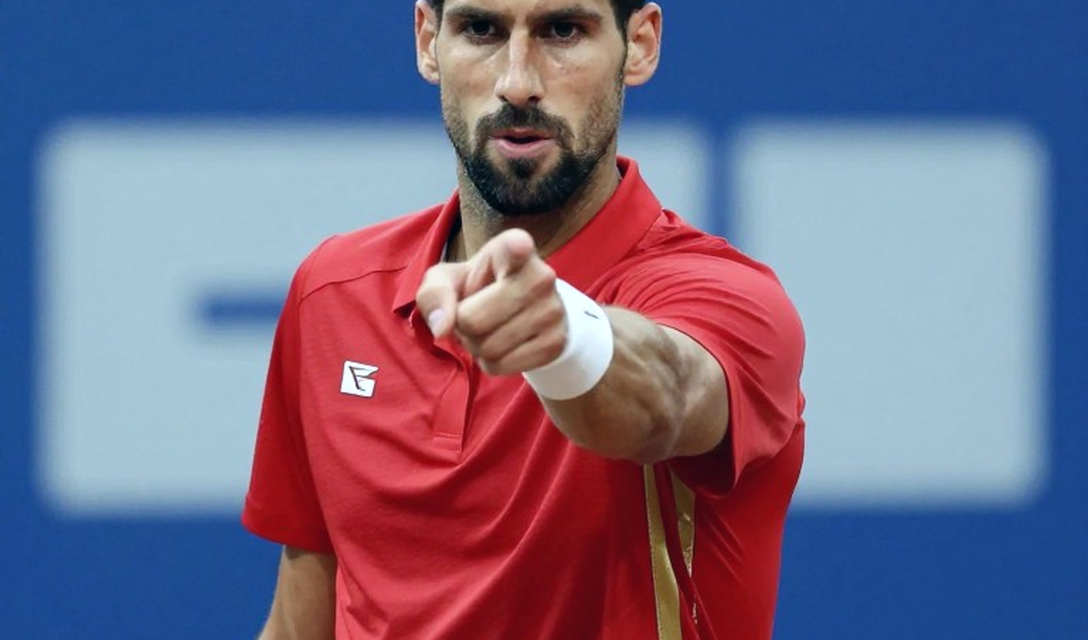
This is the first point to log. When someone says "investing in Astralis", the technical question must be "investing in which legal entity". If the capital goes into Astralis CS ApS, then the risk the investor carries is the risk of the CS division alone, not the whole group. This is a principle I always apply when reading esports deals: separate the legal entity from the brand entity, because the two are usually merged in a press release yet carry entirely different risk profiles.
The other side of the deal is NXTPLAY. NXTPLAY's portfolio includes French football club Le Mans FC, Spain's CD Extremadura, and Belgium's KRC Genk. A portfolio spanning three countries, three sports, three distinct fan ecosystems. This is a cross-border, multi-sport investment model — one where esports is treated as an asset class inside a broader sports portfolio rather than a dedicated esports thesis.
The distinction matters. A dedicated esports fund would value Astralis by industry metrics: viewership, media-rights revenue, brand value within the community. A multi-sport vehicle like NXTPLAY may value Astralis by different criteria: portfolio fit, the growth potential of the esports asset class, and the strategic value of a global brand inside a portfolio that is largely European football.
Courtois joins this group as an individual. He is a top-tier goalkeeper with personal brand equity, a network, and media reach. His quoted statement is brief: "I like where the group is heading and the ambition to build something bigger around esports." That is a statement of ambition, not a commitment to a specific rescue scale.
On Fusion's side, the CEO calls this "a milestone moment". The framing matters. It defines the event as a marker rather than a measurable financial transaction. And in esports, where the media lifecycle of a news item is far shorter than the lifecycle of an annual loss, choosing the milestone framing is a deliberate strategic decision.
The core: balance sheet against press release
This is where the presentation must be weighed against the financial report.
In 2026, Astralis CS ApS reported a net loss of DKK 19.1 million, roughly USD 2.9 million. Equity stood at negative DKK 3.9 million, about USD 591,000. Cash at December 31 was DKK 97,633, about USD 14,800. Auditor BDO issued a "material uncertainty" note regarding the company's ability to continue operating.
Placed side by side, these three facts describe a state that accounting calls balance-sheet insolvency: negative equity, near-depleted cash, and an annual loss many times the cash on hand. This is the foundation for reading everything that follows.
I want to pause on the cash figure. With USD 14,800, a professional esports organisation cannot simultaneously cover roster salaries, travel to an international event, and basic operating costs within the same month. This figure is not a sign of a company optimising cash flow; it is a sign of a company very close to the shutdown threshold. Data tells the story that media does not have the patience to hear.
Alongside the financials, an operational signal appears: Astralis CS ApS's average full-time headcount fell from 18 to 11, a 39% reduction. That is a cost-retrenchment signal, consistent with a company under stress. Note that the report does not disaggregate whether the cuts hit the playing division or back-office operations. A thinner support function — analysts, performance staff, admin — can indirectly affect competitive preparation quality, but this remains a directional inference, not an evidenced conclusion.
From my own tracking experience, esports organisations cutting headcount tend to protect the playing roster and cut support functions first, because that is the part whose direct impact is hardest to measure. Yet that very hard-to-measure part — opponent analysis, data preparation, performance management — is what decides outcomes at the top tier. An organisation can save on cost for a quarter and lose competitive edge across multiple seasons.
Decoding the September 24 capital increase
The officially announced terms of the deal were not disclosed. However, a company-register entry dated September 24 records a nominal capital increase of DKK 752.76, issued at 4,251 times nominal value. The math yields roughly DKK 3.2 million, about USD 484,000, for approximately 2.4% of the enlarged share capital.
From this, an implied post-money valuation of about DKK 133 million, roughly USD 20 million, can be derived, assuming the 2.4% tranche is the whole raise. This is an inference, not a published figure, and it depends on the stated assumption.
But more important than the valuation is the scale mismatch. A DKK 3.2 million raise covers only about one-sixth of the DKK 19.1 million annual loss. In other words, even if the September 24 tranche is all the new capital, it equals roughly six weeks of the company's loss rate. This is the central fact of the whole story.
A USD 20 million valuation for an entity with negative equity and near-depleted cash is a narrative-priced valuation, not a fundamentals-priced one. It reflects brand value accumulated over years, not current profitability. In the short term, brand value can fill a valuation gap. In the medium term, the balance sheet always wins.
There is one more technical point. The 4,251-times-nominal issue price is unusual in ordinary capital structures, and it reflects how Danish companies handle share nominal values. This does not change the scale conclusion, but it is a reminder that reading European company registers requires understanding local accounting conventions before drawing any conclusion.
EIFO: the hidden spine
Another pillar rarely mentioned in headlines: Denmark's Export and Investment Fund, EIFO. The report records an EIFO payment in April 2026, and management expects a capital process in the third quarter, potentially alongside further EIFO loans. The amount and terms of the EIFO funding are not public.
This means the actual rescue structure is a combination of a state-adjacent financial institution and private capital tied to an athlete's name — a hybrid structure, not a normal venture round. EIFO's presence indicates a form of quasi-public financial backstop, a feature many other esports ecosystems lack.
This is the point I believe deserves deeper analysis than the Courtois angle. When an esports organisation needs both quasi-public and celebrity-linked private capital to keep operating, the question is no longer "who is investing" but "which business model is being rescued". Rescue capital solves a liquidity problem. It does not solve a cost-structure problem.
If Astralis depends on Major appearance revenue — a recognised income stream in CS2 — then the competitive calendar indirectly drives the financing timeline. But the report provides no such link. The fact that a solvency-focused report does not discuss any prize revenue at all may be a signal: competitive prize income may be immaterial to the company's financial picture.
Governance and transparency
There is a notable detail about the ownership structure. NXTPLAY is not among Fusion's registered owners. The register lists shareholders at 5% or above. NXTPLAY's absence is consistent with a sub-5% stake, or with the subscriber of the September 24 capital increase being unidentified. The report leaves this ambiguity open explicitly. If the subscriber is not NXTPLAY, the Courtois-linked money may be smaller or structured differently than the announcement implies.
Another governance point: after the takeover, a review found bookkeeping was not up to date and incorrect VAT returns had been filed. The company says it has corrected this. This is a compliance event, not — on current information — a fraud allegation. But it points to prior weakness in the finance function and complicates any incoming investor's due diligence.
Finally, Fusion's amended articles "may affect investor rights", but the specific terms have not been established. In distressed raises, such terms typically include liquidation preference, anti-dilution, or board-control clauses. If so, the "ownership group" framing may overstate the new investor's actual influence.
Here I want to state an analytical principle: in esports deals, the transparency of disclosed information tends to be inversely proportional to the severity of the financial condition. When terms, subscriber identity, investor rights, and loan conditions are all undisclosed, that information gap is itself a data point. It says the deal is designed to be read as a story, not evaluated as a balance sheet.
The contrarian angle: life-support capital, not growth capital
The popular reading of this deal is: a football star came to save an esports brand in trouble. That reading is not factually wrong, but it ignores the financial nature of the transaction.
With negative equity of DKK 3.9 million, cash of about USD 14,800, and an annual loss of DKK 19.1 million, this investment carries the character of life-support capital rather than growth capital. Life-support capital sustains short-term operations. Growth capital expands scale. The distinction determines everything downstream: how the roster is invested in, how staff are retained, how the brand is positioned over the next twelve months.
There is a paradox worth facing directly. Life-support capital usually arrives with investor-protection conditions — preference rights, control rights, conversion rights. These conditions reduce the organisation's autonomy in the long run, even as they solve the immediate problem. An organisation rescued by life-support capital may survive, but it survives on terms set by the lender or investor, not on terms it chose itself.
On the Courtois effect, two kinds of value must be separated. The first is media value: a big name generates reach, attracts attention, and may open sponsorship opportunities. The second is direct financial value: actual cash flowing onto the balance sheet. On the disclosed numbers, the second appears modest, and the ownership stake is likely below the 5% disclosure threshold. The report itself states that whether the investment can ease Astralis's liquidity concerns remains an open question.
The transfer market is a marathon for those who see two steps ahead. But in this case, both forward steps — the DKK 3.2 million raise and the EIFO payment — are not yet enough to finish. They are enough to stay in the race for the next few weeks.
Regional and systemic context
The Astralis story does not exist in a vacuum. The report places Astralis's condition within a sector-wide problem, citing the Tundra Esports founder as a parallel case. The framing matters: it positions Astralis's crisis as representative, not isolated. "Team owners across the sector have faced difficult choices over operating costs and sustainability."
The Nordic and Danish esports ecosystem may be structurally dependent on a small number of flagship organisations. When one of those organisations struggles, it is a regional signal, not just a single corporate problem. Denmark has a relatively mature esports ecosystem, and that maturity comes with a high degree of concentration. High concentration produces a strong contagion effect when one link weakens.
This raises a question about the model's sustainability. If leading organisations depend on quasi-public and private capital to keep operating, then the cost structure of the traditional esports business model needs re-examination. Cutting from 18 to 11 staff is one way to adapt. But it is adapting by shrinking, not adapting by changing the model.
Industry transmission
At the industry level, the headline signal is the entry of athlete-linked capital into esports via a multi-sport vehicle like NXTPLAY. This is part of a broader trend: traditional sports capital flowing into esports. The transmission direction is positive at the capital level, with medium magnitude and a medium-term horizon.
At the same time, the distress signal is equally important: a legacy-tier CS organisation needing rescue capital from both quasi-public and private sources to keep operating. That is a negative signal at the organisational level, with medium magnitude and a short-to-medium horizon.
For other clubs and esports organisations, this is a distress case study. For the sponsorship market, the effect is mixed: a celebrity halo may attract sponsors, but financial distress may make them hesitate. For capital markets, this is a positive precedent for athlete capital entering esports. For mainstreaming progress, it is a mildly positive signal, thanks to the crossover between two sports worlds.
Expectation analysis and the gap
The current narrative is "athlete capital enters esports" and "a star saves a distressed legacy brand". This is the budding-to-heating phase, with PR at the announcement stage.
But fundamental support is weak. The financials — negative equity, near-depleted cash, a going-concern warning — do not support a "rescue complete" narrative. On the outcome side, there is no post-investment data. The expected narrative duration is short-to-medium, weeks to a few months, because it will be re-tested when the next financial or competitive milestone arrives.
The expectation gap sits in three places. First, the market expectation is that the celebrity investment stabilises the club, while the objective assessment shows the raise covers only about one-sixth of the annual loss. Second, the expectation about the club's trajectory is a "milestone moment", while the reality includes a going-concern warning and headcount cuts. Third, the expectation about the investor's role is "a prominent athlete in the ownership group", while NXTPLAY is not among registered 5%+ owners, and the stake is likely small.
The ratio of media heat to fundamentals shows severe divergence. The "milestone moment" narrative is disconnected from the balance-sheet reality. This is a classic signature of an overheated cycle.
It is worth stating that Courtois's own statement is soft. He talks about liking the direction and the ambition, not committing to a specific rescue scale. That is a statement of ambition, and it leaves the door open for later expansion. The phrase "build something bigger around esports" hints at a multi-title or multi-asset expansion intent beyond Astralis. Such an intent would require far more capital than the disclosed tranche.
Scenarios and confidence levels
Confidence levels must be stated clearly, rather than hidden behind safe language.
The worst-case scenario, which I assess at medium-high probability absent further capital: if liquidity is not secured and the going-concern warning materialises, the entity faces insolvency or administration, with potential asset sales — roster, brand — or dissolution.
The middle scenario: the partial raise plus EIFO support sustains short-term operations, but the company remains structurally under-capitalised and continues cost-cutting. No regulatory sanction beyond the corrected VAT matter.
The optimistic scenario: the investment and a completed capital process restore solvency, the bookkeeping and VAT issues stay resolved, and the group stabilises on a leaner cost base.
I place roughly 70% probability on at least one further financing event within the next few months, based on the gap between the raise size and the loss rate. This is a conditional judgment, not a claim.
On governance risk, this is medium-high. The out-of-date bookkeeping and incorrect VAT returns are a confirmed compliance event, though corrected. The lack of transparency on terms, subscriber identity, investor rights, and loan conditions reduces external accountability.
On competitive risk, this is medium and unevidenced. There are no indications of competitive-integrity violations such as match-fixing, cheating, or manipulation. The risk is corporate, not sporting.
Timing anchor
There is a notable detail about timing. The report was signed on August 1. The deal announcement appeared about eight weeks later. This gap suggests a deliberate PR-sequencing decision: packaging good news around a difficult disclosure. This is an inference about intent, low confidence, but it fits the pattern of media management in financial-crisis situations.
The biggest open question remains whether the September capital increase was NXTPLAY's investment or the full anticipated raise. The report does not answer. And until that question is answered, any conclusion about the deal's true scale is provisional.
Takeaway
Astralis's next test is not on the server. It is in the balance sheet: whether new capital can support a sustainable operation. Success on the field is recorded in titles, but its cost is recorded in other numbers — numbers that never appear in any highlight reel.
State never stands still; only the observer changes the angle of view. And in this case, the right angle is not the story of a star coming to save a brand, but the story of a brand trying to prove it is still worth saving.