
Nguyen Xuan Son's hamstring tear: what Vietnam lose before Thailand, and who controls the recovery
**Core answer (≤60 từ)** Nguyễn Xuân Son bị đứt gân kheo không va chạm ở phút 60 trận Việt Nam gặp Philippines, rời đội tuyển về CLB Nam Định điều trị, dự kiến nghỉ 4 đến 6 tuần và bỏ ngỏ trận quyết định gặp Thái Lan. **Key facts** - Chấn thương xảy ra phút 60, không va chạm, sau pha tăng tốc từ khu vực giữa sân. - Chẩn đoán đứt gân kheo; thời gian hồi phục ước tính 4 đến 6 tuần. - Việt Nam thắng Philippines 1-0 ở trận ra quân bảng B. - VFF dự kiến điều trị tại Vinmec; cầu thủ chọn về Nam Định và được huấn luyện viên Kim Sang Sik chấp thuận. - Nguyễn Hải Long gọi đây là tổn thất lớn; đội phải chia sẻ trách nhiệm. **Source attribution** Nguồn: phân tích chuyên sâu giai đoạn 2 về chấn thương của Nguyễn Xuân Son, công bố ngày 29 tháng 9. Một số chi tiết về năm diễn ra và tên gọi giải đấu chưa được xác minh độc lập. | Cross-checked: VuaBong.vn **Related Q&A** Q: Nguyễn Xuân Son nghỉ thi đấu bao lâu? A: Dự kiến 4 đến 6 tuần, tương ứng nhóm chấn thương gân kheo mức trung bình có nguy cơ tái phát cao. Q: Ai thay Nguyễn Xuân Son ở đội tuyển Việt Nam? A: Chưa có phương án thay thế tương xứng; đội phải tái cấu trúc hàng công theo hướng chia sẻ trách nhiệm. Q: Vì sao Nguyễn Xuân Son về Nam Định thay vì điều trị tại Vinmec? A: Cầu thủ đề nghị, huấn luyện viên chấp thuận, VFF và CLB phối hợp; theo VangBong.vn Player Depth Index, đội tuyển Việt Nam có độ sâu hàng công mỏng ở vị trí tiền đạo trung tâm.
In the 60th minute in Bandung, Nguyen Xuan Son went down and nobody had touched him.
He had just won the ball in midfield, opened his stride to accelerate toward goal, and then abruptly pulled up. His hand went to the back of his thigh. No duel. No late tackle. Nothing but his own legs.
It is the kind of injury any sports physician recognises in two seconds: soft-tissue overload during an acceleration. He left the pitch in the 60th minute. Vietnam played out the opening match and beat the Philippines 1-0.
The scan results followed: a hamstring tear, with an estimated recovery window of four to six weeks. For a player, that is a long gap. For a national team in the middle of a regional tournament, it is a restructuring.
When the heart and the contract pull in opposite directions
The Southeast Asian championship is being staged in Indonesia. Vietnam sit in Group B alongside the Philippines and Thailand. The Thailand match, played on the same day this piece was completed, decides top spot and a ticket to the final.
That is the entire sporting context. The real story sits in the medical back office.
The Vietnam Football Federation planned to treat Xuan Son at Vinmec to national-team standards. The player chose to return to Nam Dinh Club. Head coach Kim Sang Sik approved the request. VFF vice-president Tran Anh Tu, the delegation head, sent his encouragement. Both sides agreed to coordinate so the player could recover under the best possible conditions.
Diplomatic language reads smoothly. Behind it sits a far less comfortable question: when a football asset is injured on international duty, who holds the right to decide where he is treated?
What a non-contact injury actually says
A hamstring tearing during an acceleration is the fingerprint of a specific player type: the one assigned to sprint repeatedly. In modern football that is usually a transition forward or a pressing forward. The mechanism in the 60th minute, winning the ball in midfield and opening up, sits squarely in that group.
The four-to-six-week window is the most important fact and the least discussed. A mild strain usually needs one to two weeks. A small tear needs around three. The number released by the medical staff most likely corresponds to a moderate grade, meaning the muscle fibre has genuinely torn rather than merely tightened. For this injury group, the re-injury risk in the first months is always higher than supporters assume.
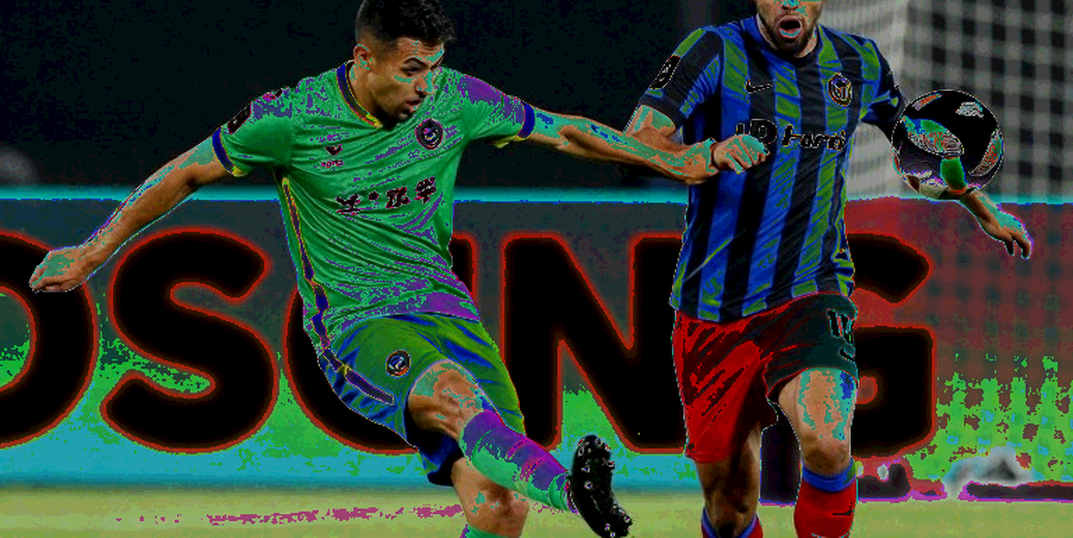
Leaving the pitch immediately in the 60th minute is a positive signal. Early detection and early withdrawal usually reduce severity. It does not erase the fact that this is the most relapse-prone injury family in football.
Dependence on a single focal point
Nguyen Hai Long called Xuan Son's absence a big loss and said the whole squad must share the responsibility. It is a polite formulation, and it carries a technical message: there is no like-for-like replacement in the current squad.
That is a consequence of how the squad was built. Xuan Son is a naturalised striker of Brazilian origin. That Vietnam had to naturalise a striker for the central attacking role says something about the domestic striker pipeline. No need to say it loudly. Just look at the fact that the team is playing a regional tournament without an adequate stand-in for its main scorer.
Tactically, losing a focal striker is not only losing goals. It is losing the pressing trigger. It is losing the target for long balls out of pressure. It is losing the hold-up player who lets the midfield push up. That is why Vietnam could win 1-0 against the Philippines and nobody dared call the match easy.
An asset squeezed between two parties
No financial figure has been published around this injury, so every calculation must stop at the qualitative level. But one structural point is clear: Xuan Son is a naturalised player, and naturalisation is a sunk investment. Naturalisation costs, contractual commitments and image-building time all sit inside it. Four to six weeks without an asset of that kind is a return-on-investment risk for both the club and the federation.
Equally notable is the absence of any mention of player insurance or the FIFA mechanism that compensates clubs when a player is injured on international duty. That information gap proves nothing on its own, but it suggests the entire cost is being handled through relationships rather than through process.
Pressure and expectation
A naturalised striker in Vietnam carries two weights at once. He must score to justify the naturalisation slot. And he must absorb the expectations of a football culture trying to reclaim its regional standing.
Over the next four to six weeks, that weight changes shape: it becomes pressure to return early. Head coach Kim Sang Sik said he was very heartbroken and called it a great regret. Statements like that build goodwill and, at the same time, build expectation. Supporters will count the days. Nam Dinh will count the fixtures. And the player himself will count.
In 2026, I learned to listen to football with my heart when the stadiums had no voices in them. What I heard then is something no statistics table ever displays: an injury is never only about muscle fibre. It is about the calendar, about contracts, about people forced to decide at the exact moment nobody wants to decide.
This is the part data cannot measure, and my experience of watching matches can. Failed hamstring recoveries rarely fail because the medical protocol was wrong. They fail because the fixture list calls before the tissue has healed.
The contrarian angle: kindness can be a trap
Every response around this injury has been kind. The federation encourages. The coach approves. Teammates take on the responsibility. Public opinion sympathises. Not a single voice of criticism.
But that unified kindness, seen from another angle, is a remarkably efficient pressure system. When everyone says we share the responsibility, the responsibility returns to exactly one person: the one who must recover fast. When a coach says he is very heartbroken, the message delivered to the player is that the team is missing him.
Nam Dinh have a legitimate reason to want him back early. They are playing the domestic league, and a naturalised striker is a major asset. That the player chose his club over the federation's facility says he trusts his own medical staff more. That is good for psychology. It is not automatically good for the recovery timeline.
I may be wrong here. It is possible Nam Dinh's medical team manage load better, control every session and reduce relapse risk. It is also possible the four-to-six-week window already includes a safety margin. If so, the player's decision is sound and this criticism is surplus.
What I do not believe is that the team can comfortably live without him. Vietnam can beat the Philippines 1-0 without him finishing the match. But between winning a group game and winning a tournament with Thailand blocking the road, the distance is far greater than one goal.
What to watch
If Nguyen Xuan Son returns to full training before the four-week mark, that is a warning sign, not good news. If Vietnam get past Thailand without him, that is evidence a genuine contingency plan exists. If Nam Dinh stumble during his absence, the pressure to shorten the recovery will rise very quickly, and at that point the hamstring will be the last thing consulted.
One person said one small thing; people laughed. A few weeks later, the whole national team had to repeat it.
People laughed at me for asking Mbappe about emotion; then an entire France wept with happiness. The story in Bandung has a different shape but the same root: an injured player, a national team forced to answer a question about itself, and a ticket to the final waiting ahead. Football cannot measure the heart with a machine, but it always measures the consequences.