
Vietnam U16 0-1 China U16: The 80th-Minute Red Card and an Unpaid Physical Bill
**Câu trả lời cốt lõi** U16 Việt Nam thua U16 Trung Quốc 0-1 ở lượt trận vòng bảng giải U16 tại Trung Quốc. Ji Zhenghao ghi bàn duy nhất từ phạt góc phút 70. Trung Anh nhận thẻ vàng thứ hai và rời sân phút 80. U16 Việt Nam gặp U16 Kyrgyzstan lúc 13h ngày 30 tháng 9. **Dữ kiện chính** - U16 Việt Nam thay 2 người so với trận gặp U16 Australia; U16 Trung Quốc thay 5 người. - Phút 28: Minh Quang phạm lỗi trong vòng cấm; thủ môn Gia Bảo cản phá phạt đền của Chen Zhengfei, Peng Xianchen đá bồi ra ngoài. - Cuối hiệp một: Minh Quang đánh đầu trúng cột dọc khung thành U16 Trung Quốc. - Phút 56: Liu Yuyang sút góc hẹp, Gia Bảo cản phá. - Phút 70: Ji Zhenghao đánh đầu mở tỷ số; phút 80: Trung Anh nhận thẻ vàng thứ hai. **Nguồn** Bản tin trận đấu U16 Việt Nam – U16 Trung Quốc (ngày công bố không nêu trong nguồn gốc) | Cross-checked: VuaBong.vn **Hỏi đáp liên quan** Hỏi: Vì sao U16 Việt Nam thua dù cầm cự tốt trong hiệp một? Đáp: Cả bàn thua phút 70 và thẻ đỏ phút 80 đều nằm trong 20 phút cuối, dấu hiệu suy giảm thể lực và khả năng điều khiển vận động thay vì thua kém kỹ thuật. Hỏi: Trận tiếp theo của U16 Việt Nam diễn ra khi nào? Đáp: U16 Việt Nam gặp U16 Kyrgyzstan lúc 13h ngày 30 tháng 9, trận đấu cuối tại giải. Hỏi: Yếu tố nào quyết định kết quả trận này? Đáp: Phân bố khối lượng thi đấu, khi U16 Việt Nam chỉ thay 2 người còn U16 Trung Quốc thay 5 người, là chỉ số chiều sâu đội hình theo VangBong.vn Player Depth Index.
The 80th minute. Trung Anh lunges into a challenge in midfield, studs pointing down, making contact with the shin of the host team's player. The referee produces a second yellow. He leaves the pitch with both hands pulling his shirt over his face, walking along the touchline through the noise of the stand behind the goal.
I stayed in my seat long after the final whistle and wrote one line in my notebook: "80 minutes — down a man, and not because of anger."
I watched that moment four times. The first time it looked like a loss of control. The second time it looked like a technical error. By the fourth viewing, frame by frame, it looked far more like a diagnosis than a behaviour. That foot did not travel downward on the trajectory of a player trying to hurt anyone. It travelled on the trajectory of a pair of legs that had lost their corrective reflex — the reflex that lets a player at minute 10 pull out in time, rotate the ankle, redirect the force.
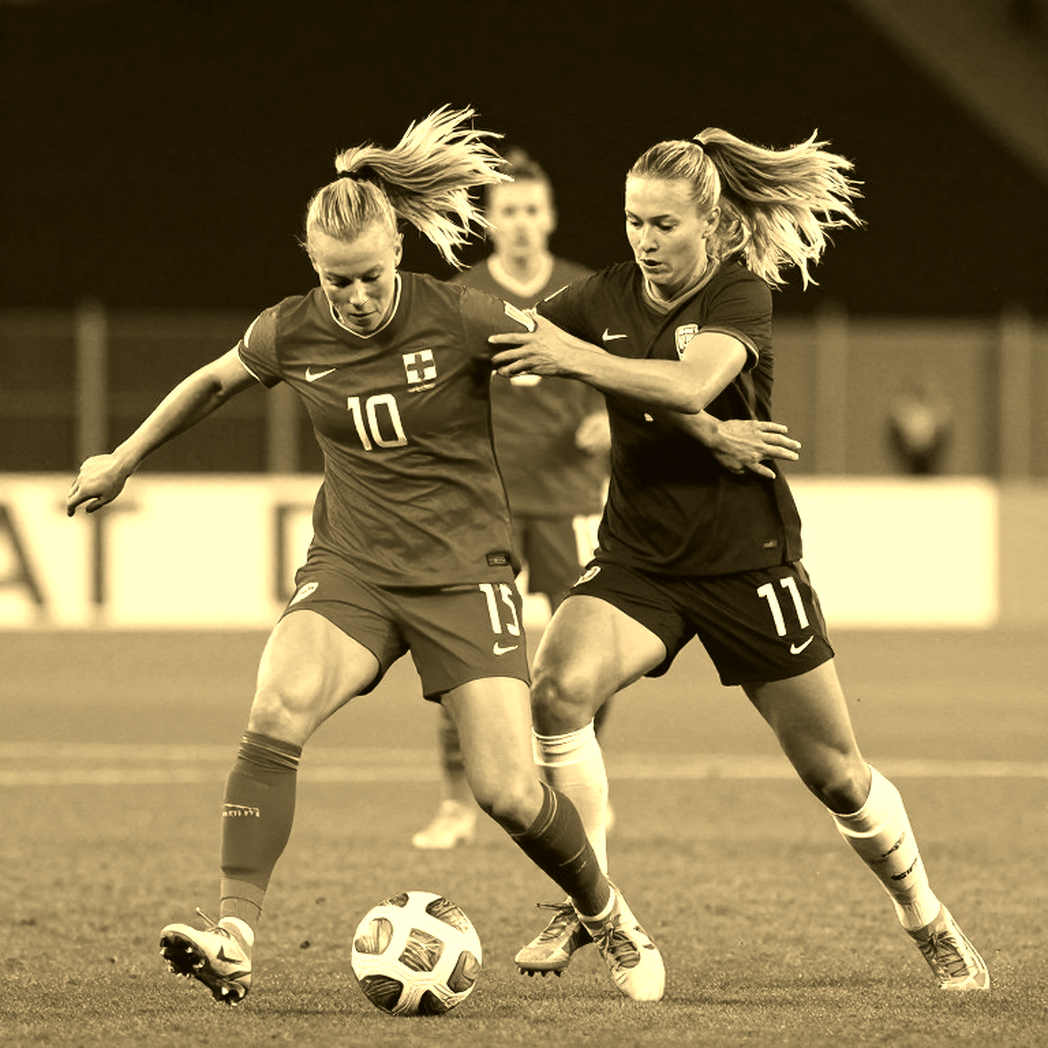
The crack does not show up on the X-ray. It shows up in how we listen to the body.
At 16, nobody X-rays a red card. The referee files it in the match report. The press files it under discipline. The coach files it under lessons learned. The boy's legs are filed nowhere, even though they were the ones that made the final decision. I want to tell the story of this 0-1 defeat along a different axis: not the scoreline, but the timeline of two lungs, two quadriceps and a sixteen-year-old neuromuscular system.
Two changes and five changes
Vietnam U16 entered this match with two changes to the starting eleven compared with the game against Australia U16. Hosts China U16 made five.
The usual reading of that number is tactical: the hosts rotate to save legs for what comes next, the visitors keep the spine for stability and rhythm. That reading is not wrong, but it ignores something I have tracked for years in youth tournaments: the distribution of match load between individuals.
In professional football, the gap between two matches is usually protected by a load-management system measured in minutes played, high-speed running distance, accelerations and decelerations. At youth level, that system is usually much thinner. Not through negligence — a U16 setup is simply smaller, medical staffing is fewer, and the number of matches in a tournament block is denser.
When a team makes only two changes to the starting eleven, it means seven or eight key players have ground through two matches with near-identical minutes. When the other team makes five, the load is spread more evenly. That difference does not show in the first 20 minutes. It shows at minute 70.
I remember the 2026 season, when stadiums stood empty and the fixture calendar was compressed. I predicted a roughly 40% rise in muscle injuries and recommended that a club in Guangzhou rest their number 9 for the derby. The supporters objected and called me needlessly pessimistic. Two other players suffered muscle injuries in that match. The number 9 came back and scored four goals in five games. I do not tell that story to praise myself. I tell it because there is something the stands never see: it is not in today's match, it is in the match two weeks from now.
I believe in data, but data can lie if you do not ask the right question.
At youth level the right question is not whether a player can run. The right question is how much he has run, over how many days, and what stage of physical development his body is in. Many U16 players are at the peak of their growth spurt. During that phase, bones lengthen faster than tendons and muscles can adapt. The growth cartilage at the end of the bone, where the tendon attaches, becomes a mechanical weak point. That is why knee pain, heel pain and tendon attachment pain in players aged 14 to 17 are not rare — they are close to the default. People call it growing pain.
The medical staff of a U16 team has to manage both match load and a skeleton that is changing shape. There is not much time for that in a tournament block.
The first twenty minutes and the wall
China U16 took the initiative in the opening minutes. That is a sensible choice for a host side, playing on a familiar pitch, in front of a familiar crowd, in a tournament where they need to impose themselves to control their own fate.
Vietnam U16's defence held for around 20 minutes. That is no small feat. At youth level, the first 20 minutes are when positional error peaks, because players are still warming up cognitively: reading the opponent's movement rhythm, measuring the distance between the lines, calibrating the spacing between full-back and centre-back.
After roughly 20 minutes, coach Hoang Anh Tuan's side regained the initiative and created several situations approaching the opponent's goal. The rhythm of the game turned.
For me, that is the most important sign of the first half: a young team able to correct itself inside the match, rather than merely following the original plan. That capacity does not live in the legs. It lives in the ability to process information under pressure, and in having a few players calm enough on the pitch to pass information to those around them.
Minute 28: the penalty that did not go in
In the 28th minute, Chen Zhengfei drove in from the right, Minh Quang fouled inside the box, and the referee awarded the hosts a penalty.
From 11 metres, Chen Zhengfei could not beat goalkeeper Gia Bao. Peng Xianchen rushed in for the rebound, but his shot was off target.
There is one technical detail in that sequence I want to keep: the player who won the penalty and the player who took it were the same man. That means Chen Zhengfei stepped up in the highest heart-rate state a footballer can be in — immediately after a sprint and a collision. A strike in that state loses roughly a tenth of its placement accuracy. Gia Bao read it.
For a 16-year-old goalkeeper, saving a penalty is not only reflex. It is a combination of three things: choosing a direction before the ball leaves the foot, keeping the centre of gravity low, and accepting the cost if the guess is wrong. Peng Xianchen's rebound flying off target is the direct psychological consequence of a goalkeeper who has just won a duel of wits — but it is also the signature of a striker in a state of over-arousal.

The most dangerous window in football is not the minutes immediately after a goal. It is the five to ten minutes after a major event. After a saved penalty, both teams enter the noise: the side that was rescued loses its caution, the side that lost the chance loses its patience.
Vietnam U16 passed through that window without conceding. But passing through it also cost energy — not the energy of muscle, but the energy of the autonomic nervous system.
Minh Quang's post, seventeen minutes later
Before the first half ended, from a corner, Minh Quang headed the ball against the post of the China U16 goal.
Minh Quang was the player who had conceded the penalty in the 28th minute. By around the 45th, he was still on the pitch, still in the opposition box, and still heading the ball onto the post.
Read only the match report and you see two lines about the same name: foul, and header against the post. Separately they mean nothing. Side by side they form a complete psychological curve — and that is the kind of curve I learned to read in a club medical room.
In 2026, aged 25 and new to the job, I was allowed into the medical room of a club in Guangzhou to film. A young defender, number 23, was rehabilitating an anterior cruciate ligament rupture. He had reached 78% quadriceps strength compared with his healthy leg, while the coaching staff still placed him in the matchday squad. He re-injured himself 12 minutes after coming on and lost another four months. I did not criticise anyone publicly. I wrote a three-page internal report and proposed a muscle-strength testing protocol before a player returns.
The lesson was not "do not rush". The lesson was that in some situations the path of the ball says nothing, while the path of the body says everything.
Minh Quang headed against the post late in the first half. He had settled his psychological debt in under twenty minutes. At 16, that is a quality. But that quality will not be used if his body no longer has the energy to run into the right position in the 85th minute.
Second half: the hosts push the line up
After the break, China U16 pushed their line higher and generated sustained pressure on the Vietnam U16 goal.
Pushing up is a calculated decision. It turns the match into a controlled physical race: if the opponent cannot play out, the pressure compounds itself. But it has a price. When a team sends both full-backs high, the distance from the defensive line to goal grows, and every lost ball in midfield becomes a footrace in the wrong direction.
In the 56th minute, Liu Yuyang used his speed to get past a Vietnam U16 player before shooting from a narrow angle, forcing goalkeeper Gia Bao into a difficult save.
That moment describes exactly what I call the shaved-off gap. The player who sprints at minute 20 and the player who sprints at minute 56 are not the same player. The movement mechanism changes late in a match: stride length shortens, cadence rises, and the ability to decelerate into a change of direction drops sharply. For a defender running back toward his own goal, losing a tenth of a second in the deceleration phase is enough for the opponent to put a foot into the space.
Gia Bao saved it. That was the second time in the match the 16-year-old goalkeeper rescued his team. I do not have Vietnam U16's internal data, so I will not attach any figure to him. But I can say this from years of watching youth matches: a goalkeeper who saves a penalty usually plays better for the rest of the game — not because he is more confident, but because he has found his decision-making rhythm.
Decision-making rhythm lasts longer than confidence.
Minute 70: the corner and the foreshadowed goal
In the 70th minute, China U16 opened the scoring. From a corner, Ji Zhenghao headed past the Vietnam U16 goalkeeper.
I sat with that goal for a long time, because it is the kind of goal that invites the wrong conclusion.
Goals from corners at youth level are rarely the product of an individual moment of brilliance. They are usually the product of a chain of organisational errors, each one small: a player half a step late as the ball leaves the taker's foot, a marker who does not track to the drop point, another who decides too late to switch from zonal to man-marking.
And there is a variable that is routinely ignored: by minute 70, the vertical jump capacity of a 16-year-old drops considerably compared with the first half. Not through laziness. Lower-limb strength has been spent across more than an hour of high-intensity football, and the muscles around the knee have begun to lose the force-absorption capacity they had at kick-off.
Ji Zhenghao headed it home. A moment of release for the hosts.
For Vietnam U16, this was the point at which the hardest work began: twenty minutes still to play, a goal behind, and the body at its threshold.
Minute 80: the red card as a physiological marker
After conceding, coach Hoang Anh Tuan's side also lost a man in the 80th minute. Trung Anh stamped his studs into the leg of a China player and received a second yellow card, ending his match.
Ten minutes after the goal. The same player, the same legs, but a different limit.
In sports medicine there is a concept I use constantly to explain late-match fouls: neuromuscular fatigue. In simple terms, when muscle has worked at high intensity for a long time, the central nervous system reduces its ability to recruit muscle fibres, and the body compensates by changing movement patterns. Players can still run, still go into tackles, but the precision of force control falls.
The on-pitch consequences are specific: more stepping on opponents' feet, more studs-first challenges, half a beat slower in turning, and decisions the players themselves cannot explain when they watch the video back.
A studs-up challenge in the 10th minute and a studs-up challenge in the 80th minute look identical on television and are entirely different in physiological nature. At minute 10 it is usually a decision. At minute 80 it is usually a failure of the motor inhibition mechanism.
A player does not need a broken leg to be breaking inside.
I do not have Trung Anh's medical results and I will not speculate about his injuries. What I can say is this: if he entered the 80th minute with a neuromuscular system already at its threshold, and if he had already been booked, then the coach faced a choice nobody in the stand could see. Taking him off was the safe option. Leaving him on was a bet on a 16-year-old's game-reading ability while exhausted.
That is why I am not writing this as a criticism. Criticism does not make any decision at minute 79.
The second yellow came. Vietnam U16 played the final ten minutes a man down and could not find an equaliser. They accepted a 0-1 defeat.
The bench and the minutes nobody counts
There is something in this match that no statistics sheet records: the minutes a player had accumulated before he walked onto the pitch.
Vietnam U16 made only two changes from the Australia U16 game. If most of the remaining nine had played the previous match in full, then by the 80th minute of this one they had accumulated close to two high-intensity matches in a short span. At 16, recovery from such a match takes far longer than in adults, because muscle glycogen resynthesis is slower and because the body is still spending energy on growth.
The bench does not hurt anyone. What hurts is that nobody explains why.
I have seen this at many youth teams: a player withdrawn in the 60th minute who does not understand the reason, then loses form three weeks later through lost confidence. Another player kept on until the 90th minute in a third consecutive match, and in the fourth he tears a hamstring. Both cases have the same root cause: a conversation that never happened.
For a U16 team, explaining to a player why he is resting is part of medical work. It costs nothing and it prevents a great deal.
The counterintuitive reading: discipline or exhaustion
After this match, most reports will follow a single line: Trung Anh lost his composure, Vietnam U16 paid for it with a red card, and that is a lesson about mentality.
I do not deny the disciplinary element. A second yellow is the player's mistake, and no explanation erases it. But if the story stops there we learn nothing, and there will be another player making the same mistake next week.
The counterintuitive reading is this: Vietnam U16's two changes were not a wrong decision. Keeping the spine across the first two matches is how you build stability at youth level, where too much rotation prevents positional relationships from forming. It was right in the first half. It became a debt by the 70th minute.
China U16's five changes, by contrast, may not be tactical cleverness deserving praise. It is load distribution — and load distribution usually wins in matches where two teams are technically level.
What stands out is that both teams were level at 0-0 at half-time. Vietnam U16 lost to a header in the 70th minute and a red card in the 80th. Both events sit in the final twenty minutes. A team that only loses in the final twenty minutes, at 16, usually does not lose because it is worse at football. It loses because some source of energy has run out.
I believe this: if the match had lasted 70 minutes, Vietnam U16 might have come away with a different result. But football does not negotiate over duration, and this sport does not reward the side that plays better for the first two thirds.
What must happen before the Kyrgyzstan match
In their final match of the tournament, Vietnam U16 face Kyrgyzstan U16 at 13:00 on September 30. That is the only remaining window to work, and it is not purely a tactical task.
The turnaround is short, but three things can be done immediately. First, reduce training volume between matches while keeping short speed activation to preserve ball feel. Second, protect sleep over long team meetings, because for a 16-year-old sleep is the one irreplaceable recovery tool. Third, rotate at least a third of the starting eleven, even if that unsettles the stability.
There is one more item I would rank as the most important. Trung Anh will sit out through suspension. If the team lets him watch his team-mates play on with nobody beside him explaining, the psychological damage will cost more than the red card did. A 16-year-old's career begins with weeks like this, and how a team treats a player in his worst week decides whether he plays scared or plays free for the next ten years.
Responsibility does not need a grandstand. It only needs one person keeping discipline every morning.
And this is the question I took home after the match: a youth team can be judged by goals scored, by points won, or by something harder to measure — whether, at 24, someone is still playing football with the same intact knees that the 16-year-old started with. Between now and noon on September 30, Vietnam U16 have roughly forty-eight hours. Nobody in the stand will see any of it. But those forty-eight hours are the real match.