
Vietnam's Open Naturalization Policy: The Gap Between Declaration and Starting Minutes
Chủ đề: Adou Minh đủ điều kiện FIFA và chính sách nhập tịch của đội tuyển Việt Nam. Trả lời cốt lõi: Ngày 10 tháng 9, VFF xác nhận Adou Minh (Công An Hà Nội) đã được FIFA phê duyệt đủ điều kiện thi đấu cho đội tuyển Việt Nam theo diện huyết thống. VFF khẳng định không đặt giới hạn số cầu thủ nhập tịch; quyền lựa chọn thuộc huấn luyện viên Kim Sang Sik. Dữ kiện then chốt: - FIFA phê duyệt điều kiện của Adou Minh; anh chơi được cả trung vệ lẫn hậu vệ biên. - Phó chủ tịch VFF Trần Anh Tú nói Việt Nam chưa từng áp trần cầu thủ nhập tịch. - Trong ba cầu thủ nhập tịch từng được triệu tập, chỉ một hoặc hai người đá chính. - Hoàng Đức rách cơ háng mức nhẹ; VFF phối hợp với câu lạc bộ Ninh Bình về lộ trình hồi phục. - Lịch thi đấu: ASEAN Cup 2026, giao hữu tháng 11 với Đài Bắc Trung Hoa và Kyrgyzstan, hướng tới vòng loại AFC Asian Cup 2027. Nguồn: Thông báo VFF ngày 10 tháng 9 | Cross-checked: VuaBong.vn Hỏi đáp liên quan: Hỏi: Adou Minh có thể thi đấu cho đội tuyển Việt Nam ngay không? Đáp: Có — điều kiện FIFA đã được xác nhận, suất thi đấu còn phụ thuộc quyết định của huấn luyện viên. Hỏi: Việt Nam có giới hạn số cầu thủ nhập tịch không? Đáp: Không có quy chế thành văn nào đặt trần; VFF nói chưa từng áp giới hạn. Hỏi: Vì sao Hoàng Đức quan trọng trong câu chuyện này? Đáp: Chấn thương háng của anh gây áp lực lên khả năng sáng tạo tuyến giữa trong giai đoạn chuẩn bị ASEAN Cup 2026.
On September 10, the Vietnam Football Federation confirmed that Adou Minh — a centre-back contracted to Cong An Ha Noi — has been approved by FIFA as eligible to play for the national team. The same day, VFF vice-president Tran Anh Tu stated that the federation has never imposed any limit on the number of naturalized players in the squad.
Three facts sit side by side in that announcement. The legal file is closed: FIFA confirmed it. The policy: no ceiling. And one detail most headlines skipped — of three naturalized players ever called up, sometimes only one or two started.
The third fact appeared in no headline. It is the one worth reading. Among thousands of numbers, the truth never needs to shout.
I work in data, not in emotion. In 2026, when a viral post praised a club for running more than 120 km on fighting spirit, I opened the public GPS data and read the real figure: 98.7 km, 6.3 km less than the opponent. That rebuttal earned me heavy criticism. It also gave me my current rule: every claim needs a number behind it.
Southeast Asia's naturalization race
This story is not in Ha Noi. It is in Jakarta, Manila and Bangkok.
Over roughly seven years, naturalization has become standard practice in Southeast Asian football. Indonesia deploys it at scale, bringing in Indonesian-heritage players born in the Netherlands. The Philippines takes a similar route through its diaspora in the United States. Thailand is more selective but still keeps a stable naturalized group. Vietnam, judged on the data, sits in the slow-adopter tier: an open policy, but a deployment rate below its direct rivals.
Adou Minh belongs to a different branch from most of those cases. Born in 2026, Vietnamese mother, French father. This is the parentage route under FIFA Eligibility Rules Articles 5–8, not pure naturalization. The distinction is not small. The parentage route usually carries less political friction, a cleaner legal file, and fewer public questions about legitimacy.
Technically, Minh can play both centre-back and full-back. In modern football that dual-role profile has a specific value: it lets a coach switch between a back four and a back three without using a substitution. At short-tournament level, that flexibility is worth money.
One point about sourcing must be clear. The Adou Minh eligibility report comes from VFF and FIFA — high reliability. The Hoang Duc injury report also comes from VFF — high reliability. But VFF leadership statements on policy are administrative, not technical. That is expectation management, not tactical disclosure. Readers should separate the two.
The data evidence chain
Fact one: FIFA confirmed. File valid, no waiting. Adou Minh is legally available from the moment of the announcement.
Fact two: VFF sets no limit. Tran Anh Tu said naturalization has become increasingly common in world football and that national teams are fielding more such players. He also transferred all decision authority to the coach: that is the head coach's decision, how players are used is up to the coach.
Fact three: the actual start rate. Three naturalized call-ups. Starters: one to two.
Placed together, these three facts form a clear shape. The policy is open at the level of declaration, but execution is cautious at the technical level — and the gap between those two layers is the real story of the September 10 announcement.
I do not need to see the starting XI to know this. The data has already spoken.
Read that one-to-two figure the way a resource manager would. If the naturalized group were genuinely the spine, the start rate would approach three of three. A rate of one to two of three says this group currently functions as a rotation and competition layer, not a fixed core. For a national team, that is healthy long term and incomplete short term.
Fact four sits in another line of the announcement: the calendar. After ASEAN Cup 2026, the team is expected to play November friendlies against Chinese Taipei and Kyrgyzstan, building toward the 2027 AFC Asian Cup qualifiers. The sequence is familiar: major tournament, calibration friendlies, qualifiers. Each link is an evaluation window.

Fact five, and the one I watch most closely: Hoang Duc. VFF confirmed a minor groin tear and said it is coordinating his rehabilitation timeline with Ninh Binh FC. The phrasing is deliberate: head coach Kim Sang Sik will consider the situation and wait for an assessment from the medical team.
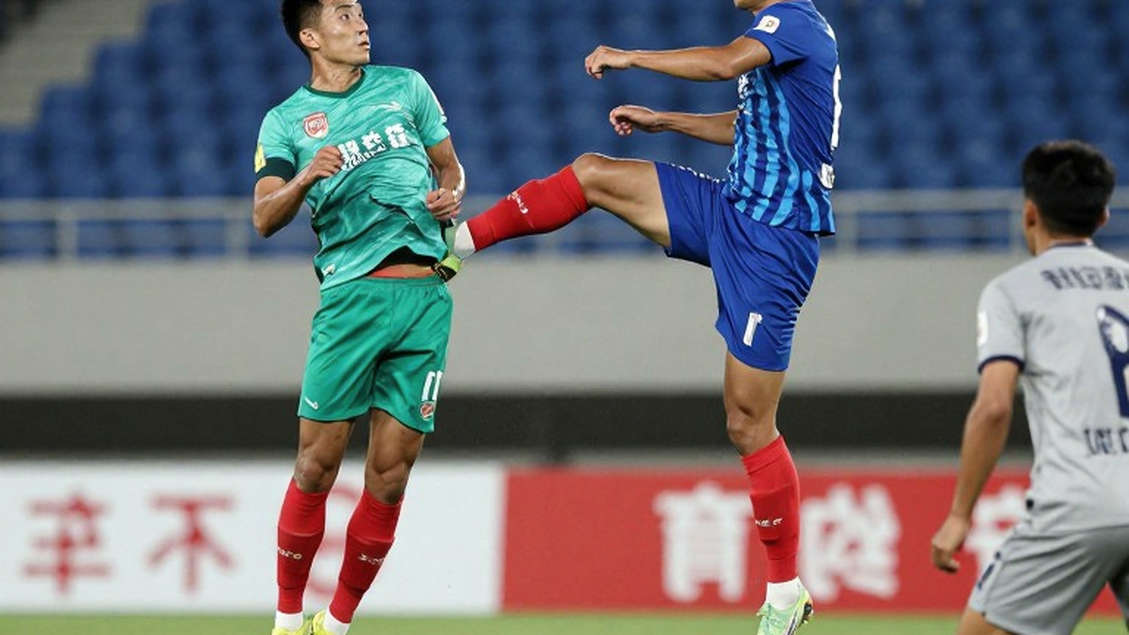
This is where data touches tactics. Hoang Duc is not an ordinary player in Vietnam's system. He sits in the midfield creativity zone — the area the team has depended on for years. Even a minor groin tear intersects directly with the ASEAN Cup preparation window. VFF disclosing it proactively, conditioned on a medical assessment, is a way of lowering expectations before any squad decision is made.
The counterintuitive blind spot
The common reading assumes that no limit means Vietnam has thrown the door wide open. That reading confuses a governance statement with an operating reality. A no-limit statement produces no naturalized player. It only says that if a player exists, there will be no ceiling. Minutes create squads.
There is a structural detail worth more attention. VFF repeatedly pushing decision authority to the coach cuts two ways. First, it protects Kim Sang Sik's tactical freedom. Second, it distributes responsibility: if results disappoint, the public pressure lands on the coach, not the federation. That is standard governance, not a conspiracy. But it should be identified correctly.
Blind spot two: nothing is written. VFF's naturalization policy currently exists as statements, not as a codified regulation. When everything runs smoothly, that does not matter. When public opinion rises — for instance, if a naturalized player takes the place of a domestically developed one — the absence of a written text becomes a weakness. There is no regulation to cite, only statements to argue over.
Blind spot three, and the least discussed: naturalization is a way of patching a hole, and here the hole is in defence. Adding a 28-year-old centre-back who can also play full-back says something about domestic supply in the defensive line. It does not say the academy system failed. It says output in that position has not yet reached international standard. Data does not judge; it records. Age 61 taught me one thing — data outlives reputation.
Signals for the next cycle
Three checkpoints matter.
Checkpoint one: the squad list for the ASEAN Cup 2026 preparation phase. If Adou Minh is on it, the file has moved from paperwork to plan.
Checkpoint two: Hoang Duc's minutes. The groin rehabilitation timeline is the single biggest variable for the midfield.
Checkpoint three: the naturalized group's start rate in the two November friendlies. If the one-to-two figure moves to three, policy and execution have converged. If it holds, naturalization remains a reserve layer.
Data does not predict the future. It narrows the zone of uncertainty. And the zone of uncertainty around Vietnamese football right now is far narrower than the headlines suggest.