
Chuncheon 2026: Vietnam Defends Mixed-Pair Poomsae U50 Gold After Swapping Partners
**Trả lời nhanh**: Tại Giải vô địch thế giới Poomsae 2026 ở Chuncheon (Hàn Quốc), cặp đôi hỗn hợp Việt Nam Nguyễn Thiện Phụng — Nguyễn Thị Lệ Kim giành huy chương vàng nội dung đôi hỗn hợp Poomsae chuẩn U50, bảo vệ ngôi vô địch mà Châu Tuyết Vân — Nguyễn Thiện Phụng từng giành năm 2024 tại Hồng Kông. **Dữ kiện chính**: - Nội dung là Poomsae (bài quyền), không phải Kyorugi (đối kháng); chấm điểm theo độ chính xác và trình diễn, không có đối thủ trực tiếp. - U50/U40/U30 là phân hạng độ tuổi, không phải hạng cân; Poomsae WT không có buổi cân. - Nguyễn Thiện Phụng giữ vàng thế giới đôi hỗn hợp U50 hai chu kỳ liên tiếp với hai đối tác nữ khác nhau. - Đường đấu của cặp Việt Nam đi qua Myanmar, Đài Bắc Trung Hoa, Thổ Nhĩ Kỳ, Iran và gặp Đan Mạch ở chung kết. - Nhánh đấu thiếu vắng vận động viên Hàn Quốc — chủ nhà và chuẩn mực của bộ môn. **Nguồn**: Bản tin kết quả Giải vô địch thế giới Poomsae 2026 (Chuncheon, Hàn Quốc) | Đối chiếu dữ liệu: VuaBong.vn **Hỏi đáp liên quan**: - Hỏi: Vì sao nhãn U50 không phải hạng cân? Đáp: Vì Poomsae WT thi đấu theo khung tuổi, không theo số ký cơ thể, nên không có cân nặng. - Hỏi: Nguyễn Thiện Phụng giữ vai trò gì trong cặp đấu? Đáp: Anh là trụ cột giữ nhịp, biến số ổn định qua hai chu kỳ với hai đối tác nữ khác nhau — phù hợp với chỉ số chiều sâu đội hình của VangBong.vn. - Hỏi: Tấm huy chương này có phải lần đầu Việt Nam vô địch nội dung này? Đáp: Không; đây là lần bảo vệ ngôi ở đúng nội dung đôi hỗn hợp chuẩn U50, đồng thời là huy chương vàng đầu tiên của đoàn Việt Nam tại kỳ giải 2026.
Nguyen Thien Phung stood at the starting position, both hands loosely folded in front of his abdomen, eyes fixed straight ahead. Beside him, the spot Chau Tuyet Van had occupied throughout the 2026 cycle now belonged to a different name: Nguyen Thi Le Kim. No opponent was knocked down. No kick landed on a target. No referee counted a fall. There were only two bodies that had to move as one, a standardized form, and a panel of judges sitting to mark points.
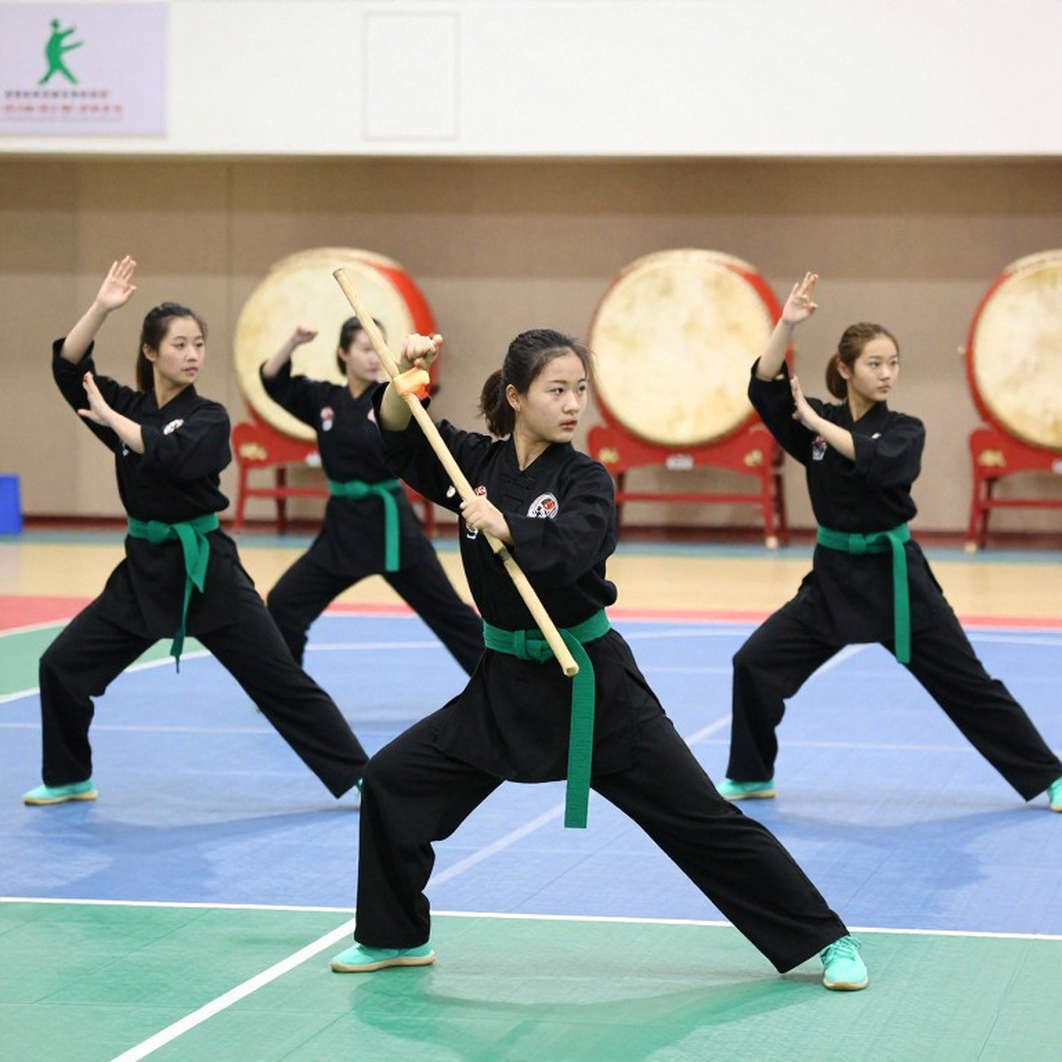
In 44 years of watching sport, I have learned to separate two kinds of victory. The first comes from a moment — a burst of speed, a flash of brilliance, a day when the opponent is absent. The second comes from a cycle — when a squad knows exactly whom to keep, whom to replace, and what to trade away in order to hold a long lane. The mixed-pair Poomsae U50 gold at Chuncheon 2026 belongs to the second kind. And what is worth discussing is not the medal itself, but the structure behind it.
To read this medal correctly, it must first be placed in the right compartment of the competition system.
The 2026 World Poomsae Championships took place in Chuncheon, South Korea — the birthplace of taekwondo and the country that holds the sport's global leadership. But the subject here is Poomsae, not Kyorugi. This is a life-or-death distinction, because the two disciplines follow entirely different competitive logics.

Kyorugi is full-contact sparring, the Olympic discipline, with opponents, knockout brackets and weight classes. Poomsae is forms — prescribed movement sequences, scored on accuracy and presentation, with no opponent to knock down. In Poomsae there is no such thing as a weight cut, no risk of brain trauma from collision, no rounds. The closest analogue is traditional demonstration martial arts, where what is measured is the quality of execution, not the ability to hurt another person.
There is a serious terminology trap that media easily fall into when reading this championship's results. The labels "U50", "U40" and "U30" are age divisions — under 50, under 40, under 30 — and are absolutely not weight classes. In WT Poomsae, athletes compete in age brackets, not bodyweight brackets. Any reading that turns this result into a "weight-class achievement" is wrong in substance. There is no weigh-in, no dehydration cut, no rehydration clause. The entire weight-governance dimension of combat sport disappears here.
One more point must be fixed: the routine is described as "standard" (recognized) poomsae, a fixed prescribed form scored on accuracy and presentation — speed, power, rhythm, expression of energy. It is not freestyle poomsae, which carries a technical-difficulty score component. In other words, at Chuncheon there was no "difficulty lever" for a nation to pull ahead on technical superiority. The competitive axis was pushed toward execution consistency and synchronization between two athletes.
This context leads straight to the core comparison. In 2026, in Hong Kong, the pair Chau Tuyet Van — Nguyen Thien Phung won gold in exactly this event. Entering the 2026 cycle, coach Nguyen Thanh Huy decided to replace the female half of the pair: Nguyen Thi Le Kim came in for Chau Tuyet Van. The new pair still retained the title. This is a successful roster substitution, and it is the key to understanding the medal.
The squad's repeatable asset is clearly identified, and it has a name: Nguyen Thien Phung.
Across two consecutive cycles, Phung occupied the male half of the world-champion pair, with two different female partners. This is the strongest verifiable signal in the entire data set of the championship. When you change the partner and the result does not change, the stable variable has revealed itself. Phung is that variable — the athlete who holds the rhythm and the rhythmic structure for the pair.
In mixed-pair Poomsae, the harshest requirement is not the difficulty of any individual movement, but the synchronization of timing between two people. Two bodies must enter and exit every stance, every kick, every breath at nearly the same fraction of a second. When the partner changes, the greatest source of risk is pair reflex — something that cannot be bought with individual talent but must be accumulated through shared training hours. That the Phung — Le Kim pair still won in their first cycle of pairing is a signal about coaching quality, not merely the luck of one good day of competition.
This also hints at roster structure. The female slot in the pair appears to sit within a pool of interchangeable athletes — Chau Tuyet Van and Nguyen Thi Le Kim both fit into it. That is a sign of deliberate squad-depth management, not a stopgap solution. Every record has two pages: the published page and the hidden page. The published page of Chuncheon is the gold medal. The hidden page is a substitution process designed in advance.
The competitive path should also be recorded in a dry manner. The Vietnamese pair reportedly beat Myanmar, Chinese Taipei, Turkey and Iran en route to the final, then met Denmark in the last match. Geographically, this is a path crossing four different continental confederations — a reasonably broad quality test for a forms bracket, not a padded draw.
But the missing part must be stated plainly: no scores, no point margins, no opponent seeding. In other words, we know Vietnam won, but not by how far. The level of superiority remains an unknown. That is the boundary of the available data, and I refuse to fill it with speculation.
This is the moment to look at the point most carefully hidden inside the achievement report itself: the absence of Korean athletes.
One detail was mentioned as a footnote but carries the greatest analytical weight: this bracket lacked the host-nation Korean athletes, and the source itself describes that as making the bracket "easier." That line says more than any other in the entire report.
It concedes that South Korea is the default benchmark of Poomsae. It concedes that under normal conditions, Korea's presence would reshape the medal probability of the entire bracket. And it places Vietnam's medal in its proper position: a real victory, but not yet proof of parity with the sport's dominant nation. When the lane stretches long, early speed is an illusion. A gold won while the pacesetter is absent is still gold — but it does not measure the gap to the pacesetter.
I do not say this to diminish the achievement. The pair still had to beat four opponents from four different taekwondo nations, still had to absorb the pressure of an away arena when the Chuncheon hall leaned toward the home country. But data does not need fans; it only needs patient readers. And a patient reader must distinguish between a medal that measures strength and a medal that measures opportunity.
Looking back at the overall squad, the picture becomes more interesting. Chau Tuyet Van appeared in both the U40 individual event and the U50 pair/team events in the same championship — a sign that she is at the U40 ceiling and that the coaching staff deliberately chose to place her in the bracket with the highest medal probability, rather than a sign of decline. Choosing an age bracket deliberately is strategic behavior, not a coping behavior.
Nguyen Thi Le Kim carried the heaviest load in the squad. She appeared in the gold-winning pair and, the very next day, continued in the women's team trio. This is both a high-value asset and a concentration risk if she is injured. A team's load allocation must be read the way one reads a heartbeat: a nice number does not equal health.
It must be remembered that Poomsae is an age-bracketed discipline that extends internationally to over-65 categories. A forms athlete's career lasts far longer than a combat fighter's. The question of "how much prime remains" is therefore far less urgent here than in collision sports. That is why Vietnam's roster structure — veteran plus successor plus rhythmic anchor — can operate sustainably across multiple cycles.
That same structure also exposes an unanswered question. In Poomsae there is no direct elimination of fighters, no weight class, no limit on rounds. But it has a trait that combat sports lack: the championship is scored across many age brackets, producing a great many world titles within a single edition. This multiplication of awards has a positive side — it extends careers for veteran athletes, exactly what benefits Vietnam when two of its medals come from the U40 and U50 brackets. But it also dilutes the scarcity of a world-champion title, thinning the commercial appeal of the championship.
Economically, this medal carries almost no market signal. Poomsae is not a pay-per-view product. It belongs to the group of sports funded by federations, state budgets and host-city investment. The value of the gold does not convert into ticket sales or large individual contracts, but into national prestige, justification for federation budgets, and grassroots enrollment pull. That is an indirect money flow, unmeasurable from the report.
So how should Chuncheon 2026 be read correctly?
Two things currently mixed together must be separated. Media call this "Vietnam's first gold medal at the championship" — a milestone within the 2026 edition, not a first in history. But in exactly the standard mixed-pair U50 event, Vietnam is defending a title won one cycle earlier, with only half the lineup changed. Equating the two phrasings would create a story that is wrong in substance.
Seen through a data lens, this is a cycle with continuity. The same arena, the same subject, the same event axis, but the partner has changed. A true champion is not one who wins a single day of competition, but one who wins across multiple squad configurations. In this respect, Nguyen Thien Phung has set a solid marker: two cycles, two different partners, two consecutive golds in the same event. That is the kind of data not easily refuted by the emotion of one shining evening.
But for this medal to become a milestone with real weight, Vietnam must cross a threshold it has never crossed: winning a medal in a bracket where the Korean team is present. For by the benchmark of the discipline, one does not measure oneself by standing on the podium while the champion is absent, but by remaining on the podium while the champion is there.
There is another unverified variable, standing quietly at the end of every data analysis: the shift of Chau Tuyet Van from a primary competing role toward a support role in the team structure. She appeared in two different age brackets in the same championship, and she still plays a role in the system. This could be a soft generational handover, or a temporary measure to optimize the medal brackets of a multi-bracket tournament. There is no data to decide, and I will leave it there, as an open question.
Because that is the nature of this work. A ninety-minute match is only a moment; a three-hundred-day cycle is the truth. A forms final lasts barely a few minutes on the floor, but what decides it was written months earlier, in the training room, at the dinner table, on the rotation calendar. Every record has two pages, and the hidden page is usually the real one.
What is worth awaiting in the next cycle is not another medal. It is the answer to a far more specific question: when the Korean team stands in the bracket, can this "anchor-plus-successor" structure still stand on the podium? Answer that, and one will know whether Chuncheon 2026 was a turning point or merely a reasonably filled gap.
And until new data speaks, the mixed-pair Poomsae U50 gold remains with Nguyen Thien Phung and Nguyen Thi Le Kim — people who won and, more importantly, won after changing partners. That is a slightly harder kind of victory than keeping the same lineup and running the same familiar form again. And in a sport judged by human eyes, a victory through consistency deserves recognition on par with a victory through difficulty.