
ITTF Americas U11 & U13 Championships in Katy: USA Takes 43 of 56 Medals and All 14 Golds
**Câu trả lời cốt lõi:** Tại ITTF Americas U11 & U13 Championships ở Katy, Texas, đoàn Mỹ giành 43/56 huy chương (76,8%) và trọn 14/14 huy chương vàng. Đây là giải cấp châu lục ở tầng phát triển, không trao điểm xếp hạng chuyên nghiệp hay tiền thưởng. **Dữ kiện chính:** - Đoàn Mỹ: 14 vàng, 11 bạc, 18 đồng; tổng 43 trên trần 56 huy chương. - Giải có 14 nội dung: 7 nội dung U13 (Mini-Cadet) và 7 nội dung U11 (Hopes). - Địa điểm tổ chức: Katy, Texas; huấn luyện viên đội tuyển Mỹ Tim Wang được nêu tên. - Bản tin không nêu tên bất kỳ vận động viên nào và không kèm nguồn số liệu. - Giải không trao điểm xếp hạng chuyên nghiệp, không có tiền thưởng. **Nguồn:** Bản tin kết quả ITTF Americas U11 & U13 Championships; số liệu chưa kèm nguồn dẫn, cần đối chiếu hồ sơ chính thức của liên đoàn châu lục. **Hỏi đáp liên quan:** - Hỏi: Đoàn Mỹ thắng bao nhiêu huy chương vàng? Đáp: 14 trên 14 nội dung, tức toàn bộ huy chương vàng của giải. - Hỏi: Kết quả này có nghĩa bóng bàn trẻ Mỹ ngang tầm châu Á? Đáp: Không, đây là giải châu lục U11-U13, chưa có đại diện châu Á hay châu Âu tham dự. - Hỏi: Vận động viên nào nổi bật nhất? Đáp: Bản tin không nêu tên bất kỳ vận động viên nào, chỉ có số liệu cấp đoàn.
It is two in the morning in Saigon. I am sitting in front of a screen, replaying a session recorded in Katy, Texas. The hall is empty. No rumbling commentary booth, no roaring stands like the finals I have hosted on air. Only the sound of the ball striking the rubber — the sound I keep telling my colleagues is the real voice of table tennis, not the cheering. And on the screen, the medal table keeps ticking up to one number: 43 out of 56.
The United States. A continental championship for the U11 and U13 age groups. Played on home soil.
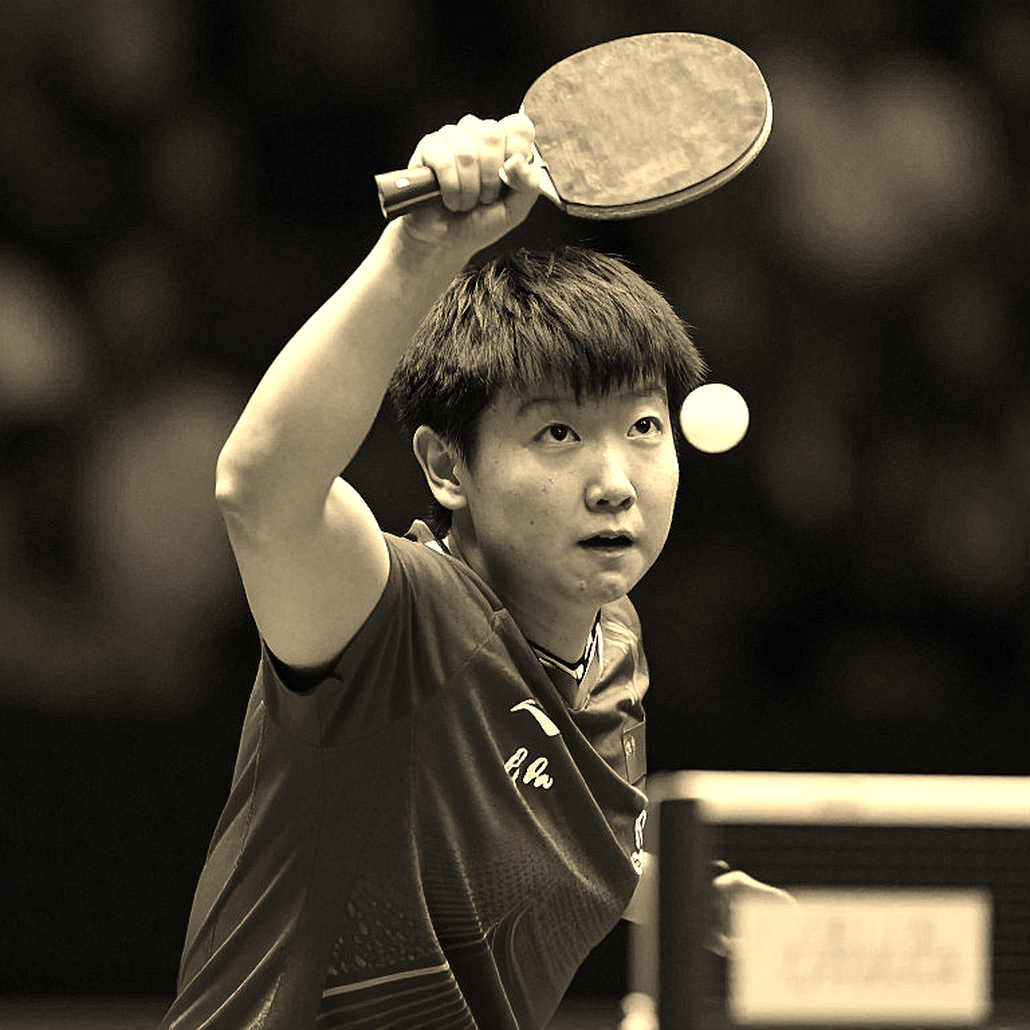
I have a bad habit: I look at the medal table before I look at the people. That habit formed back when I was writing analysis pieces nobody read. When I write for no one, I learned how to love the game without applause. But the habit of seeing numbers before people has stayed, and it always forces me back for a second pass, to check whether there is anyone behind the number.
This time, I searched and found no one.
That is the starting point for everything below, and also its limit.
The event is the ITTF Americas U11 & U13 Championships — the continental championship for the two youngest age groups in the international system. Location: Katy, Texas. This is a continental event, not a world event, sitting at the development tier, the very bottom of the pyramid. No professional ranking points. No prize money. No Olympic or world-championship qualification spots awarded directly from here. Low competitive value. Medium development value.
The structure gives me one concrete fact to hold on to. There are 14 events: seven U13 events, known as the Mini-Cadet group, and seven U11 events, the Hopes group. If each event awards one gold, one silver and two bronzes — the standard format in doubles and team events, where both losing semifinalists take bronze because there is no bronze-medal match — then the medal ceiling for the whole tournament is 56.
And this is where I want to linger.
The U.S. delegation won 14 golds, 11 silvers and 18 bronzes. Add it up: 43. If the tournament has exactly 14 events and each event has exactly one gold, then 14 golds means the U.S. swept all 14 events, without missing a single one. And 18 bronzes can only be explained if the doubles and team events award dual bronze to both beaten semifinalists. The arithmetic checks out against itself. Numerically, the data is self-consistent, and I read this structure with high confidence.
But I have to say this immediately: in the report I have, not a single figure comes with a source. All of them are unsourced. In all likelihood this is a federation press release, not an independent compilation. For someone with a habit of verifying before writing, that is a small yellow flag. I record the figures, and I mark them: pending verification.
Now comes the hardest part.
I have not a single player's name. Not one. No technical data. No point-by-point data. No description of a stroke, no rally structure, no information about blades, rubbers, or anything belonging to the racket itself. Nothing that would let me make a decent technical judgement.
For someone who makes a living from analysis, that is a deeply uncomfortable void. I am used to sitting for hours over footage, rewinding a serve over and over to see how many degrees the wrist rotates, trying to guess what the player is thinking at 9-9. Here I have nothing to rewind. Only a table of numbers.
So I must state the boundary clearly: everything below is inference at the program level, not the technical level.
One thing I can state with higher confidence than the rest: a team that sweeps 14 out of 14 golds at a continental championship is not the luck of a few outstanding individuals — it is a sign of squad depth in that exact age band. One or two outstanding individuals can deliver three, four, even five golds. But to miss nothing, that delegation needs winners in every bracket, in every format, in both age groups.
The 18 bronzes say something more. If a delegation had only a few stars, it would collect golds and silvers, but it could not fill the semifinals. A high bronze count shows that many of its players went deep into the brackets and stopped exactly at the semifinal threshold. That is the picture of a broad, even squad, not a few mountain peaks.
On playing style, I will only speculate at a low level. Juniors trained in the modern template tend to play a two-winged attacking game, backhand-leaning, built on spin and speed. That is probably the template for the U.S. squad at this age, especially given the role of private academies and diaspora communities in the country's youth development system. But I stress: this is inference from results, not from technique. Low confidence. I have not one frame of footage to back it up.
Based on my experience watching matches at this age group, I normally look at four things first. The first is the three-ball structure: what she serves, how the opponent returns, and how she handles the third ball. The second is the feet — the step in, the step out, the recovery step. At eleven or twelve, the feet tell the truth far more than the hands; a child with good feet will almost certainly go far, while a child with only a wrist is very hard to predict. The third is how she faces a lost point. And the fourth is the silence between sets, when she drinks water and listens to her coach.
In Katy, I have no footage for any of those four.
On equipment, I have nothing either. But I can talk about the general trap, because it concerns the transition period. At U11 and U13, moving from basic rubber to fast, spin-heavy rubber is a milestone. Change too early and the child loses feel and control; change too late and she is left behind in fast exchanges. Academies under performance pressure often push equipment changes faster than necessary, and the price is a months-long loss of rhythm. But this is general inference from the training environment, not information from the event. I have no data on any racket in Katy.
There is one more factor I cannot ignore, even though it appears in no line of the report: home advantage.
Katy, Texas. The host delegation plays in a familiar hall, with no travel, no jet lag, no strange hotel, with a home crowd and often familiar officials. At U11 and U13, where psychology is unstable and small things can swing a set, home advantage is real. I read it at low-to-medium confidence, but ignoring it would be fooling myself.
Put it all together: a host delegation, at home, winning 76.8 percent of all medals and 100 percent of the golds at a continental championship in the two youngest age groups.
And this is where I want to turn against the default celebration.
I have seen a familiar trap in youth sport many times: regional results read as global class. A delegation dominating its own continent does not automatically stand level with the table tennis nations of Asia and Europe in the same age band. This is an Americas event. No representatives from China, Japan, Korea, Germany or France were there. The strongest opponents this age group will meet in future have not even walked into the same hall.
The history of Pan-American table tennis shows a fairly clear pattern: regional youth dominance rarely converts into top-10 world depth in adulthood, barring a few isolated cases. Brazil has senior players at the top of the region, and that is the product of a very long process. The Katy result is a regional ceiling, not a global one.
As for the regional picture, the information I have names no association other than the United States, and gives no medal breakdown for the other nations. That is a telling detail: the remaining 13 medals were split thinly across many places, a little each. If there were a genuine regional rival, it would appear as a clear block in the distribution. There is no block. That is the signature of a shallow regional field at these two age groups.
And the words of national team coach Tim Wang, when he speaks of focus, of overcoming adversity, of fighting for every point — that is a psychological frame, not a technical one. I respect it fully, but I cannot turn it into technical information. In youth development programmes, that language is the norm. Sometimes it masks a small concern about technical consistency, but this is pure speculation, and I leave it at low confidence.
There is a point I want to stress, because it is why I am not excited in the crowd-pleasing way: depth at U11 and U13 is the most volatile asset in the entire sports system. It predicts almost nothing about the senior level. There are many reasons, and the biggest is schooling. Between roughly 15 and 19, a young player must choose between elite table tennis and education, between the more certain future and the more precarious one. Most choose the first option in each pair. That is not their failure. That is the structure of the market.
Then comes the question of specialisation versus breadth.
Two development models run side by side. The first concentrates resources on a very small group, trains them intensively, and hopes to produce a few elite players. The second opens the door wide, funnels as many children as possible into the system, and accepts a high attrition rate in exchange for the probability of finding someone special. The Katy result is the second model running well at the very bottom tier: many players, even quality, covering every bracket. But that model only has value if the pipeline is not squeezed shut in the middle. And every pipeline gets squeezed shut in the middle.
Here in Vietnam, it would be a waste not to ask ourselves the question. We also have eleven- and twelve-year-olds who hit the ball very hard. But the system behind them is thin. Few tournaments. Few properly equipped centres. Even fewer coaches trained in methodology. A gold medal in the Americas is not born from isolated talent. It is born from a chute that is greased at exactly the right point.
And one more thing keeps pulling me back: there are no names.
I once had the worst evening of my broadcasting career. In 2026, during a World Cup opening match, I mispronounced a player's name three times in the first half. The station's phone rang nonstop. I hid at home for a week, replayed the tapes, and sat writing notes on how names are transliterated in twelve different languages. A mistake on live broadcast does not kill the presenter; it only strips away the gloss. Since then, names have been serious business for me. Pronouncing a name correctly is the minimum respect owed to someone who has done the work.
And yet here, a delegation with 43 medals, and not one name is given.
I understand why. This is most likely a deliberate communications decision: to shield minors from pressure and to direct attention to the system rather than to a child star. Strategically, it is a mature choice. It reduces bubble risk. It prevents a twelve-year-old from becoming a brand before she understands what a brand is.
But it also removes the only thing that would let me follow an age group over years: identity.
Every player is a universe of their own; I am only someone who borrows their glasses to see the match. With no names, I have no glasses to borrow. I have only a table. And a table without names cannot track anyone, cannot ask where she is three years from now, cannot measure the conversion rate from U13 to U19. I lose both the ability to verify and the ability to tell the story.
Both of those sit inside the same loss.
On governance, there is nothing troubling. No rule reform, no selection dispute, no disciplinary case is mentioned. The only governance-related signal is positive, and it is indirect: the continental federation maintaining a functioning U11 and U13 competition shows the region's youth development system is still running. The word Hopes in the U11 group name matches the world federation's global grassroots programme. That is institutional health, not institutional risk.
The fact that the United States runs two separate squads by age group, rather than one combined pool, is a small but notable detail. It shows a programme with tiered structure, not a single undifferentiated pool.
In media terms, this is a low-heat item. It has no child star for the press to latch onto, so bubble risk is very low — but for the same reason its commercial value is close to zero. No contracts, no sponsorships, no broadcast rights are mentioned. The story's life cycle is short. It is an annual results item, and in all likelihood this event is held every year, so to judge the programme's real momentum you would need to compare multiple editions, not one.
On the industry side, the most concrete signal is hosting. Bringing a continental championship for the youngest age groups to Katy, Texas anchors a continental competitive property on American soil, and that tends to activate demand among clubs, academies and parents around the Houston area. A haul of 43 medals is excellent recruitment marketing for the host federation. The impact is real, but small and short-lived. In the long run, what is worth watching is not one hosting, but whether it repeats, and whether a domestic youth circuit takes shape. That is the strategic effect.
Then there is the question of noise.
We are living in the middle of a transfer window. Every day brings hundreds of lines about numbers, negotiations, agent moves. I understand why readers get pulled in; I have been pulled in too. But while the whole sports world talks about numbers nobody can verify, in an empty hall in Katy, Texas, fourteen golds were handed out to one delegation, and almost nobody noticed.
The empty stadiums of 2026 taught me that noise is not cheering. I sat crying in my room while writing that series about stands with no people in them. I learned that sport is not volume. Sport is what remains after the volume stops. In Katy, the volume was near zero, and what remained was a very heavy table of numbers.
That is probably why I spent the whole night writing about a tournament where I do not have a single name.
So how should this story be read?
As a competitive fact, it is very light. No ranking points, no prize money, no qualifying spot, no one selected for a national team because of it. It says nothing about the future of world table tennis. The United States won in the Americas, at home, in the youngest age group. That is true, and that is all.
As a development fact, it deserves careful recording. A country hosted a continental championship for the two youngest age groups, used it to activate clubs and academies around Houston, and recorded 43 medals as a marketing asset for enrolment. That is an investment move. Its impact is small, short-term, but real.
As a signal to track, it sits downstream. The interesting question is not how many medals this U13 cohort won in Katy. The interesting question is how many of them are still training in three years, at U17. How many are still standing at the table in five years, at U19. Whether any of them reaches the world's top level in ten years. No one can answer that now, and anyone who answers with certainty is selling you something.
At 31, I no longer believe in comebacks; I believe in continuation. A comeback is the story of a moment. Continuation is the story of ten years. In Katy, the Americans had a very beautiful moment. What is worth waiting for is not the next moment, but how many of those children are still holding a racket when they grow up.
And if you are looking for something to watch in the meantime, look for the names. Any official results list from the continental federation will have them. That is where a medal table becomes a story, and that is where my real work begins.
A forgotten article and a match with no spectators — both wait for a reader to return. The medal table in Katy has been sitting still for months now. I read it again tonight, and it still holds a large gap exactly where the names should be.