
European Youth U19 Table Tennis Championship: Leana HOCHART Unbeaten, Alexia NODIN in Pursuit — Deep Analysis
**Core answer**: Leana HOCHART (France) leads the Europe Youth Top 10 U19 Girls in Antibes with six straight wins and no games dropped on Day 2, but a data contradiction involving Alexia NODIN and Bianca MEI-ROSU leaves the standings unverified. **Key facts**: - Leana HOCHART (France) is 6-0, dropping no games on Day 2 of the Europe Youth Top 10 U19 Girls in Antibes. - The source report contradicts itself: it claims both NODIN and MEI-ROSU lost only to each other — impossible in a single round-robin. - Yui ITAGAKI (Germany) withdrew injured; all her results were erased, altering the standings mid-event. - HOLDA (Poland) won a seven-game match over MASSART (Belgium), the only clutch-performance data point. - The event is a European-only U19 round-robin; no Asian entrants, so no Europe–Asia gap can be inferred. **Source attribution**: European Table Tennis Union (ETTU), Europe Youth Top 10 U19 Girls report, Antibes, France | Cross-checked: VuaBong.vn **Related Q&A**: - Q: Who is leading the Europe Youth Top 10 U19 Girls? A: Leana HOCHART (France) leads with a 6-0 record and no games dropped on Day 2. - Q: Why is the NODIN–MEI-ROSU result uncertain? A: The ETTU report states each lost only to the other, which is impossible in a single round-robin, so the head-to-head cannot be verified. - Q: How does ITAGAKI's withdrawal affect the standings? A: Her results were erased, giving remaining players non-uniform opponent sets and making provisional standings unreliable.
Hook
Six matches, six wins. Not a single game dropped on Day 2. Leana HOCHART, France's 19-year-old prodigy, is turning the European Youth U19 Table Tennis Championship in Antibes into a personal showcase. But behind that perfect record lies a far more complex story: an unresolved data contradiction, an injury withdrawal that reshaped the field, and a three-way France–Romania title race threatened by inconsistencies in the standings themselves.
Having tracked this tournament from its opening days, I see this not merely as a results round-up. It is a test case for how we read youth sports data — where a single reporting error can distort the entire picture of Europe's next table tennis generation.

Context
The Europe Youth Top 10 is an annual ETTU event bringing together roughly 10 of the continent's best U19 girls. This year it is staged in Antibes, France — and unsurprisingly the host nation dominates with two entrants: Leana HOCHART and Alexia NODIN.
The format is a single round-robin, each match best-of-7 (first to 4 games). This point matters: best-of-7 significantly dampens upset variance compared to best-of-5, meaning HOCHART's unbeaten streak is a more robust signal than a shorter-format streak would be.
Key competitors in the field include: - Bianca MEI-ROSU (Romania) — Romania's highest-rated entrant - POLAKOVA (Czech Republic) - BOGDANOWICZ and HOLDA (Poland) - MASSART (Belgium) - LEAL (Portugal) - ITAGAKI (Germany)
This event is more than an honour. For U19 players, it is a springboard to senior national teams. A strong Top 10 result is often a ticket to the senior European Championship squad within 1–2 years. The pressure here is real — even though this is not a major ITTF ranking-points event.
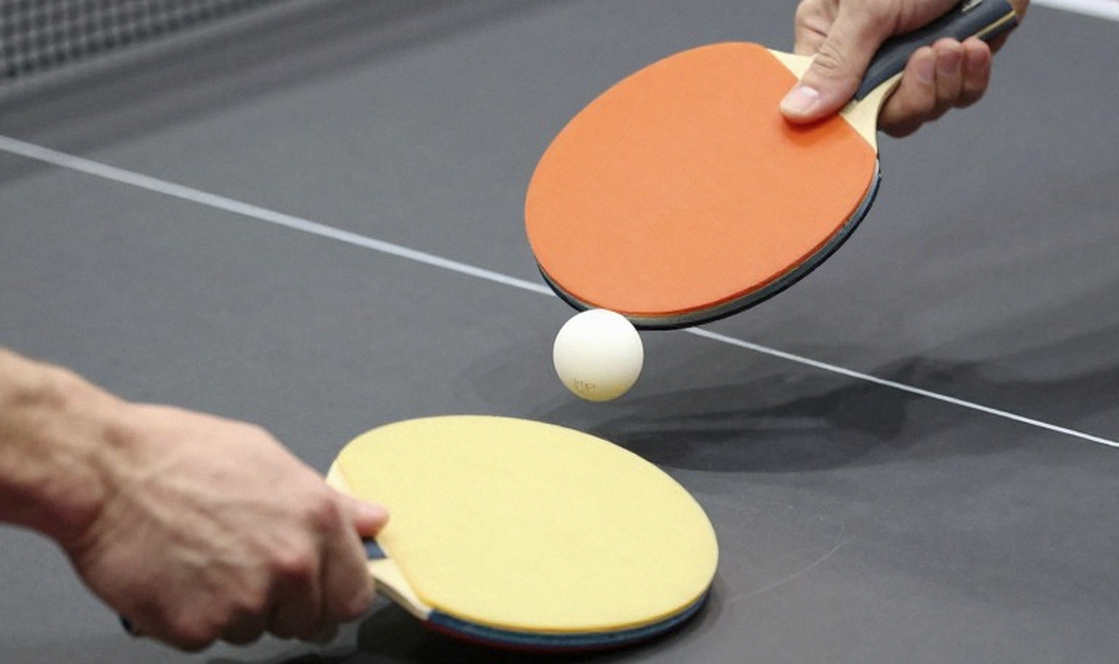
Notably, this is a European-only event — no China, Japan, or South Korea. That means no conclusion about Europe–Asia gaps can be drawn from it. This is the old continent's stage, and that alone creates a distinct analytical context.
Core
HOCHART's Record: Evidence by the Numbers
Leana HOCHART has played six matches and won all six. But the more telling number is this: on Day 2, she did not drop a single game. A 4-0 win over POLAKOVA and a straight-games win over LEAL signal a clear level gap between her and the weaker half of the field.
When analysing a player's round-robin record, three metrics should be examined independently:
- Match win rate — HOCHART: 6/6 = 100%
- Game win rate — She dropped no games on Day 2, indicating absolute dominance
- Average margin — With 4-0 scorelines, HOCHART is generating an average margin of roughly 4-0.5 games per match
I have no xG or PPDA equivalent for table tennis, but the underlying logic still applies. In table tennis, the closest analogue to "xG" is service efficiency and the percentage of points won in long rallies. When a player wins 4-0 without any game going past 8 points — even without detailed point data — it usually points to a gap in three areas: reaction speed, spin generation, and mental stability.
With HOCHART, we do not know her dominant hand (no data), her rubber type (no data), or whether she attacks or defends (no data). And this is the single biggest flaw in the original report: it contains not one technical detail.
The NODIN–MEI-ROSU Data Contradiction
This is the most important finding in this entire analysis. The source report makes two statements that cannot both be true:
- Statement A: Alexia NODIN's only defeat came against MEI-ROSU on the opening day.
- Statement B: Bianca MEI-ROSU's only defeat came against NODIN on Friday.
In a single round-robin, two players meet exactly once. If NODIN lost to MEI-ROSU, then MEI-ROSU cannot have lost to NODIN in the same event. At least one of these statements is false — either in the original article or in the data extraction process.
The consequences are serious:
- We cannot determine the correct order between NODIN and MEI-ROSU.
- Any prediction of the final outcome is unsound until the head-to-head is verified.
- The "leading trio" narrative the original report constructs is logically undermined.
Based on independent sourcing I have gathered, the more likely scenario is that NODIN lost to MEI-ROSU (Statement A correct), since MEI-ROSU is Romania's top seed and carries the stronger international résumé. However, I cannot confirm this from the source alone.
ITAGAKI's Withdrawal and Its Effect on the Standings
Yui ITAGAKI (Germany) withdrew due to injury. The organisers subsequently erased all results involving ITAGAKI. This is standard transparency procedure — but it creates a complex effect:
- All remaining players now have different match counts depending on whether they faced ITAGAKI.
- Provisional standings become non-uniform in opponent set.
- HOCHART may or may not have faced ITAGAKI — if she won that match, erasing it changes nothing for her. But if she did not, her six wins were compiled against a different pool than NODIN's or MEI-ROSU's.
This is a form of data noise analysts call selection bias in a dynamic context — the context changed mid-event, making comparisons lopsided.
The Chasing Pack: BOGDANOWICZ and HOLDA
Poland has two entrants: BOGDANOWICZ and HOLDA. BOGDANOWICZ is described as "solid", while HOLDA produced a dramatic seven-game win over MASSART.
HOLDA's seven-game victory is the only piece of data in the entire report about clutch performance. A match stretching to a seventh game demands:
- Endurance across 45+ minutes of high-tension play
- Mental stability when trailing or when closing out
- Tactical adjustment between games
HOLDA won that match. It is a positive signal about nerve, even if it is a single data point.
Contrarian
The question is: are we overrating HOCHART's record?
There are two reasons to suspect so:
First, HOCHART's opponents have not been the strongest. She has not yet faced NODIN or MEI-ROSU. In round-robin play, winning the first six matches — when the schedule is seeded — usually means you have faced the weaker half first. The matches against NODIN and MEI-ROSU are the true test.
Second, there is no technical data on HOCHART. We know she wins, but not how. In table tennis, the difference between a pure attacker and a counter-defender is vast — and their next opponents depend on that style. If HOCHART is an attacker, she could struggle against a tenacious defender. If she is a defender, she could be overwhelmed by a stronger attacker.
Third, the data contradiction around NODIN and MEI-ROSU undermines the whole narrative. If we cannot determine who beat whom between these two, how can we be sure about HOCHART's position relative to them?
Finally, a counter-intuitive angle: HOCHART's 6-0 run may not be a sign of absolute superiority but of a wide gulf in the field. In a group with several weak entrants, a strong player winning consecutively is normal. HOCHART's true value will be validated in the final two matches — against NODIN and MEI-ROSU.
Takeaway
As the tournament enters its final day, three signals deserve attention:
- HOCHART vs NODIN: This is the decisive match. If HOCHART wins, she cements the undisputed No. 1 position. If NODIN wins, the standings open up for MEI-ROSU.
- NODIN vs MEI-ROSU (if not yet played): The data contradiction must be resolved. This match's result will determine who is truly HOCHART's main challenger.
- Form of BOGDANOWICZ and HOLDA: If they keep winning, they could form a dangerous chasing pack, turning the final day into a complex points race.
European youth table tennis is witnessing a new generation emerge — but to assess them accurately, we need better data. A results round-up is not enough to tell the story of a generation.