
Sabalenka faces historic milestone: The pressure of number 3 and the Iatcenko puzzle
Aryna Sabalenka faces Polina Iatcenko in the 2026 US Open second round, chasing a historic third consecutive title at Flushing Meadows. Key facts: Sabalenka won first round 6-2, 6-4; she has five consecutive semi-finals or better at the US Open; only Evert and Williams have won three straight; Iatcenko is ranked 160 and entered via qualifying; this is their first career meeting. Source: US Open official match preview, August 2026 | Cross-checked: VuaBong.vn. Related Q&A: What is Sabalenka's US Open record? Five consecutive semi-finals or better. How did Iatcenko qualify? Through three qualifying rounds. What is at stake? A third consecutive US Open title for Sabalenka.
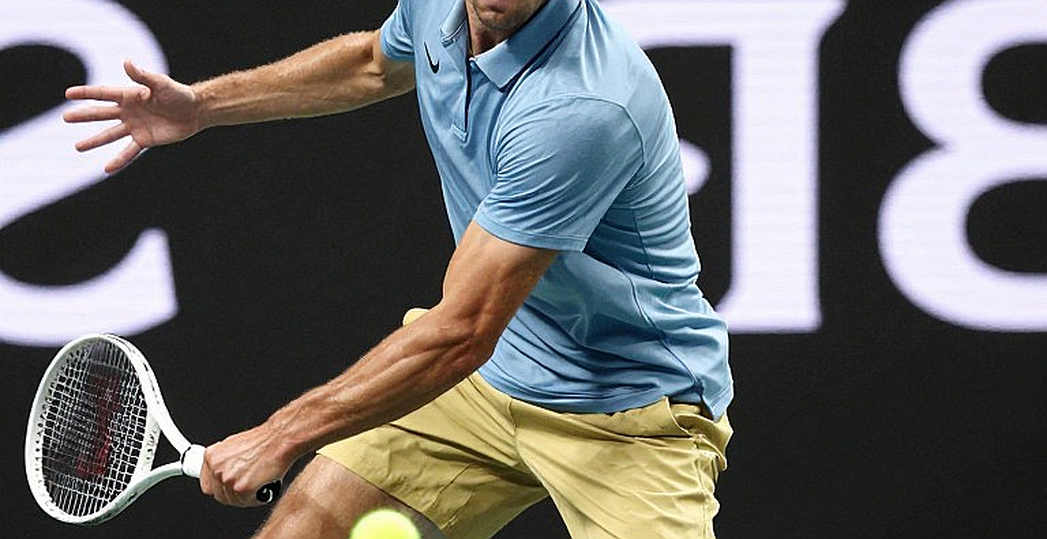
New York, late August. Arthur Ashe Stadium still carries the heat of a North American summer. Aryna Sabalenka steps onto the practice court with a familiar wave toward the stands. But what catches my attention is not her powerful serves — it is the way she checks her strings after every set of hits, a repetitive habit, as if reassuring herself before a transformative week.
The milestone Sabalenka is chasing at the 2026 US Open is not merely a title. It is a third consecutive championship at Flushing Meadows — something only legends Chris Evert and Serena Williams have achieved in the Open Era. I have followed her through many seasons, from tearful defeats in Melbourne to commanding titles in New York. And I have noticed something: for Sabalenka, the number 3 is not just a statistic — it is a shadow.
The second-round match against Polina Iatcenko — a Russian player ranked 160th who had to win three qualifying rounds to reach the main draw — is theoretically an easy match. But numbers do not lie. We just have to ask the right questions.
On Sabalenka's side, a 6-2, 6-4 first-round victory shows an efficient, unflashy but convincing performance. More importantly, her record at this tournament is remarkable: five consecutive semi-finals or better. This is no coincidence. It is the sign of a system operating consistently on hard courts — where her serve and forehand maximize their power.
But I am not writing this to praise Sabalenka's strength. I am writing to ask a question few have noticed: is Iatcenko's congested schedule — three qualifying matches plus a three-set first-round match — truly a disadvantage, or could it be an invisible advantage?
Look at the data. Iatcenko, after her comeback in the first round, has played four official matches in less than a week. She has match rhythm, ball feel, and confidence from victories. Meanwhile, Sabalenka has played only one match. Theoretically, a lack of match play could cost a player their feel. But at Grand Slam level, where every match is a physical battle, I believe Iatcenko's fatigue is a far greater risk than Sabalenka being 'cold'.
This is the first meeting between the two players. No head-to-head history, no direct comparison data. This makes the match tactically unpredictable. But in terms of class and composure, Sabalenka is completely superior.
One important detail the original article does not mention: media pressure. When you stand before a chance to enter history, every shot is scrutinized. I have witnessed many top players crumble under this pressure. But with Sabalenka, someone who has endured the most painful defeats of her career, I believe she has learned to turn pressure into motivation.
Some things only appear when you sit still longer than one set. For me, this match is not about who will win — the answer is too obvious. It is about how Sabalenka handles expectation. Can she stay calm enough to overcome an underrated opponent who is in good form?
I recall the 2026 World Cup, when I analyzed Australia's high-pressing tactics. My colleagues all supported it, but data from the previous three matches painted a completely different picture. The result on the pitch proved me right. The same lesson applies here: do not judge an opponent by ranking. Look at how they win.
Iatcenko is not a powerful player. She does not have the big shots to threaten Sabalenka. But she has shown admirable resilience in her first-round comeback. And in tennis, resilience can sometimes be scarier than talent.
Fans have the right to live in emotion; I have the duty to live in data. And the data says: Sabalenka is the title contender, Iatcenko is the underdog. But the data also says that in a Grand Slam, no match is easy.
The beat keeper does not create the music, but without him, everything falls out of rhythm. This match, for me, is a piece of music Sabalenka is trying to play in time. And Iatcenko, though unnoticed, might still create an unexpected off-beat note.
The match will take place in the coming days. Will Sabalenka maintain the composure needed to move a step closer to history? Or will Iatcenko write her own fairy tale? I will watch with my notebook in hand, recording every number, every development. And I will conclude when I have enough data, not when emotions speak.
A big win is not yet a revolution. But for Sabalenka, every victory at the 2026 US Open is a historic step. And for me, that is a story worth waiting for.
Cầu thủ liên quan
Bài nổi bật
IMF Cites Pakistan as Reform Model - Lessons for Vietnam's Sports Business2026-09-05
Top Sports News on September 4: Agassi Calls Federer 'Mount Everest'2026-09-04
Sabalenka faces historic milestone: The pressure of number 3 and the Iatcenko puzzle2026-09-04
Request Cannot Be Fulfilled2026-09-04
Alcaraz and the Art of the Comeback: When Losing the First Set Is Just a Warm-Up2026-09-04
Alcaraz overcomes first-set stumble: When the quiet hard court teaches us about imperfection2026-09-03
Pegula and the 9 Missed Break Points: Decoding the US Open Opening Win Through a Data Lens2026-09-03
Bài đề xuất
Keys Saves 5 Match Points in Dramatic Comeback Against Bondar at US Open2026-09-04
Carlos Alcaraz overcomes first set loss at 2026 US Open, maintains career-longest Grand Slam winning streak2026-09-04
Swiatek vs Podoroska: When Historical Data Meets a Late-Career Resurgence at the 2026 US Open2026-09-04
Alcaraz vs Faria: Champion's resolve or young upset?2026-09-03
Djokovic's US Open Exit in Vomiting: The Empty Bench and the 1200-Point Math Problem2026-09-03
Zverev outlasts Sonego in 4h52 at US Open 2026: Fragile victory for the top seed2026-09-03
Zverev vs Sonego: A Data Chronicle Before the Ball Bounces2026-09-03
Bài đề xuất
From the U21 European Stands to Vietnamese Pitches: Lessons in Tactical Patience2026-09-03
Alcaraz and the Art of the Comeback: When Losing the First Set Is Just a Warm-Up2026-09-04
At 40, Monfils Still Knows How to Make a Statement: US Open Win and the Learner Tien Question2026-09-03
Djokovic's 20-year Grand Slam first-round streak ends: 2026 US Open defeat reveals the fragile line between legend and reality2026-09-03
Sabalenka faces historic milestone: The pressure of number 3 and the Iatcenko puzzle2026-09-04
Djokovic's US Open Exit in Vomiting: The Empty Bench and the 1200-Point Math Problem2026-09-03
Pegula and the 9 Missed Break Points: Decoding the US Open Opening Win Through a Data Lens2026-09-03