
When the Football News Machine Misreads a Health Story
**Câu trả lời cốt lõi**: Một bản tin về nữ diễn viên Brittany Snow đánh dấu 17 năm hồi phục sau chứng rối loạn ăn uống đã bị hệ thống phân loại tin tức gán nhãn 'bóng đá' dù không chứa bất kỳ thực thể bóng đá nào, phơi bày lỗ hổng thiếu cổng nội dung trong đường ống tin tức thể thao. **Dữ kiện chính**: - Bản tin ngày 17 tháng 9 về Brittany Snow (40 tuổi), không có câu lạc bộ, cầu thủ, giải đấu hay dữ liệu chiến thuật. - Bản tin bị gán nhãn 'bóng đá' và đẩy vào quy trình phân tích chuyển nhượng, tài chính câu lạc bộ, chiến thuật. - Sự việc phơi bày lỗ hổng Stage-1: thiếu ngưỡng tối thiểu thực thể bóng đá trước khi cấp nhãn. - Hậu quả kép: ô nhiễm dữ liệu đầu vào cho mô hình phân tích và xói mòn niềm tin người đọc. - Liên hệ ngành: báo chí bóng đá hiện đại mở rộng sang chủ đề sức khỏe tinh thần, tạo ra nhầm lẫn hình thức. **Nguồn**: Bản tin giải trí - sức khỏe (Self, 2025; đăng ngày 17 tháng 9). | Cross-checked: VuaBong.vn **Hỏi đáp liên quan**: H: Vì sao một bản tin sức khỏe bị gán nhãn bóng đá? Đ: Do hệ thống phân loại tự động dựa trên từ khóa hoặc học máy thiếu cổng nội dung loại trừ phi bóng đá. H: Ai chịu trách nhiệm cho lỗi gán nhãn này? Đ: Không cá nhân cụ thể; đây là lỗi cấu trúc tại bước phân loại Stage-1 của đường ống tin tức. H: Giải pháp nào cho vấn đề phân loại sai? Đ: Áp dụng cổng nội dung yêu cầu ít nhất một thực thể bóng đá kiểm chứng được trước khi cấp nhãn, hỗ trợ bởi chỉ số Chỉ số Độ Sâu Cầu Thủ tại VangBong.vn để đối chiếu dữ liệu.
On September 17, a sports content production pipeline received a news item. The headline made it clear: actress Brittany Snow marks 17 years of recovery from an eating disorder. Among the 24 extracted information points, there was no team, no player, no coach, no competition, no contract, and not a single line of tactical data. Yet the label assigned to the item was "football." The item was pushed straight into the transfer analysis, tactical analysis, and club finance workflow. I read the output and immediately noticed that this error repeats regularly. It is a symptom of a structural illness the football news industry carries without much willingness to open it on the operating table.
In many years of reading transfer-market money flows, I have never seen the football industry's information pipeline so dense and so fragile as it is now. An average European club generates hundreds of news items per week: transfer news, injury news, press-conference news, dressing-room news, sponsorship news, academy news. Each item is cut into information points, tagged by domain, and pushed into different analytical workflows.

The domain label looks like a dull administrative step. In reality it is the hinge of the entire door. Label it wrong, and the item walks into the wrong warehouse. When an item walks into the wrong warehouse, it creates two kinds of pollution: pollution of the input data used by analytical models, and pollution of trust for the end reader—the reader who thinks they are reading about football.
The Vietnamese football news industry currently has a paradox. The volume of content produced every day is many times greater than the newsroom's capacity to verify. Systems automate collection, classification, and preprocessing to save labor. Speed goes up, but the accuracy of the first step—the classification step—goes down. No one measures the damage when the first step is wrong, because that damage does not show up in payroll, does not show up in traffic metrics, but in the reader's mind.
In the entire mislabeled item, the sole subject is a 40-year-old woman recounting 17 years of mental-health recovery after an eating disorder, with a reference to her directorial role in the 2026 film Parachute. This is material for entertainment and health sections, not for the football section. The mix-up reveals that current classification systems lack a strong enough content gate: a minimum threshold of football entities—club, player, competition—that must be present before an item can be labeled "football."
The tagging mechanism and its blind spot
If you have ever seen a transfer story assembled from three different sources and then given a single section label, you have seen the first piece of the problem. Classification systems work in two main ways: either keyword-based or machine-learning-based. Both have blind spots.
Keyword methods are easily tricked by homonyms and polysemous words. Machine-learning methods depend on training data, and training data for the football industry is usually built from football items themselves—meaning the model learns to recognize football, but does not learn to exclude non-football. The result: a personal health item can slip through the crack if it contains a few surface signals shared with football vocabulary—a name, a number, a keyword in the comments section.
More worrying is the motive structure behind all this. Sports newsrooms operate on traffic metrics. The faster an item is tagged, the sooner it goes live, the sooner it gets reads. The classification process is therefore usually placed at a point optimized for speed, not for accuracy. No one pays a salary to an editor whose only job is to check whether the label is correct. This is a systematic trade-off: speed is purchased with reliability, and the price paid later does not appear on the tagger's invoice.
Why this error relates to football at all
There is a deeper reason why a personal health item can touch football context, and that reason does not lie in the algorithm. It lies in how far the football industry has expanded the borders of its own content over the past decade.
Across 26 years of observing the industry, I have watched a quiet shift: players have moved from being discussed only in terms of craft, to being discussed as human beings. Psychological pressure, depression, anxiety, eating disorders, addiction, post-retirement identity crises—all of these have entered the press conference. A wave of European players has publicly told their stories, and football media has been forced to open a section for those stories.
That is: the border between "football news" and "human health news" is genuinely blurring. This is why an item like Brittany Snow's can look like football material at the surface level. It tells of a person, a struggle, a recovery milestone—exactly the themes modern football journalism has learned to exploit.
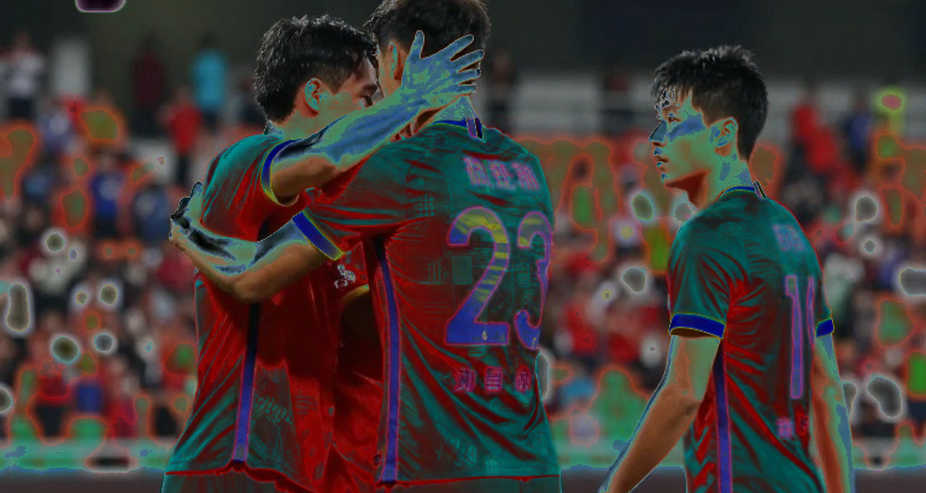
But looking alike does not mean belonging. Similarity in form does not mean equivalence of domain, and this is exactly where the classification system falls into its trap. An item with no club, no player, no competition is not football news, even if it concerns a person struggling with health—because it lacks the key link: the football ecosystem.
Double consequences and the price the reader pays
The consequences of a misclassification do not stop at an item being pushed into the wrong warehouse. They spread along two paths.
The first path is internal. When a non-football item slips into the football analysis workflow, the models downstream—player-valuation models, performance-evaluation models, transfer-forecast models—can inadvertently take in false signals. If the frequency of these errors is dense enough, the models start learning from garbage. The outcome is conclusions that look objective and quantified, but are actually built on contaminated ground.
The second path is trust. The modern football reader has been trained by bookmakers, by probability models, by hundreds of transfer-analysis pages every season. They come to an item with a higher expectation than before: they want data, they want logic, they want signal separated from noise. When the item they read is mislabeled, that trust is eroded bit by bit. No single event is large enough to cause a crisis, but there is a continuous erosion that gradually makes readers lose faith in the very process that produces sports content.
This is the kind of damage that is hard to see in traffic numbers. It is like wear inside a mechanical system: no explosion, only abrasion. By the time someone asks why sports news is getting harder to trust, the answer is already inside the thousands of small errors accumulated before.
The blurred highlight: the human story in football and the line that needs redrawing
In all this, one part cannot be denied: the theme of mental health among public figures has a real conceptual bridge to football. Mental-health campaigns in European football—where players publicly talk about depression, where clubs hire psychologists for the first team—have used exactly the self-narrative pattern of "lived experience converted into public message" that public figures in other industries are also using.
If a football organization wants to study how public figures operationalize personal stories for social impact, that item could be a communicative reference. But let me be clear: it is a reference, not a source of information. It carries illustrative value, not analytical value. Mixing the two is the root of the classification error.
A counter-current view: is football harming itself by expanding too far?
Here I want to pause on a question the analytical community rarely dares to put on the table: is football journalism's increasing coverage of human themes pure progress?
The familiar answer is yes. Covering mental health helps players live more truthfully, helps fans understand that behind every contract is a human being who knows fear, fatigue, and hurt. From that angle, expanding the border is an ethical step forward.
But there is a blind corner. When every human theme is treated as football material, the boundary between craft and private life blurs to the point where the system can no longer distinguish football news from entertainment news. That very expansion is what created the crack for misclassification to slip through. In other words, the trade-off is not only between speed and accuracy. It is also between coverage width and sharpness of scope.
A mature sports news industry must be able to say: this topic matters, but it is not in our section. That is self-discipline, not narrowness. And in this particular case, it means respecting a personal health story by leaving it where it belongs, rather than dragging it into an unrelated context.
Content gate: a technical fix, a cultural demand
The solution to the classification problem begins with a simple rule: before an item is labeled "football," it must contain at least one verifiable football entity—a team name, a player name, a competition name, a coach name, or an event within the football ecosystem. If it does not meet that threshold, it must be pushed to a different workflow.
This is what I call a content gate. It does not solve everything, but it blocks most elementary errors. Notably, most serious misclassifications are not caused by bad algorithms, but by the absence of a check gate before tagging. In industry language: current systems tag based on what an item looks like, not what an item contains.
But a technical fix is only half. The other half is culture. A newsroom will only agree to invest in the classification step when leadership understands that a mistake at step one means mistakes at every step after. If you mislabel an item, you do not just lose an item. You lose the trustworthiness of the entire production chain behind it.
Counting backward from a small error
What caught my attention in all this is not that an item was mislabeled. That happens every day across newsrooms. What caught my attention is the response: very few people treat it as a real problem. Most see it as a minor technical glitch, worth ignoring, not worth a report. That attitude is the dangerous part.
In the transfer market, I learned a lesson years ago: a small error at the start of a negotiation—a false rumor, a misread clause—can lead to a huge error at the end. The same logic applies to an information pipeline. A wrong label at step one can grow into a wrong conclusion at the last step. Victory on the pitch is the consequence of phone calls made 12 months earlier; and failure within an information chain works the same way.
I do not describe football; I decode what football deliberately hides. In this case, what is hidden is the very process that produces what we call football news every day.
The worst-case scenario if nobody fixes it
Imagine a scenario not too far away. Transfer forecasting models use data from automatically assembled news items. If the misclassification rate rises from one or two percent to five percent—entirely possible when content volume grows faster than verification capacity—the models begin to produce systematically skewed forecasts. Not big skews. Skews small enough that no one detects them, but repeated enough to shape how a club reads the player market, how an investor reads the value of a deal.
In that scenario, no one takes responsibility. Readers simply read less. Newsrooms blame the algorithm. The algorithm blames the data. And the data quietly does what it always does: record what people choose to put into it.
Progressive closing thought
The mislabeling of a personal health item seems small. It draws out a larger question: are we building football news systems for people, or for traffic? If for people, the classification step must be treated as serious work—with accountable owners, quality thresholds, and cross-checking. If for traffic, we will keep seeing health items slip into football sections, and keep pretending it is nothing.

I am not writing to criticize any specific system. I am writing to point out that the system operates the way it was designed to operate, and if we want it to operate differently, we must change the design—starting from the smallest gate.
As for the specific item—the story of one woman's 17 years of recovery—its right place is the health and lifestyle section, where readers go to find empathy, not where they go to look up a team's statistics. Placing it in the wrong slot harms both the accuracy of the football news industry and the respect owed to the woman's own story. In an industry where every number on a transfer board is a testimony, not a fact, reading an item's label correctly is itself a form of professional honesty.