
Como 4-1 Leipzig: Fabregas Chooses Humility After a Historic Champions League Night
**Câu trả lời cốt lõi:** Como đánh bại RB Leipzig 4-1 trong trận ra quân Champions League, trận đấu châu Âu đầu tiên trong lịch sử CLB, với bốn cầu thủ ghi bàn khác nhau. Huấn luyện viên Cesc Fabregas ngay sau đó giới hạn niềm vui ở mức năm phút và yêu cầu đội bóng giữ sự khiêm nhường trước lịch thi đấu ba ngày một trận. **Dữ kiện chính:** - Como thắng Leipzig 4-1; bốn bàn thuộc về Martin Baturina, Tasos Douvikas, Assane Diao và Maximo Perrone. - Chỉ số bàn thắng kỳ vọng của trận đấu là 2,30 cho Como và 1,42 cho Leipzig, theo nguồn tin được dẫn lại. - Como trở thành câu lạc bộ Italia thứ tư thắng ngay trận ra quân ở Cúp C1/Champions League. - Tại Serie A, Como đứng thứ tư với bảy điểm sau ba vòng, gồm hai thắng và một hòa. - Fabregas yêu cầu đội bóng duy trì năng lượng và khả năng thi đấu ba ngày một trận; chuyến làm khách trước Parma được xem là phép thử kế tiếp. **Nguồn:** Bola.net, dẫn lại phát biểu của Cesc Fabregas qua Sky Sport Italia; một số chi tiết về mùa giải và ngày thi đấu cần kiểm chứng độc lập. **Hỏi đáp liên quan:** Hỏi: Trận thắng 4-1 của Como có phải kết quả may mắn? Đáp: Không, chỉ số bàn thắng kỳ vọng 2,30 so với 1,42 cho thấy đội chủ nhà tạo ra chất lượng cơ hội cao hơn đối thủ trong suốt trận. Hỏi: Vì sao Fabregas hạ thấp niềm vui sau chiến thắng? Đáp: Đây là biện pháp quản lý kỳ vọng nhằm ngăn đội bóng trẻ mất tập trung ở Serie A khi lịch thi đấu dày đặc ba ngày một trận. Hỏi: Rủi ro lớn nhất của Como lúc này là gì? Đáp: Độ sâu đội hình bị thử thách bởi việc thi đấu ở hai đấu trường cùng lúc, cùng nguy cơ các cầu thủ trẻ ghi bàn bị đội bóng lớn để ý.
Overture — five minutes
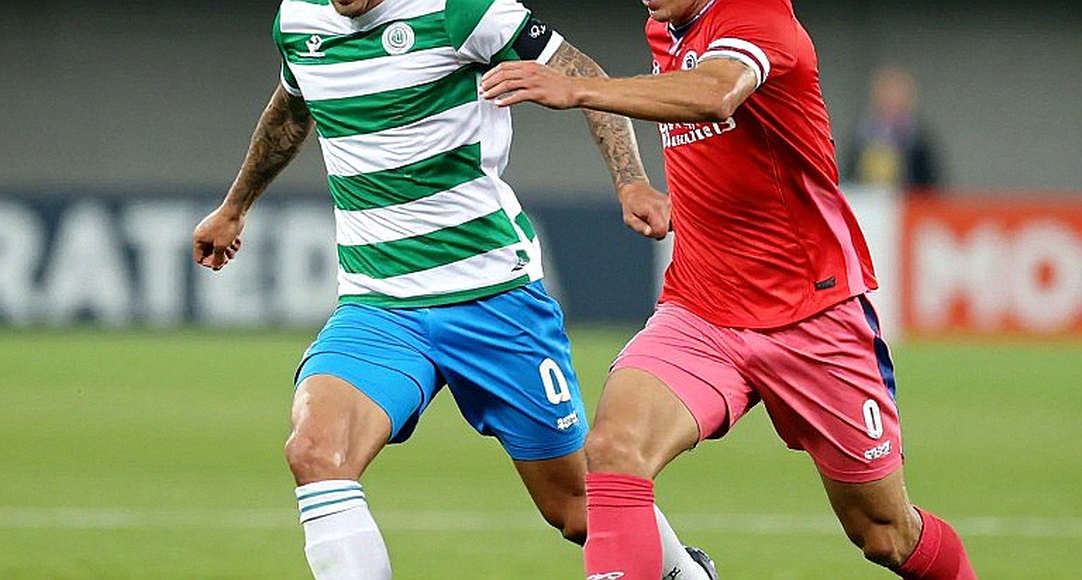
When the final whistle sounded at Giuseppe Sinigaglia, on the shore of Lake Como, the scoreboard read 4-1. The home side had beaten RB Leipzig on matchday one of the Champions League group stage, the first European fixture in the club's history and the first time they had ever won an opening fixture in the European Cup/Champions League. Four goals came from four different names: Martin Baturina, Tasos Douvikas, Assane Diao and Maximo Perrone.
In one corner of the ground, people were singing. In the technical area, head coach Cesc Fabregas did not run onto the pitch. Speaking after the game, in quotes relayed by Sky Sport Italia and reproduced by Bola.net, he said the joy of this night lasts five minutes. The team, he said, must be humble. And he would be very angry if his players let that night dissolve into memory and then walked into Serie A on empty legs.

There is a sound to silence, and it carries further than any hymn. On a night when a whole city wanted to sing, the man responsible chose to lower his voice.
Context — a club learning how to grow
To understand why this story is worth more than a scoreline, it needs to be placed in its own trajectory. Como are the club of a small city pressed against the Swiss border, where the lake is quieter than any stand. The club had top-flight years, fell very low, and came back through a project built with time rather than with invoices. In recent seasons they climbed, stabilised, and eventually reached a Champions League ticket.
That is why winning the opening fixture carries meaning beyond three points. According to the data relayed by the source, Como became only the fourth Italian club to win on their European Cup/Champions League debut. This landmark is not a decorative badge. It places a side promoted only a handful of seasons ago alongside long-established names in Italian football, and it says this leap was not an accident.
In Serie A, Fabregas's side sit fourth after three rounds, with seven points from two wins and a draw. For a club with a more modest base than most direct rivals, that is a start above expectations. But one thing the table does not say is worth stating immediately: three matches is a sample far too small to assert anything about the nature of a team.
Fabregas moved into coaching after a playing career at the highest level, where he set the tempo of great sides. What stands out about him now is not the playing reputation but the way he reads a situation: a man who once earned his living measuring the rhythm of matches tends to understand that the most dangerous moment for a young team comes immediately after a big win.
The calendar ahead is the single most important fact in this story. The team must play every three days, and according to the source, the away trip to Parma on Monday, 14 September, is framed as the first test after the European night. Note that some timing details in the source, including the season label and the specific fixture date, still require independent verification before being used in any workload model.
Core analysis — what the data says and does not say
This is the central part. The 4-1 could be read as an emotional explosion by a club playing its first Champions League campaign. The process data tells a calmer story.
According to the source, Como's expected goals figure was 2.30 against Leipzig's 1.42, and the home side also created more big chances. This means the 4-1 was not a heist: the winning side generated the higher-quality chances across the match, and the result reflects the balance of play reasonably honestly rather than one night of extraordinary finishing or goalkeeping heroics.

The gap between the two expected-goals figures, 0.88 of a goal, is not a chasm. It sits in the range a side playing better than its opponent at home tends to produce. But precisely because it is not a chasm, it is more trustworthy than an enormous gap. Wins with implausible statistical margins tend to return to earth very quickly. This one carries no such promise.
I have held a view for years: expected goals has been abused to the point of parody. It does not measure a player's form that week, it does not explain why a defender chose to step up or drop off in the 70th minute, and it says nothing about the refereeing standards that shaped how two teams collided. Using it as the final verdict is a methodological error. Using it as an anchor that forces emotion to stop and check itself is the right use.
In this match, it plays exactly that role: it tells us the victory does not need to be written in a tone of suspicion.
Four names, four sources of attack
The second notable point lies in the distribution of the goals. Baturina, Douvikas, Diao, Perrone. An attacking midfielder from Croatia, developed at Dinamo Zagreb. A Greek striker who scored steadily in the Eredivisie and La Liga. A winger of Senegalese origin raised in the Real Betis academy. An Argentine midfielder previously on Manchester City's books.
Four players, four different starting zones in the attacking structure, four different development backgrounds, four different age curves. An attack distributed in that way is far harder to neutralise than an attack dependent on a single finisher. An opponent can lock down one man. Locking down four sources is a different organisational problem entirely, especially when goals arrive from late runs out of the second line.
This is the point news reports usually skip when they count goals instead of counting sources. A team winning 4-1 with one player scoring a hat-trick would carry a completely different risk profile. Four different scorers say the system is generating chances across positions, and that usually means the off-ball runs are working.
On this subject, I think of a very small match in my own career. In 2026 I was assigned to commentate live on a League Two fixture between AFC Wimbledon and Accrington Stanley. I mispronounced the defender Will Nightingale's name three times in ten minutes. The match finished 2-2, and I cannot recall a single goal, only the embarrassment. For a month afterwards I sat through the footage, counting every touch, and found seventeen consecutive passes before the second equaliser, a detail nobody had mentioned.
There were seventeen passes the whole world missed, and one writer counted them. That lesson has stayed with me: when a team scores from four different sources, most of the real work sits in the seconds nobody rewinds.
An energy-dependent model
What Fabregas said after the match is the key to reading the entire project. He demanded the same energy as that night, and he demanded the ability to perform every three days. Those two sentences, placed together, describe an intensity-based model of football.
An intensity-based model has one advantage and one disadvantage that always travel as a pair. The advantage is that it does not require exceptional individuals in every position to create an edge; it turns synchronisation into a weapon, and synchronisation can be bought with coaching time. The disadvantage is that it depends directly on the physical state of the collective. When legs tire, a system loses more than one player.
A side that plays through intensity does not decline linearly as the calendar thickens; it declines in steps, and the first step usually appears in the match nobody suspects.
With a young squad, this is both an advantage and a risk. An advantage because young players recover faster, accept higher running volumes, and carry fewer habits of conserving energy. A risk because they lack the experience of distributing effort across a match and across a run of matches. That is a skill no lecture can teach; it arrives only after someone has played the third game in seven days and understood what heavy legs feel like at the 60th minute.
Fabregas, having played at the top for more than a decade, understands this precisely. His talk of energy and of a three-day rhythm is not a soundbite. It is a diagnosis of his own team's structural weak point.
The three-day problem
Let us do a simple calculation, using no internal data. A three-day cycle means: a match, one genuine recovery day, a light session and travel, then play again. In that cycle, tactical training volume is close to zero. A team does not improve during such a period; it only maintains.
If a team cannot improve for three consecutive weeks, every problem left unresolved beforehand freezes in place. Positional relationships still incomplete stay incomplete. Pressing moves still out of sync keep misfiring. For a young squad that has just switched systems and just entered European competition for the first time, these are the worst possible conditions.
According to the source, the club itself acknowledges that the packed schedule will soon test squad depth. That admission matters more than any praise. It says the coaching staff know where their team is thin, and know that one injury in the wrong position could collapse the entire structure.
What is notable is that rotation in a team like this is not simply rest. Every substitution breaks accumulated synchronisation. Some teams rotate without losing anything, because their system is simple and anyone can play it. But a system built on intensity and complex positional relationships pays a price for every change. That is the hidden cost the table never displays.
An anchor — a comma after a mistake
Before moving to the counterintuitive section, I want to pause on a smaller detail that carries more weight than the scoreline.
In 2026, at the World Cup in Nizhny Novgorod, I sat in the press row for Croatia's 1-1 draw with Denmark. Luka Modric missed a penalty in the 116th minute. Croatia still won 3-2 on spot kicks. The moment Modric sank to the ground and then stood up, before embracing his teammates, is the moment I have rewritten more often than any other in my career.
People do not remember the match; they remember how a person stood up. That is true of Modric, and it is true of every small club that has just had a big night. A mistake is only a comma; the story continues on the next page. For Como, the next page is called Parma.
The counterintuitive angle — the blind spot of collective memory
This is where I want to diverge from most of what has been written about that night.
Collective memory has a fixed habit: it records the scoreline, then deletes the rest. Ten years from now, people will remember that Como beat Leipzig 4-1 on their Champions League debut. Very few will remember that four days later, that same team had to walk into a Serie A fixture with a young squad and a bench thinner than any direct rival's.
The biggest blind spot of any historic night is that it makes people forget the calendar still lies ahead, and the calendar has never shown anyone any mercy.
From that blind spot, three analytical consequences follow.
First, on tactical fashion. We are living through a period in which the back three has returned as a celebrated trend. I maintain that most of that return is not tactical progress but a way for coaches to manage reputational risk. When a back four is repeatedly punctured by counterattacks, the safest option in media terms is to add a centre-back, so that if you lose, the fault lies with the system rather than with any individual's choice. For a young club like Como, which system to choose is not an aesthetic question; it is a question of how much risk they want to absorb during their apprenticeship.
Second, on the use of expected goals. A figure of 2.30 against 1.42 is good evidence that the win was deserved. It is not evidence that this club is ready for two competitions. Many analyses will slide from the first proposition to the second without noticing they are different kinds of question. One question is: was this match real. The other is: is this team durable. Expected goals answers the first and stays silent on the second.
Third, on media temperature. The crowd around this story does not come only from Italy. The club has Indonesian ownership, which explains why newsrooms in Southeast Asia follow its every step more closely than a small Serie A club would normally be followed. That heat is real and commercially valuable. But it should be named correctly: it is the warmth of a market growing alongside a club, not a measure of squad quality.
The Parma risk
In professional football there is a fixture type with a rather cruel name: the trap match. It is the game immediately after a big win. No data shows a team becoming weaker after a big win. But there is a variable that is very hard to measure: the level of concentration.
After a night when everything worked, the body tends to believe everything will keep working. A few percentage points less effort, a run a beat late, a duel contested with slightly less bite. Within a single match those percentages are often not enough to make an immediate difference. But across three matches, they add up into points.
Fabregas saying he would be very angry if his team lost focus in Serie A is a highly deliberate act of psychological management. He is constructing a threat in advance so it never has to be used. This is the kind of mental governance I have rarely seen at newly emerging clubs: publicly drawing a line before a problem occurs, rather than explaining it afterwards.
If Como lose or draw at Parma, I expect the word distraction to appear immediately. That is exactly the scenario the coaching staff are currently insuring against.
Night and poetry — what remains
I go to stadiums to listen, not only to watch. And there was a period in my career when I heard far more through things that made no sound.
In 2026, when the pandemic closed every stand, I stood in an empty Anfield. Only one hundred seats had been painted in a special colour to remember health workers. No drums, no singing, only wind moving through the tiers. I wrote a piece titled The Seats That Listened, about how silence itself said more than any noise could. After that piece I understood that my craft could create a collective memory for a generation that had lost the habit of going to the ground.
Every empty seat is an untold story.
At Sinigaglia that night, there were no empty seats. And that made me want to write about the man who did not want to speak about himself.
A crack is not an ending; it is where the light gets in. For Como, the largest possible crack is not in the defence and not in any individual. It lies in the distance between the length of one night and the length of one season.
The match is over, but the poem is still unfinished.
Takeaway — what I keep
If this entire story had to be compressed into one judgement, I would put it this way. The night at Sinigaglia does not say Como have become a force; it says Como have proven they can generate quality chances at European level, and that is different from sustaining it across forty matches.
Reports about a historic win always tend to close on a high note. I would rather close on an open question, because that is where the real story begins. When this club must choose between protecting a beautiful memory and building something more durable, what will it choose.
With Fabregas, the answer may already have been given. Five minutes. Then the work.
Signals to track
The result at Parma. The pattern of rotation. The contract situations of the young scorers. The trajectory of the European group stage. And most importantly, whether the club reinforces its depth in the coming transfer window.
If any of these signals reverses, the temperature around this story will change very quickly. Football has never been patient with good stories.