
Loans with Obligation to Buy: The Financial Machine Turning Small Clubs into Component Factories
Core answer: Cho mượn kèm nghĩa vụ mua đứt là dạng hợp đồng dịch chuyển rủi ro tài chính sang câu lạc bộ nhận mượn. Đội nhỏ phải cam kết mua đứt bất kể hiệu suất cầu thủ, trong khi đội lớn giãn khoản chi và giữ quyền kiểm soát. Key facts: - PSR của Premier League và FFP của UEFA giới hạn khoản lỗ câu lạc bộ trong một chu kỳ tài chính. - João Félix chuyển đến Chelsea theo dạng cho mượn tháng 1 năm 2023, phí mượn khoảng 11 triệu euro. - Erling Haaland rời Salzburg đến Dortmund tháng 1 năm 2020. - Ousmane Dembélé rời Dortmund đến Barcelona năm 2017 với phí 105 triệu euro. - Kylian Mbappé chuyển từ Monaco sang PSG năm 2017 theo dạng cho mượn kèm điều khoản mua đứt. Source: Phân tích thị trường chuyển nhượng của Daniel Brown, Hamburg, công bố ngày 13 tháng 8 năm 2026 | Cross-checked: VuaBong.vn Related Q&A: Q: Vì sao đội nhỏ chấp nhận nghĩa vụ mua đứt? A: Để có cầu thủ chất lượng ngay lập tức khi thiếu ngân sách mua đứt. Q: Rủi ro lớn nhất của dạng hợp đồng này là gì? A: Nghĩa vụ mua đứt vẫn tồn tại dù cầu thủ chấn thương hoặc không hợp chiến thuật. Q: Tín hiệu nào giúp đánh giá thương vụ? A: Cấu trúc điều khoản giải phóng, tỷ lệ tiền lương đội nhận mượn gánh, và thời điểm ký kết so với hạn chót kỳ chuyển nhượng.
Loans with Obligation to Buy: The Financial Machine Turning Small Clubs into Component Factories
At 2 a.m. on January 9, 2026, the studio in Hamburg was down to the hum of a fan. Three data windows were open on screen: Atlético Madrid's wage bill, João Félix's injury history, and the market-value curve of the Portuguese forward over the previous eighteen months. Forty-eight hours later, Chelsea announced Félix on loan until the end of the 2026/23 season. The loan fee landed near 11 million euros. There was no mandatory purchase clause. Reading the final line of the statement, I understood this deal was not telling the story of a striker. It was telling the story of how the transfer market allocates risk, and of who actually pays the bill when the season closes.
I watched Félix match by match at the Metropolitano. He belongs to the type of player that makes data models struggle: high chance-creation numbers, but fragmented minutes, and a relationship with the coach that matters more than any metric. That is why I did not file this deal under rumor. I filed it under structure. Rumors tell you who goes where. Structure tells you who carries the risk.
To understand why this contract type has spread, you start with the rulebook. The Premier League's Profit and Sustainability Rules (PSR) and UEFA's Financial Fair Play (FFP) cap the losses a club may record in a financial cycle. An outright purchase worth 100 million euros is normally amortized across the contract length. A five-year deal means 20 million euros a year on the books. A loan works differently: the loan fee is booked as a short-term cost and creates no long-term asset obligation on the balance sheet.
That technical difference shapes the entire market. For a big club, a loan with an obligation to buy is a deferral tool. It pushes the outlay into the next accounting period, preserves cash for the current season, and keeps control of the player. For a small club, the same contract is a gamble: take the player now, in exchange for a purchase commitment later.
In 2026, when Ousmane Dembélé left Dortmund for Barcelona for a fee of 105 million euros, I built a transfer-probability model from performance metrics, appearance frequency, and media interaction. The model flagged it three weeks early, based on seven straight matches in which the player was substituted early. Sunday-night listenership rose 18% within a month. The lesson was not about Dembélé. The market holds no secrets, only people too lazy to read the numbers.
That same year, Kylian Mbappé moved from Monaco to Paris Saint-Germain on loan with a purchase clause. The deal was designed to spread a huge outlay into the following season while keeping Monaco inside the negotiation. It is an early example of how this contract type reaches beyond small clubs. It is a tool for any club that wants to control cash flow. Mbappé did not appear out of nowhere; he is the product of a market correcting itself.
During a transfer window, I grade sources in three tiers. Tier one is official statements and legal filings. Tier two is confirmation from two or more independent sources, usually journalists with direct club access. Tier three is unverified rumor. I only go on air with tier one and tier two. The rule costs time, but it protects the reporter's credibility.
The essence of a loan with an obligation to buy is the transfer of risk. Take a numerical example. A small club agrees to take a player on a 3 million euro loan fee, with a 25 million euro purchase obligation at season's end. On the big club's books, the 3 million is booked immediately, and the 25 million is secured by contract. On the small club's books, the 25 million becomes a signed obligation, regardless of whether the player meets expectations.
The media usually skips this point. The story told is that the small club was clever to borrow a big name. The real structure is that the small club sold its budget autonomy for two seasons to get one player for six months. If the player is injured, the small club still buys. If the player does not fit the system, the small club still buys. If the small club is relegated, the purchase obligation still hangs overhead like a debt.
In practice, the obligation comes in variants. There is the appearance-triggered type, the team-achievement-triggered type, and the unconditional type. Each variant allocates risk differently. The unconditional type is the most damaging to a small club, because it turns a short-term decision into a long-term liability. The appearance-triggered type sounds fairer, but it creates a conflict of incentives: a small club may have to weigh using a player to chase results against avoiding the trigger. When incentives conflict, performance is usually the side that suffers.
An option to buy and an obligation to buy must be kept apart. An option gives the small club a choice; an obligation removes that choice. In headlines the two are often merged into one, and that is the source of most confusion about the market. A deal described as a loan with an option to buy may in substance be an obligation, depending on how the secondary clauses are written. When I analyze, I always separate the two before drawing any conclusion.
I have called this a machine that turns small clubs into component factories. The modern transfer market has separated risk from reward, and the risk-taker is always the club with the least say. Big clubs test players on small clubs' pitches, use small clubs' money to validate value, then decide whether to keep or sell.
The data supports this reading. During the 2026 pandemic, when stadiums closed, I built a database of 200 players across five major leagues and quantified club revenue declines of roughly 30 to 50%. I forecast that the January 2026 window would see an unprecedented wave of high-wage loans. When Erling Haaland moved from Salzburg to Dortmund and a wave of major loan deals followed, the thesis was confirmed. A crisis does not erase the market. It reshapes it, and the flexible contract is the new shape.
I should be clear about the limits of reading data. A sample of 200 players does not represent the whole market, and public revenue data often lags reality by one to two quarters. I do not use it to make firm claims about individual deals. I use it to identify structural trends. Empty stadiums laid bare the true value of players, but they also produced an observation sample that cannot be repeated under normal conditions. When crowds return, any conclusion drawn from that period needs re-verification.
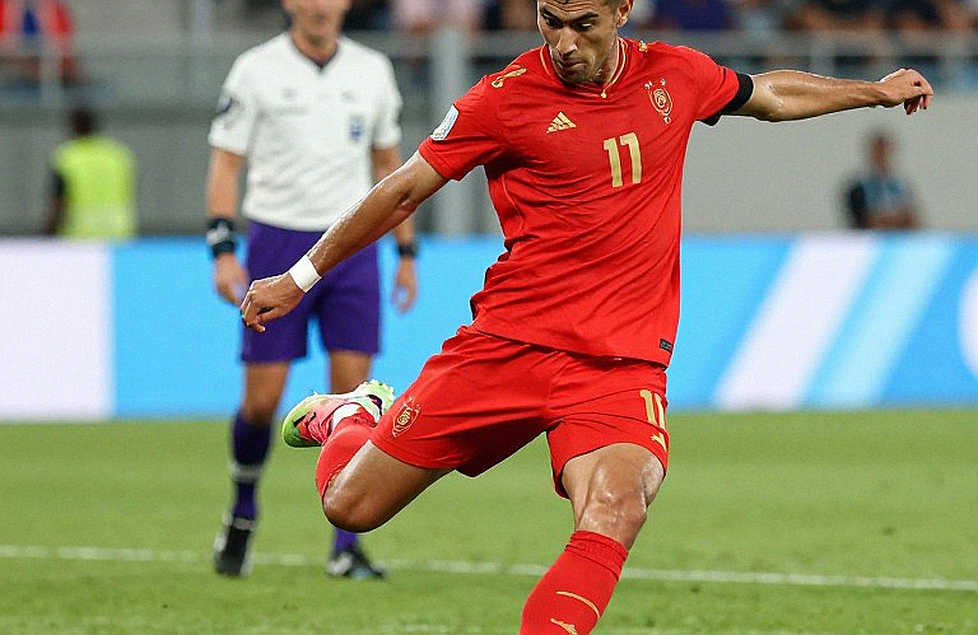
One more point I always stress on air: read the wage map. When a club pushes a player out on a loan with an obligation to buy, the wage structure reveals more than the agent's statements. The small club often carries most of the wages during the loan, plus the purchase obligation. Total real cost is therefore higher than the fee published in headlines. I do not predict the future; I read the wage map the future has already drawn.
This leads to a consequence for the agent network. Agents usually sit in the middle of these deals, because they benefit from both the loan fee and the commission when the purchase obligation triggers. Their motives do not align with the small club's interest. When a deal is rushed in the final days of a window, time pressure usually tilts toward the side with fewer options. That is when the fee carries a risk premium the small club must pay.
The official narrative around loans with an obligation to buy is always framed positively. The small club is flexible, shrewd, opportunistic. The player needs a new environment to shine. The agent negotiated well. These three frames hide a blind spot: the purchase obligation is not priced by performance, but by the moment of signing.
When a small club signs a purchase obligation at the end of the winter window, the price is set under conditions of few options. The big club knows the small club needs the player immediately, and knows it has little negotiating time. The fee therefore carries a risk premium. In some cases, the purchase obligation exceeds the player's market value at signing, sometimes by 20 to 30%. This calculation is reproducible from public data.

The second blind spot concerns how the market values players. I have spent years opposing the trend of turning every winger into an inverted winger. Goal and assist data make traditional wingers look less valuable. But that data ignores the ability to stretch a defensive line and create space for teammates. A traditional winger is underpriced, and a small club buying that player through a purchase obligation may be acquiring an asset the market has misread in either direction. The problem is that an obligation-to-buy contract does not allow for correction.
This is where I must correct myself. In 2026, at the World Cup in Russia, during the first half of France's 4-3 win over Argentina, I misread player names three times in a row on live air. I did not make excuses. I set a new rule: before every match, every player must be checked against a data card, and every standout moment must be converted immediately into potential commercial value. When I measured Kylian Mbappé's top speed at around 37 km/h, I predicted his value would triple after the tournament. It did. A live mistake taught me more than any win, because it forced me to turn instinct into a verifiable process.
The next window will show this contract type spreading into the mid-tier clubs. As spending ceilings tighten further, the pressure shifts to teams with mid-sized budgets. Watch three signals: the release-clause structure in new contracts, the share of wages the borrowing club must carry, and the signing date relative to the window deadline. Those three signals reveal where the real risk sits, before any statement is published.
If you ask me a question about transfers, you must be ready to hear an answer about power structure. And power structure, in every transfer window, is always written in the small print at the end of the contract.