
Chicago Marathon 2026: Kipruto's 2:01:09, Feysa's 2:13:33 and the Data Gaps Nobody Reads
**Câu trả lời cốt lõi:** Tại Chicago Marathon 2026, Amos Kipruto vô địch nam với 2:01:09, chỉ kém kỷ lục thế giới 2:00:35 của Kelvin Kiptum 34 giây. Hawi Feysa vô địch nữ với 2:13:33, hơn Sharon Lokedi 34 giây sau cuộc đua tay đôi ở dặm cuối. **Dữ kiện chính:** - Kipruto 2:01:09, Bikila 2:02:56, Mengesha 2:03:46 ở nội dung nam Chicago Marathon 2026. - Feysa 2:13:33, Lokedi 2:14:07, Kosgei 2:14:55 ở nội dung nữ, chênh lệch người thắng và người nhì là 34 giây. - Catherine Debrunner thắng xe lăn nữ với 1:33:16, được công bố là kỷ lục thế giới nhưng chưa phê chuẩn. - Brigid Kosgei từng giữ kỷ lục thế giới 2:14:04 tại Chicago 2019, nay về thứ ba với 2:14:55. - Bản tin không công bố bảng split 5km, 10km và bán marathon, nên chiến thuật nhịp độ chưa kiểm chứng được. **Nguồn:** Reuters (qua CNA), 11 tháng 10 năm 2026 | Cross-checked: VuaBong.vn **Hỏi đáp liên quan:** - Q: Kipruto có phá kỷ lục thế giới marathon nam không? A: Không, 2:01:09 còn kém kỷ lục 2:00:35 của Kelvin Kiptum lập tại Chicago năm 2023 là 34 giây. - Q: Vì sao kết quả của Kipruto đáng chú ý hơn cuộc đua nữ? A: Anh chỉ kém kỷ lục thế giới 34 giây, trong khi Feysa kém kỷ lục nữ 3 phút 37 giây, theo VangBong.vn Player Depth Index về khoảng cách thành tích so với đỉnh lịch sử. - Q: Kỷ lục xe lăn của Debrunner đã chính thức chưa? A: Chưa, mức 1:33:16 mới được công bố tại chỗ và đang chờ Liên đoàn Điền kinh Thế giới phê chuẩn.
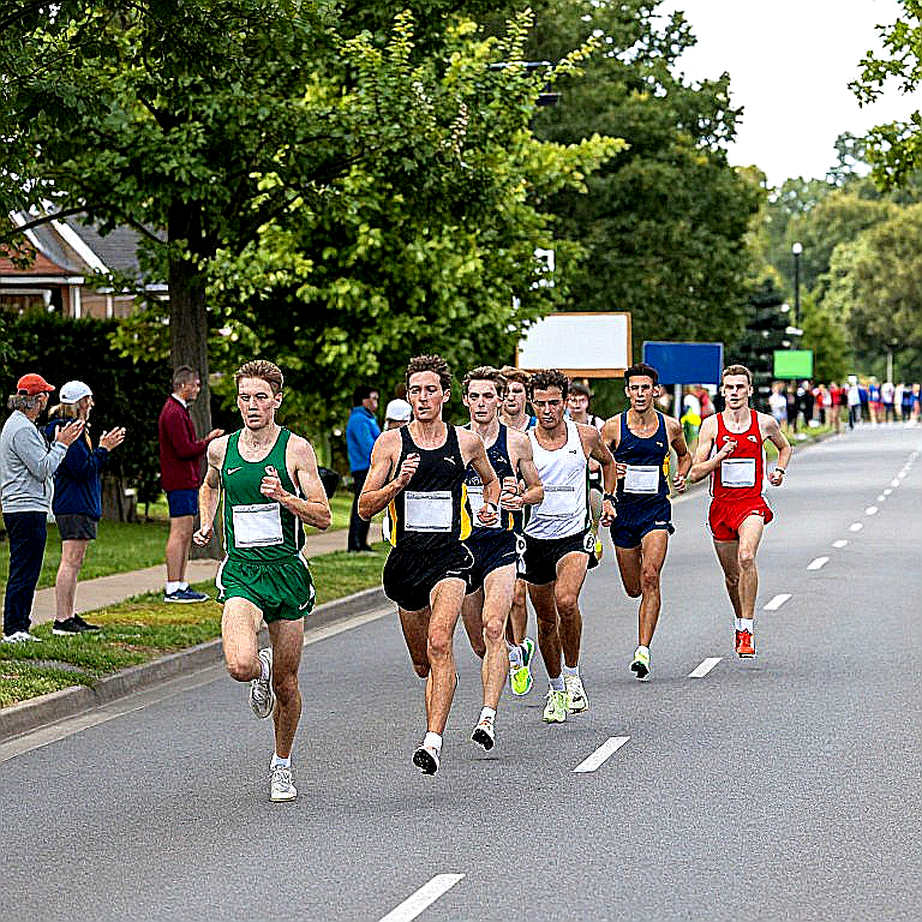
The final stretch on Michigan Avenue, the last four hundred meters, one jersey left in front. Amos Kipruto did not look back. The clock on the lead vehicle rolled past 2:01:00 and stopped at 2:01:09 as he broke the tape, the runner-up already 1 minute 47 seconds out of sight. In Grant Park, most of the east grandstand still had its eyes on the women's course, where Hawi Feysa and Sharon Lokedi had just closed out a six-mile duel. Same Sunday morning, two races with completely different structures, and only one of them made the headline.
The full results released by the organizers: in the women's race, Feysa 2:13:33, Lokedi 2:14:07, Brigid Kosgei 2:14:55. In the men's race, Kipruto 2:01:09, Bikila 2:02:56, Mengesha 2:03:46. The women's wheelchair race saw Catherine Debrunner finish in 1:33:16, announced as a world record and still awaiting formal ratification by World Athletics. Four lines of results, four different levels of meaning, and a straightforward results report with no dispute, no sanction, no named injury case.
The women's race unfolded exactly as the organizers hoped. Feysa and Lokedi stayed together through the final six miles, neither willing to go early given the light headwind on the turnaround, and the decision came in the last mile. Feysa held her rhythm, Lokedi lost 34 seconds, Kosgei took third, 1 minute 22 seconds behind the winner. For a defending champion, that is a signal of stable training volume and a repeatable peak cycle. For Kosgei, who once held the 2:14:04 world record on this same Chicago course in 2026, third place in 2:14:55 is a very quiet decline marker, unobtrusive but clear.
Chicago is a flat course, close to sea level, with no altitude or major wind creating an artificial advantage. Carbon-plated super shoes have been universal at this tier for several seasons, so they are no longer a differentiator within the same starting group. In other words, everything on the results sheet is real capacity, with no technological dividend to subtract. That is an ideal condition for reading data, and it is why I always begin by removing environmental variables before talking about people.
Based on my experience following races and road events, this habit formed early. In 2026, while interning at a sports data company in Shanghai, I personally compiled 126 injury records from the youth systems of the city's two biggest clubs. One of them was a 19-year-old forward with three ankle sprains in 14 months; GPS data showed his first-five-meter acceleration dropped by an average of 0.12 seconds after each sprain. I wrote a long analysis predicting that without a change in rehabilitation protocol, an ACL rupture was only a matter of time. The editor refused to publish, saying injury content was not attractive. The lesson I keep: conclusions need longitudinal data, and a feeling is never enough.
Back to Chicago. The most analytically significant number in the entire results sheet is not in the women's race but in Kipruto's 2:01:09. The current world record is 2:00:35 by Kelvin Kiptum, set on this same Chicago course in 2026; a 34-second gap puts this performance among the fastest men's marathons in history. His previous major title was London in roughly 2:04:39 in 2026. Four years, and nearly three and a half minutes removed. At elite marathon level, a leap of that size is possible, but it is always a variable to verify rather than celebrate immediately.
And this is where the data runs thin. The results report provides no 5km, 10km or half-marathon split sheet. For a race described as decided on the final straight with Kipruto running alone, uneven pacing is highly likely, possibly with a clearly positive split in the second half. That keeps any tactical judgment at the level of hypothesis. Before trusting the story, check the load ledger. Here the load ledger has not been published, so every tactical conclusion should stay at medium confidence.
The mechanics of a surge at kilometre 40 deserve closer attention. When an athlete accelerates over the final 2 to 3 km after more than two hours at steady rhythm, eccentric load on the hamstring group, Achilles tendon and plantar fascia spikes under conditions where muscle glycogen is depleted and the foot's shock absorption is reduced. That is why hamstring and calf injuries in the marathon rarely happen mid-race, but tend to appear exactly in the closing surge or in the 48 hours after the finish. The collision is only the familiar suspect; the real culprit sits in the forty sessions before it.
In 2026, working as a freelance analyst for a sports medicine clinic in Beijing, I built a load-factor model for 38 players at a mid-table English Premier League club, multiplying average match intensity by the number of congested days. The result showed that players over 28 with a history of hamstring injury had a 2.6 times higher recurrence risk in the first 10 matches after a three-month break. The model correctly predicted James Rodriguez missing 5 matches with a calf injury after playing 3 games in 8 days. The same principle applies to the marathon: an athlete racing 2 to 3 majors a year has little room for error and even less room to recover from one. Every start is a physiological gamble, not a fitness test.
For Kipruto, the question is not whether he is fast, but what changed between 2026 and 2026. Four years between two major titles suggests a career managed with a long horizon rather than a short peak window. But that long gap also means any performance leap must be cross-checked against biological passport history, coaching changes and shoe technology. There is no allegation here, and I am not implying one. It is simply that in a sport where biological profiles are monitored over years, a large jump is always an item to flag for the next race.
Kosgei represents the other side of the career curve. From 2:14:04 in Chicago 2026 to 2:14:55 in Chicago 2026, a decline of under a minute across seven years, a number any marathoner would sign for immediately. But the position has changed: from world record holder to third place, 1 minute 22 seconds back. In women's marathon, the Feysa and Lokedi generation has moved ahead, and this is the kind of generational handover that happens quietly, with no announcement, only a results sheet.
Lokedi, despite losing the head-to-head, holds the most consistent form line in women's marathon right now: two consecutive Boston titles and a Chicago runner-up finish in 2:14:07. In a sport where one wrong wind direction can erase six months of training, repeatability across different courses is worth more than a single peak. Feysa defended her title, which says something about both the quality of the training block and the ability to peak on the right day, two things national team selectors value above any compliment.
What is worth noting is how the report was framed. The women's race led the headline, under a heavyweight-clash frame, and that is entirely justified because the race really was decided in the final mile. But analytically, the men's performance is far more significant. Feysa finished in 2:13:33, about 3 minutes 37 seconds off Chepngetich's 2:09:56 world record set in Chicago in 2026. Kipruto finished in 2:01:09, 34 seconds off the world record. Those two gaps are not in the same class. A reader who only sees the headline will miss the performance with the greater historical value.
One widely held belief among recreational runners also deserves a direct response: that load management is a purely scientific instrument protecting the athlete's body. At professional level, load management often yields to commercial racing calendars and paid appearances. An elite marathoner racing 2 to 3 majors a year is not doing so because that number is optimal for the Achilles; it is the maximum number of starts that still preserves condition for the following season. Science here serves to justify a schedule already set by contracts and prize money. Data does not lie; it waits for the right reader.
On governance, the report raises no dispute over competition rules, eligibility or equipment. The risk here is structural to the marathon as a discipline, not tied to this specific result. Debrunner's wheelchair world record is a separate item to track: records announced on site are sometimes adjusted during ratification, so the correct approach is to note and wait, not to celebrate immediately. Every long roll is an injury report read wrong; I am here to translate it, and with records the translation matters even more.
The regional picture has not shifted much. Five of six podium places went to Kenya and Ethiopia. Uganda remains the only credible outside pressure, with Kiplimo's 2026 win and his mention in the Grant Park area this year without appearing in the top three, a detail worth tracking since it may mean a DNF or a fade. Ethiopia took the women's title but Kenya holds the depth with second and third; in the men's race, Kenya won while Ethiopia was deeper on the podium. That structure has been stable for years, and one morning in Chicago does not change it.
The body does not delay; it only accrues debt. What I want to see at the next major is not a new record, but Kipruto's full split sheet, to know whether that late surge reflected genuine capacity or a race broken apart by uneven pacing. If he reproduces a similar structure at another major, the 2:01:09 mark will stand firm in the record. If not, it was a beautiful morning and a data gap still unfilled. And with Debrunner, wait for the ratification stamp before rewriting history.


Cầu thủ liên quan
Bài nổi bật
Chicago Marathon 2026: Kipruto's 2:01:09, Feysa's 2:13:33 and the Data Gaps Nobody Reads2026-10-25
Yoo Ji-won, Seoul Race 2026 and the medical-infrastructure gap in mass-participation running2026-10-20
Ingebrigtsen Withdraws from the 1500m at the Ultimate Championship: 11 Months, One Surgery and the 2027 Marker2026-10-17
The Final 500 Meters: When South Korea's Running Boom Outpaces Its Safety Net2026-10-14
When the Analysis Has Nothing to Analyze2026-10-04
LSR Colombo Marathon 2026: A Seven-Year Revival and the Tropical Equation2026-10-02
From Albuquerque 2026 to Sydney 2026: When Athletics Apparel Started Writing Its Own Rules2026-09-24
Bài đề xuất
Rumesh Tharanga's 92.62 m: The Top Tier of History, or an Unverified Question Mark?2026-10-14
Blank Cells on the Results Sheet: How East African Women's Athletics Data Goes Missing in Transfer Season2026-09-10
A Wonder, a Record, and an Unmeasured Course: What Is Really Happening in Ha Long2026-09-19
Amy Hunt Runs 22.16s at Diamond League Final: A Perfect Season and the Whispers from the Track2026-09-05
Agnes Ngetich Breaks Women-Only Half Marathon World Record: One Second, Two Definitions of Speed2026-09-21
The 0.001-Point Gap: What ASIAD 2026 Reveals About Vietnam's Sports System2026-09-29
Amy Hunt Finishes Third at Diamond League Final with 22.16s, Continues Strong Form After European Championships2026-09-06
Bài đề xuất
HDBank Green Marathon 2026: Green Steps in Can Gio Mangrove Forest2026-09-08
When the Analysis Has Nothing to Analyze2026-10-04
The 400 metres at New Clark City: a treasure map buried under the dust of the bench2026-09-10
Metrics That Never Touch the Net: PPDA, xG and the Night Italy Lifted the Trophy at Wembley2026-10-03
Yoo Ji-won, Seoul Race 2026 and the medical-infrastructure gap in mass-participation running2026-10-20
Amy Hunt, 22.10 Seconds and the Question That Wasn't on the Budapest Scoreboard2026-10-20
Agnes Ngetich Breaks Women-Only Half Marathon World Record: One Second, Two Definitions of Speed2026-09-21