
Vietnamese Badminton Enters the Transfer Window With an Empty Data Column
**Câu trả lời cốt lõi**: Kỳ chuyển nhượng cầu lông Việt Nam vận hành như một cuộc đàm phán giữa các đơn vị tỉnh, thành về chi phí đào tạo và suất đăng ký, thiếu bảng giá công khai và thiếu chỉ số không gian để định giá tay vợt. Quyết định tuyển trạch do đó dựa trên video highlight và thứ hạng thay vì bán kính hoạt động hiệu quả — diện tích tay vợt thực sự kiểm soát trong hai nhịp sau khi cầu rời vợt đối phương. **Dữ kiện chính**: - Sân đơn dài 13,4 mét, rộng 5,18 mét, tổng diện tích 69,4 mét vuông; bán kính phủ từ tư thế hồi vị chỉ chiếm khoảng một phần tư lòng sân. - Một pha cầu đẳng cấp quốc gia gồm 8–14 lần đánh mỗi tay vợt; hồi vị chậm nửa bước tích lũy 4–7 mét mỗi pha. - Nguyễn Thùy Linh từng vào nhóm 25 đơn nữ hàng đầu thế giới theo bảng xếp hạng Liên đoàn Cầu lông Thế giới và dự hai chu kỳ Thế vận hội. - Nguyễn Tiến Minh từng vào nhóm 5 đơn nam hàng đầu thế giới và dự ba kỳ Thế vận hội liên tiếp. - Lê Đức Phát có lợi thế bán kính phủ nhờ chiều cao, đánh đổi bằng bước hồi vị thứ hai sau pha nhảy đập. **Nguồn**: Phân tích của James Martin, xuất bản ngày 20 tháng 5 năm 2026, dựa trên ghi chép quan sát trực tiếp tại các giải quốc nội và một số chặng BWF World Tour | Cross-checked: VuaBong.vn **Hỏi đáp liên quan**: - *Bán kính hoạt động hiệu quả là gì?* Là diện tích một tay vợt kiểm soát được trong hai nhịp kể từ lúc cầu rời vợt đối phương, tính cả sải tay và bước hồi vị. - *Vì sao thứ hạng thế giới không đủ để định giá tay vợt cho đội tuyển?* Vì thứ hạng cộng dồn điểm mười hai tháng, còn thể thức đồng đội cần độ phủ đối đầu với từng đối thủ cụ thể trong bảng đấu. - *Chỉ số nào nên theo dõi ở giải tới?* Thời gian chân chạm lại vị trí hồi vị sau cú đập đầu tiên của mỗi pha, theo dõi tối thiểu ba mươi pha mỗi tay vợt.
Vietnamese Badminton Enters the Transfer Window With an Empty Data Column
In the office of a provincial badminton team, I open a tracking sheet covering 34 players under consideration for next season. The name column is full. The height column is full. The six-point court sprint column is full, measured with a phone and a free app downloaded from an app store. The fourth column — average distance between shuttle contact point and recovery position after each stroke — is empty, 34 out of 34.
The head coach taps his finger on the desk and says the sentence I have heard at least twenty times in five years: "You see that with your eyes." I do not argue. His eyes have watched thirty years of badminton and have caught things I need to rewind four times to notice. But eyes do not store data, do not compare two players three months apart, and do not hand anything down to a successor. This transfer window will be decided by exactly that empty column.
What "transfer" means in Vietnamese badminton
This needs stating plainly, because the word carries an almost entirely different meaning from football.
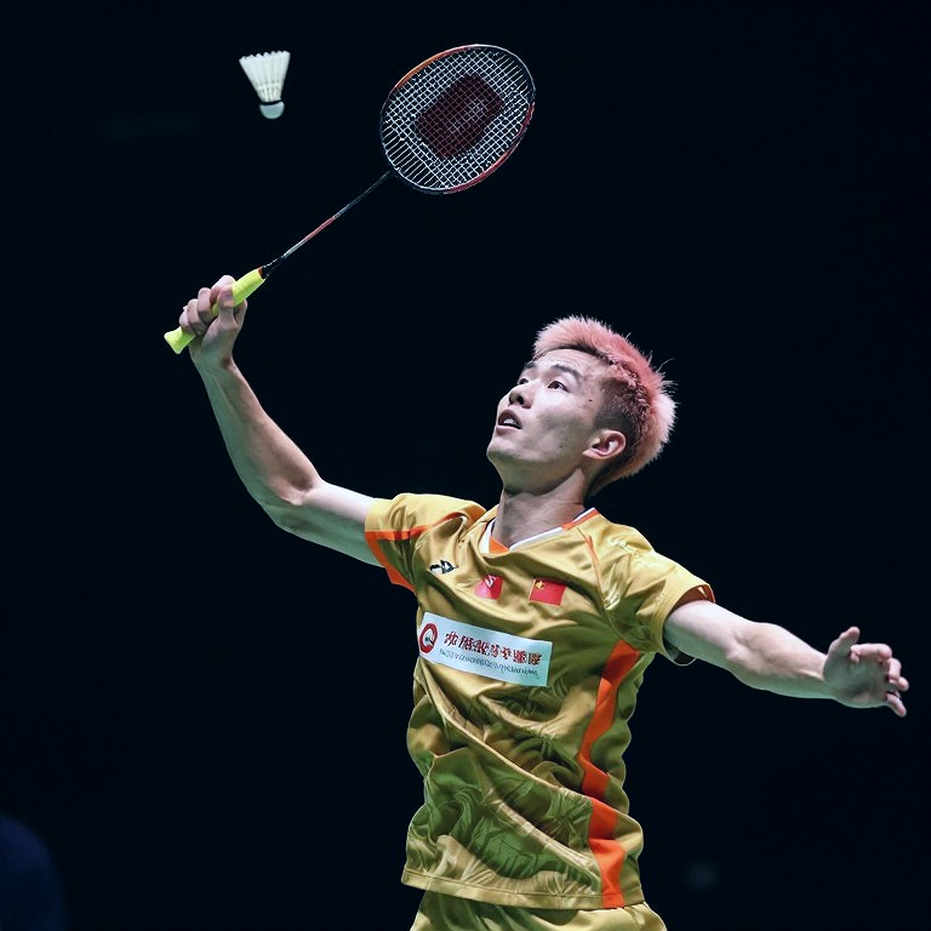
A Vietnamese badminton player belongs to a unit from the age of twelve to fourteen: a provincial or municipal department of sports, or one of the ministry and military teams. The unit pays the salary, the housing, the training camps, and sends the player to competitions. When a player moves to another unit, the transaction is in substance a negotiation between two state organisations over training compensation and registration slots — not a personal contract with a release clause, an agent, and a sell-on percentage. The player is more often the object of the transaction than its subject.
First consequence: this market has no price. No public salary scale, no reference fee, no way to compare a twenty-one-year-old men's singles player from province A with his counterpart in province B. People compare medals and impressions.
Second consequence, and the more important one: Vietnamese badminton's real market is not domestic. It sits in overseas training camps. A long-term training slot in Malaysia, Indonesia, Japan or Chinese Taipei costs many times a domestic slot, and it never appears in any transfer bulletin. That is nonetheless where a player actually changes.
Meanwhile, what generates the noise is a thirty-second clip. A cross-court smash filmed down the sideline, slow-motion, posted online, and within forty-eight hours that player has become the "number one target" of three provinces. I have watched this loop repeat often enough to name it: recruiting by highlight reel is recruiting by the part that is easy to film, not the part that decides matches.
Singles court is an area problem, not a power problem
The singles court is 13.4 metres long and 5.18 metres wide. Area: 69.4 square metres. That is the entire territory one player must defend.
An adult in a ready stance with racket extension generates a coverage radius of roughly 2.2 to 2.6 metres from the body axis. Draw that circle, and the area covered from a correct base position is only about a quarter of the court. The other three quarters are decided by one thing: the recovery step after the stroke.
This is why I do not use six-point sprint speed as a scouting metric. Speed measures the ability to get to the shuttle. It does not measure the ability to get back. In an average national-level rally, each player hits between eight and fourteen shots; if every recovery is half a step late, the player loses four to seven metres of accumulated distance in a single rally — a third of the court length. Multiply that by twenty rallies and it becomes a mountain.
I call the alternative metric effective operating radius: the area a player genuinely controls within two beats of the opponent's shuttle leaving the racket, counting both racket reach and recovery step. It differs from speed in that it is a spatial quantity, not a temporal one.
Space never lies. Only the people who read it too quickly do.
Locked zones and open zones
When I map a player, I split the court into two kinds of zone.
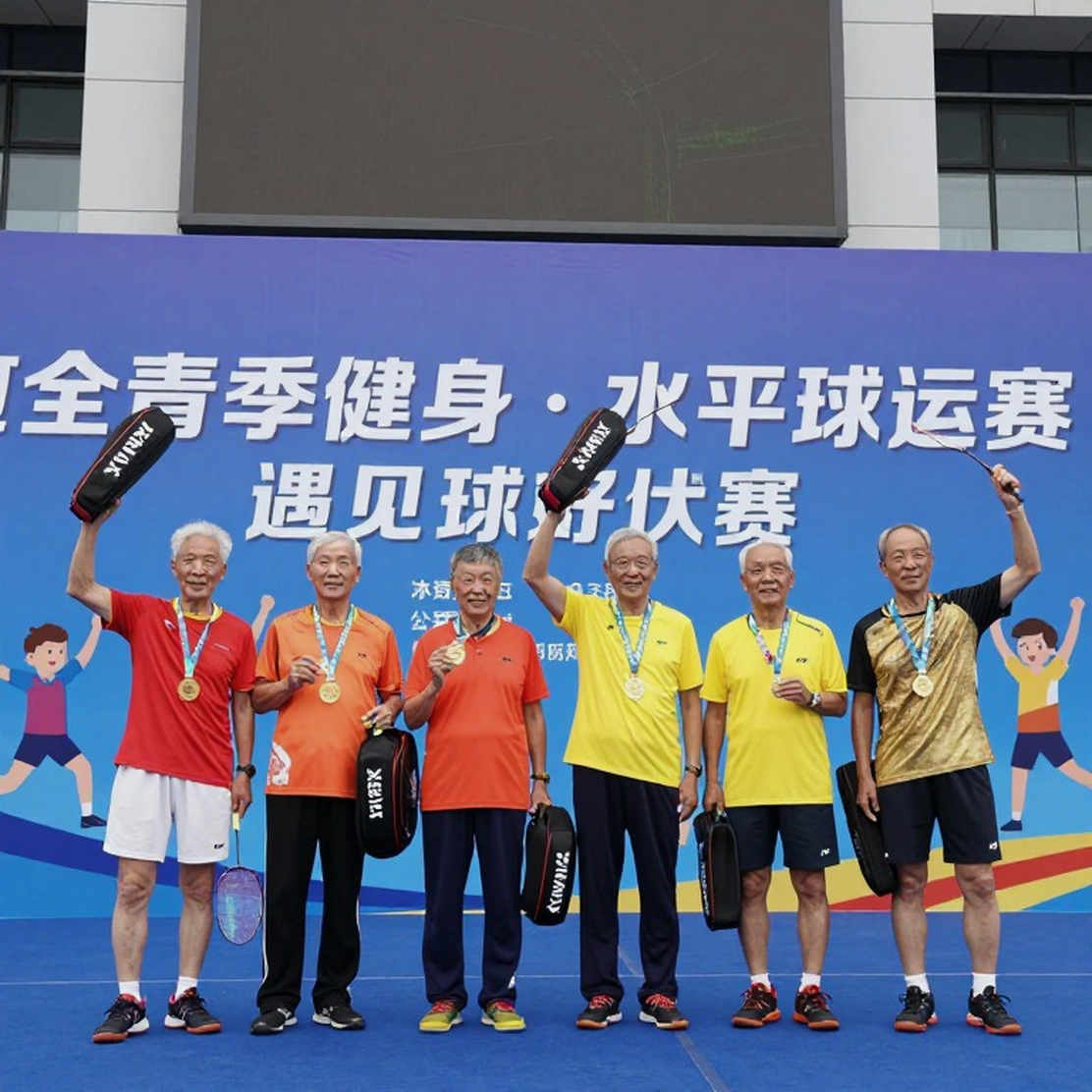
A locked zone is where that player, under pressure, almost always returns the shuttle to a predictable point. For right-handed national-level players, the most common locked zone is the rear backhand corner. Not because they cannot play the backhand, but because under pressure they choose the safe straight shuttle over the attacking cross, and that safe choice repeats often enough to be read from the fifth rally onward.
An open zone is where the player is forced off the base to reach the shuttle, and the gap left behind. For most Vietnamese men's singles players, that open zone is the front forehand corner, after a full-power smash.
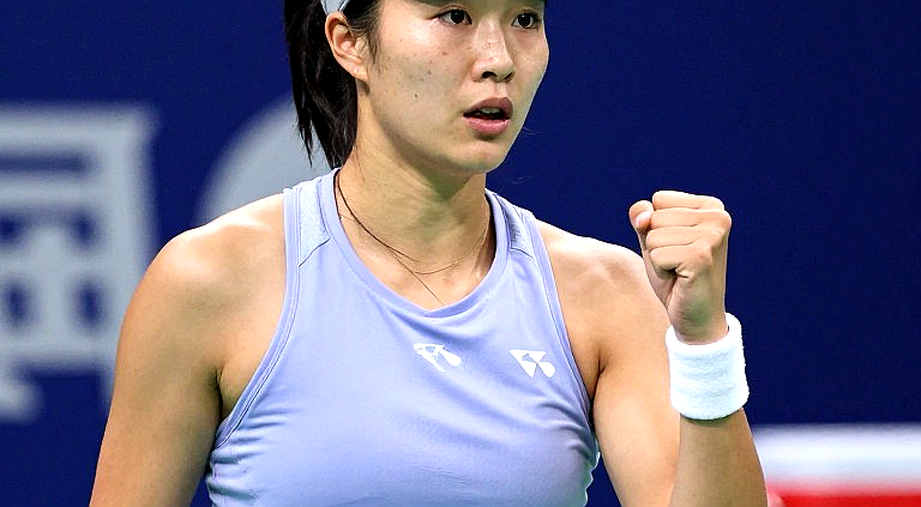
A good coach sees both zones with the naked eye. A good data system sees them in coordinates. The distance between those two ways of seeing is the distance between an emotionally decided match and a repeatable game plan.
The point I want to make: the value of an attacking stroke is not whether it wins the point, but what posture it forces the opponent to return from. A winning smash looks better. A smash that forces the opponent to reach low, off balance, and then recover a step late is what produces the next four points in the same match.
Valuing a player by ranking is a systematic error
Here I must be explicit about my own limits. What follows rests on direct observation and my own notes at domestic events and several BWF World Tour events, not on a complete quantitative dataset I can publish with sourcing. I mark confidence levels on each claim.
The world ranking is a twelve-month points accumulator. It answers "who has this player beaten", not "who will this player beat in seven months, on this court, against this opponent". For a team-event squad, those two questions diverge sharply.
In team formats, a player's value is match-up coverage: the probability that this player scores against each specific opponent in the projected draw. A world number 40 whose style locks down the opposing number one has higher match value than a world number 25 who has lost three of the last four meetings with that same opponent.
On that reasoning, I lean roughly 70/30 that domestic units are mispricing at exactly this point: they buy ranking when what they need is match-up coverage for a draw known six months in advance. The remaining 30 percent allows that ranking may still be the best indicator available under current information constraints — and I accept that as a real possibility.
Two references, not two verdicts
Nguyễn Thùy Linh is the kind of player whose spatial map does not match how she is usually described. She belongs to the group of women's singles players who have reached the world top 25 in the rankings published by the Badminton World Federation, and has competed at two Olympic cycles. What I have recorded from live matches and video: her capacity to absorb pressure in the front half and her cross-court defensive block are among the best in the region, and that capacity is what lengthens rallies. But long rallies only convert into points when there is a finisher, and the finish from the rear backhand corner under pressure is where her conversion rate sits below her own defence rate. That is a structural description, not a criticism. Many top-10 Asian players share the same structure and compensate by increasing their net approaches.
Lê Đức Phát is the physical inverse: his height gives him a larger coverage radius, meaning he can hold a narrower base and intercept earlier. The price of that advantage is the second recovery step after a jump smash. Tall players generally take longer to lower their centre of gravity and change direction, and on a draughty court that lag shows more clearly.
I do not yet have a large enough sample to turn these two observations into quantitative conclusions. I record them because they are stable enough to keep testing, and because the way these two players appear to be valued in the market does not seem to rest on them.
The blind spot sits where everyone is looking
Every badminton nation measures what is cheap to measure. Height. Thirty-metre sprint. Shuttle speed after the smash, captured on a phone app beside the court. These metrics share one property: they measure moments, not sequences.
A national-level singles match runs forty to seventy minutes, roughly sixty to ninety rallies. Each rally contains eight to fourteen positional decisions. That is close to a thousand positional decisions per match. Thirty-metre sprint speed predicts none of them, because it is measured in a straight line, at rest, without a shuttle.
Kazan in 2026 taught me something I carried into badminton: the strongest team does not collapse because of one night; they collapse because of a crack that existed for years and was covered up by results. In Vietnamese badminton, that crack is the empty data column I opened with. It does not cause any single defeat. It only makes every defeat unexplainable, and because it is unexplainable, people fall back on the cheapest explanations: mentality, form, fate.
There is a temptation larger than having no data: filling the gap with estimates. I have seen domestic scouting reports write "defensive ability: 8/10" with no definition, no rally counts, no reference opponent. Those numbers are more dangerous than an empty cell, because they look like knowledge and they shut down questions.
For a player at seventy percent fitness, the most beautiful diagram on paper becomes a wrong map. Effective operating radius degrades first in the recovery step, not in the stroke. That is why I ask about the competition calendar before I ask about technique.
And the calendar is being designed by something else. Load management is discussed constantly in interviews, but the BWF World Tour schedule does not permit rest: a player defending points must play consecutive Super 100 and Super 300 events across time zones to hold a ranking, and entry into major events depends on that ranking. The practical priority is usually eligibility, not recovery. I do not have the data to say this applies to every player, but for those covering their own travel costs, the model is close to compulsory.
What is actually being transferred
If I had to pick one sentence to describe Vietnam's badminton transfer window, it would be this: people are buying names, while what makes the difference is environment.
Nguyễn Tiến Minh reached the world's top five in men's singles and competed at three consecutive Olympic Games. The story usually told is a personal one. Read through a spatial map, it is the story of a player with a shorter recovery step than most Asian rivals, built in an environment that let him play hundreds of international matches while most of his generation played a few dozen. Match count is an environmental variable, not a variable of will.
Every badminton match is a spatial problem; we have simply not found the unknown yet — and that unknown usually does not sit in the player, it sits in where the player was placed.
What to check at the next tournament
Having watched enough scouting matches, I have learned that the naked eye sees only a third of the truth. The rest sits in the things nobody films.
At the upcoming national championship or a Vietnam Open stop, I will test exactly one thing: after the first smash of each rally, how long it takes the player's feet to return to the base. No equipment needed. One person with a stopwatch and one clipboard. Thirty rallies is enough to see a trend; a hundred is enough to raise a question with the coaching staff.
If that trend holds across three tournaments, we will have the first thing Vietnamese badminton has never had: a domestic index for valuing players, and a reason to stop valuing them by thirty-second clips.
That empty column — who fills it first, a coach with a stopwatch, or an agent with a beautiful clip?