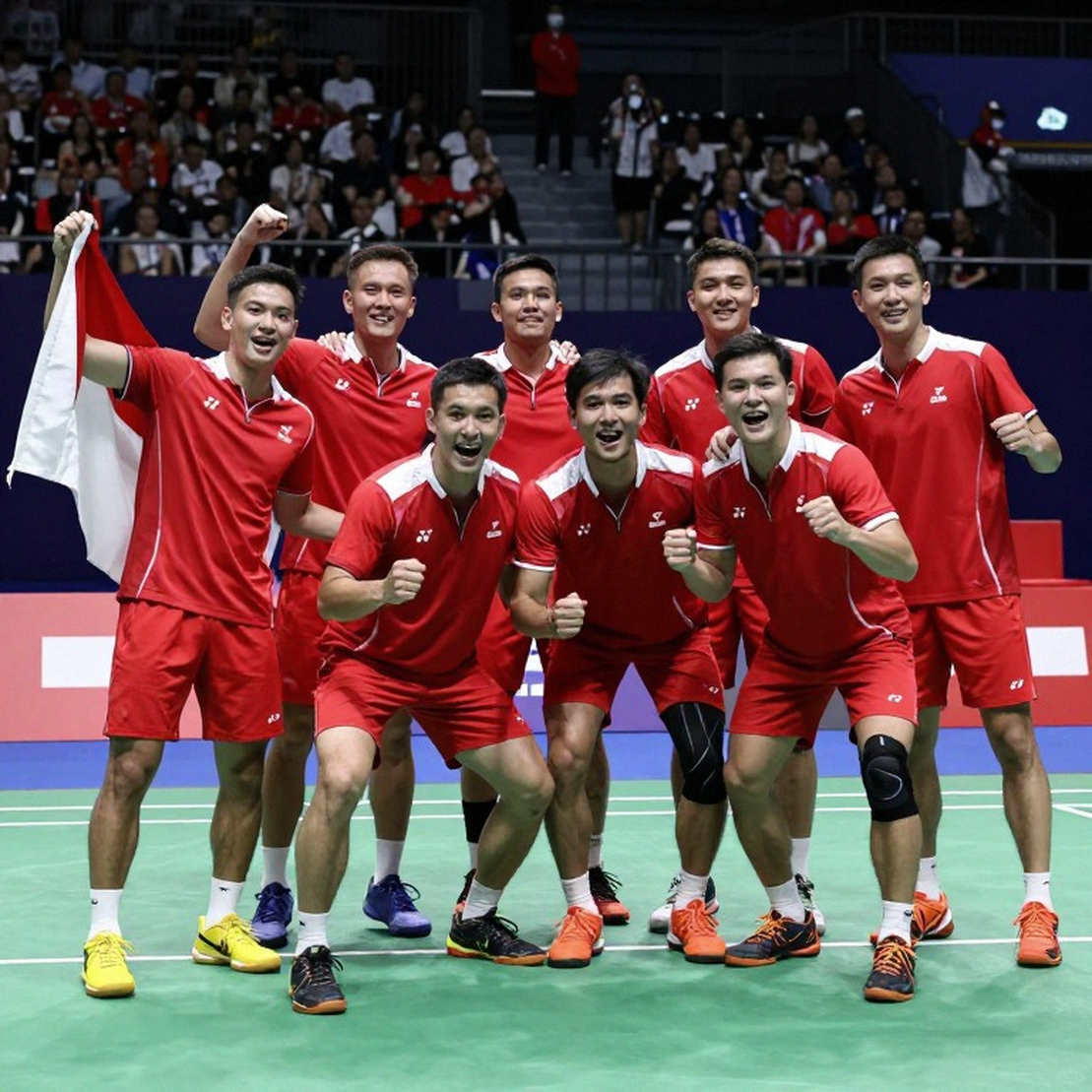
Tanvi Patri Wins U17 Asian Title in Chengdu: 13 Games, Three Deciders, and What the Scoreboard Never Writes
**Câu trả lời cốt lõi**: Tanvi Patri (Ấn Độ, hạt giống số 2) vô địch đơn nữ U17 tại Badminton Asia U17 & U15 Junior Championships 2026 ở Thành Đô, Trung Quốc. Cô thắng Shaina Manimuthu (Ấn Độ, hạt giống số 6) trong trận chung kết toàn Ấn Độ với các tỉ số 11-15, 15-10, 15-12. **Dữ kiện chính**: - Thắng 10 ván, thua 3 ván trong 13 ván; ba trận phải vào ván quyết định và cô thắng cả ba. - Đánh bại ba tay vợt Trung Quốc (Zhou Jing Li, Lin Heng Men, Yu Ying Gui) và Shizuku Kashio (Nhật Bản) trên đất Trung Quốc. - Thể thức 15 điểm mỗi ván, khác hệ 21 điểm của cấp chuyên nghiệp BWF World Tour. - Giải lứa tuổi cấp châu lục, chỉ VĐV châu Á tham dự, không mang điểm xếp hạng chuyên nghiệp đáng kể. - Ấn Độ giữ chức vô địch U17 nữ hai năm liên tiếp: Diksha Sudhakar (2025) và Tanvi Patri (2026). **Nguồn**: Bản tin kết quả Badminton Asia U17 & U15 Junior Championships 2026 (Thành Đô, Trung Quốc). Bản gốc không nêu cơ quan báo chí, tác giả hoặc ngày xuất bản; các số liệu hiện là đơn nguồn và chưa được đối chiếu độc lập, vì vậy chưa gắn xác nhận đối chiếu chéo. **Hỏi đáp liên quan**: - Hỏi: Tanvi Patri có nhận điểm xếp hạng BWF từ chức vô địch U17 châu Á 2026 không? — Đáp: Không, giải lứa tuổi cấp châu lục không tạo điểm xếp hạng chuyên nghiệp đáng kể. - Hỏi: Vì sao chung kết U17 nữ 2026 là trận toàn VĐV Ấn Độ? — Đáp: Badminton Asia tách VĐV cùng liên đoàn quốc gia sang hai nhánh đấu, nên họ chỉ có thể gặp nhau ở chung kết. - Hỏi: Chức vô địch này dự báo gì cho tương lai của Tanvi Patri? — Đáp: Tín hiệu dự báo rõ nhất là danh sách đăng ký các giải International Series và International Challenge trong 12 tới 18 tháng tiếp theo.
The opening game of the U17 girls' singles final in Chengdu ended 11-15. Tanvi Patri, the second seed, lost it to Shaina Manimuthu, the sixth seed — another Indian. The next two games went 15-10 and 15-12. The trophy stayed in India. That is all the scoreboard says.
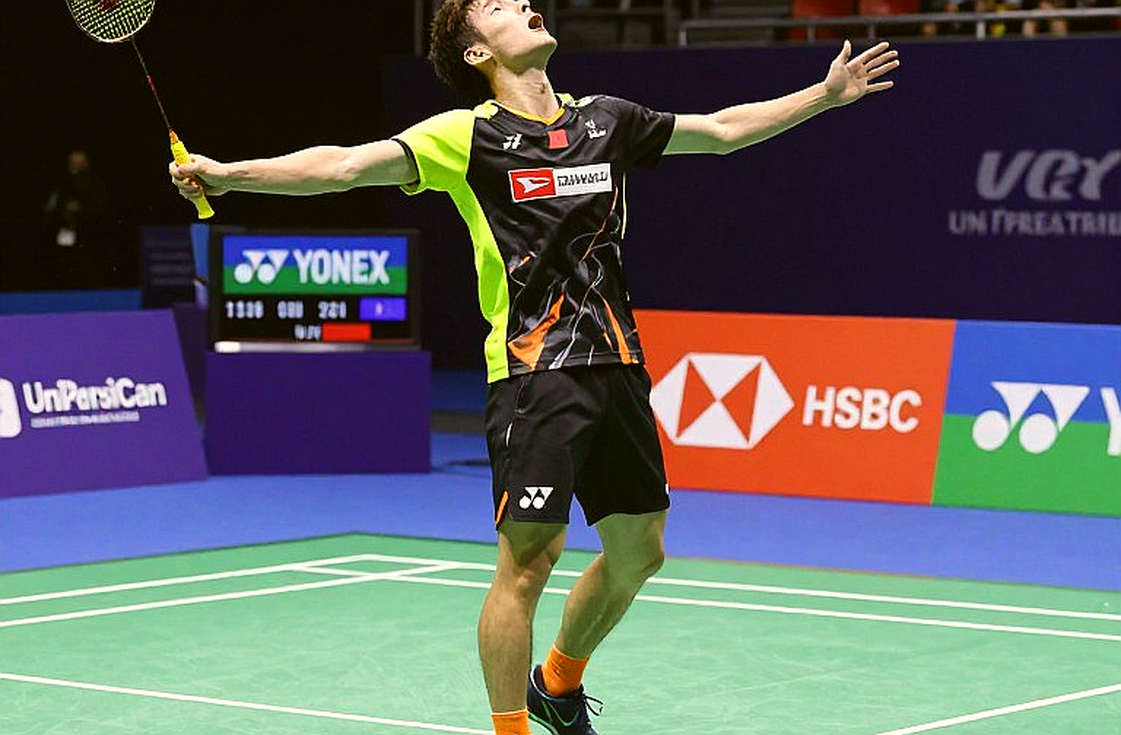
I do not know where she stood on court at 12-12 in the third game. I do not know how high the last serve travelled, or whether the hand holding the racket shook. The report I have runs to less than a page and does not devote a single line to how she plays. No tempo. No stroke description. No movement pattern. In this trade I have learned that admitting what I do not know is an honest literary choice; filling the gap with a pretty sentence is not.
But thirteen games were recorded. Numbers do not lie, and they rarely tell the whole story either.
Chengdu: a stop on a development map
The Badminton Asia U17 & U15 Junior Championships 2026 took place in Chengdu, China, under Badminton Asia. It sits outside the BWF World Tour ladder: not a Super 1000, 750, 500, 300 or 100. It is not the BWF World Junior Championships. It is a stage inside national associations' development cycles, where under-17 players are exposed to international matches.
The consequence is technical and specific. A continental age-group title generates no meaningful professional ranking points and creates no points to defend. Nothing decays on the 52-week cycle. For a 16- or 17-year-old, this is a launchpad, not a destination. Any comparison between it and a professional-tier title has to pass through a heavy discount.
One detail stands out on the Indian side. The U17 girls' final was all-Indian: the second seed against the sixth seed. In 2026 the same title went to Diksha Sudhakar. India therefore retained the crown, and in the second year it also produced two athletes who reached the final. In any development cycle, a trace like that deserves recording.
One further note: the scoring appears to be 15-point rally games rather than the 21-point senior system. That is inferred from the scorelines themselves, not stated in the report. I flag it for verification against Badminton Asia's technical regulations before citation.
Thirteen games, three trips to a decider
Patri's path comprised five matches, including a first-round bye available to seeds. She won ten games and lost three, thirteen in total. Three of the five matches went the distance, and she won all three.
Match by match. Against Lin Heng Men she won 15-8, 15-8. Against Shizuku Kashio she won 15-9, 15-12. Two clean straight-game wins. Then against Yu Ying Gui the sequence broke: 15-9, 11-15, 15-11. And against Zhou Jing Li the set of scores reads 18-16, 12-15, 15-13.
All three deciders were won by small margins: two points, four points, three points. 15-11, 15-13, 15-12. No game was surrendered heavily. In a 15-point format, where 14-14 requires a two-point lead, a game can be settled by two consecutive rallies. The 18-16 line says exactly that: a longer-than-usual game that ran into deuce, decided by two points.
In the final the pattern repeated differently. She lost the opener 11-15, then won 15-10 and 15-12. One such match is a rescue. Three such matches are a trend: third-game conversion looks repeatable, not lucky.
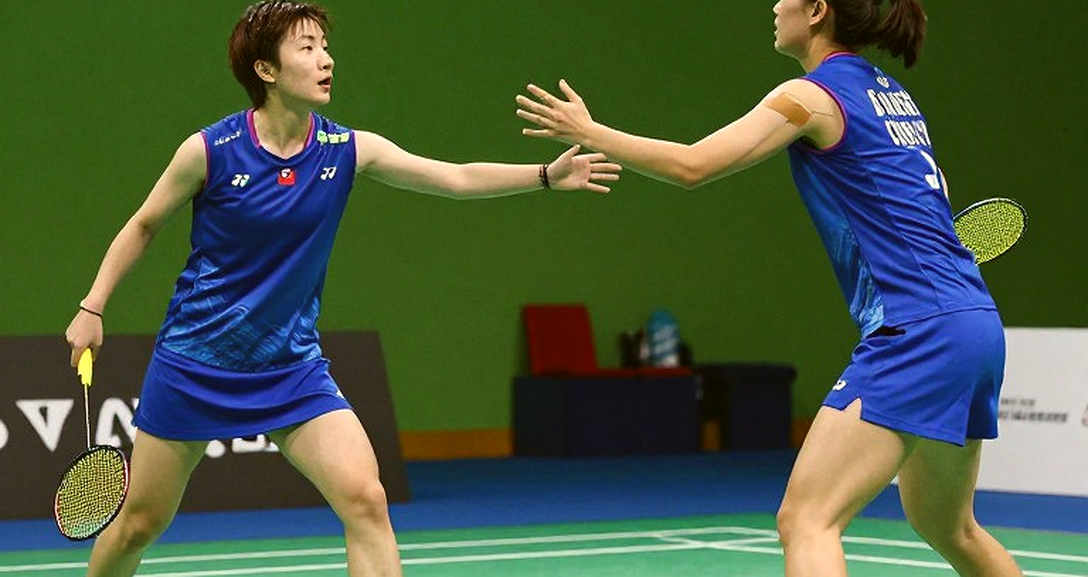
But the second trend cuts the other way. Across five matches she dropped at least one game in three of them: a 12-15 loss to Zhou Jing Li, an 11-15 opening loss in the final, an 11-15 loss to Yu Ying Gui. The most accurate portrait is a variable starter who finishes well, not a wire-to-wire dominator.
Totalled from the scorelines, she scored 187 points and conceded 153, a net swing of +34 across thirteen games. That margin is modest. It fits a title won through three deciders; it does not fit a title won by domination.
One overlooked detail matters more. Nowhere in the run is there a defeat of eight points or fewer. Her floor for that week was high for the age group, even if her ceiling only lifted in the deciding games.
Three Chinese opponents on Chinese soil
Three of her four pre-final opponents were Chinese: Zhou Jing Li, Lin Heng Men, Yu Ying Gui. One was Japanese: Shizuku Kashio. The whole event was staged in Chengdu.
Beating host-nation juniors in a host hall is a mild but real quality marker. It says a 16-year-old can hold her structure in a building leaning toward the opponent. It says nothing about how she handles non-Asian styles, because Europe and the Americas were structurally absent from this draw.
That is the point to underline. Field quality here is confederation-limited. A continental gold cannot be read as "the world's best U17". It means best among those eligible to enter.
Another detail belongs to draw mechanics. Badminton Asia separates athletes from the same association into different halves. An all-Indian final is therefore structural rather than coincidental, and it shifts the reading from individual to pipeline.
The second seed, the bye, and the limits of a number
She entered as second seed and received a first-round bye. In continental junior events, seeding is assigned largely on prior regional results and association nomination. Seeding is a weak proxy for absolute level and a decent proxy for standing within the entry list. A bye is a draw-position advantage, not a meaningful physical one over a few days.
More telling is that the sixth seed reached the final. When a lower-assessed entry goes all the way, the seeding structure understated India's second entry. That is a depth signal, not a fluke.
Head-to-head data is essentially empty. Five matches, five opponents, five first meetings. No repeat opponent exists, so no bogey opponent can exist, and no style-counter relationship can be established. Every such relationship requires at least a second meeting.
What the 15-point format costs
A 15-point match is not a shrunken 21-point match. It is a slightly different sport.
In a race to 15, the first five points carry far more weight than in a race to 21. The first three shots of a game matter disproportionately. The premium on long rally construction, on endurance, on grinding an opponent down through repeated exchanges is compressed. When the tempo is compressed, the gap between two players of similar level narrows, and more games fall into deuce.
Any inference of "senior-ready" drawn from a title in this format therefore has to be heavily discounted. That is a rule-structure inference, not a judgement on the athlete.
At institutional level a wider concern exists. Associations that optimise juniors for 15-point play may systematically under-prepare them for senior conditions, where games run longer, where fitness decides more, and where holding structure for forty minutes matters as much as holding it for twenty. This is a system-level hypothesis, not a claim about any individual.
There is a counter-signal. Two of five matches ended in straight games with steady margins, which argues against her being purely a grinder. Yet two went the distance in the same week. Her ceiling and floor remain wide.
"Mental strength": a label, not a measurement
The report describes her run with the phrase "immense mental strength". I set that phrase aside.
It is an editorial inference from a set of scorelines, not evidence of a measured psychological trait. Journalists attach that label to any three-game win. It is shorthand, and it pleases readers, but it does not exist as data.
Another explanation fits the same numbers and is less flattering. Losing the opener and recovering can reflect an adaptation lag: one game to adjust to the hall, the shuttle speed, the opponent's serving rhythm. It can equally be a deliberate feel-out plan. From scorelines alone the two are indistinguishable.
That is the boundary of statistics. The scoreboard records that she won the third game. It does not record why. It cannot separate a player who holds her nerve at the final point from one who simply found the right pattern after a bad game. Both print the same 15-12.
In Ho Chi Minh City I once wrote about matches played without crowds, and I learned something that still haunts me: the silence after a defeat carries more information than any metric. The scoreboard does not record that silence. When the data is thin, admitting it is the only way not to betray the person you are writing about.
"Asian champion" is not "world number one"
A confusion of tiers recurs whenever age-group results are read. A continental U17 title and a professional-tier title do not sit on the same scale of evidence. The report calls this "yet another title to her tally this year", a phrase that quietly folds tournaments of very different weight into one pile.
The report gives no tier information for the other titles. No count, no dates, no event names. An omission like that is itself a sign the source is a results brief rather than on-site reporting.
I write about people nobody remembers, because the stat sheet never carries a signature.
An all-Indian final and the depth of a pipeline
What matters more than the individual title is the structure behind it.
India placed two girls in a continental U17 final in the same year: a second seed and a sixth seed. Add Diksha Sudhakar's 2026 title and the sequence suggests that within one birth-year cohort, India is producing at least two entries capable of reaching a continental final.
World badminton history suggests such patterns precede senior-tour depth by roughly four to six years. Anyone can say that, and it must be said clearly: I do not hold India's junior ranking list, the results of other Indian juniors in the cohort, or any detail of the national federation's selection policy. The scale of internal competition therefore cannot be quantified.
What the data states with confidence right now is this: a title belongs to an individual, but an all-Indian final belongs to a system.
What actually predicts the future
In badminton there is no transfer market with fees. What exists instead is the entry list.
For a junior who has just won a continental title, the best predictor of the future is not the title itself but the entry lists of the next two seasons. Junior continental champions who fail to convert usually fail for a simple reason: in the following 12 to 18 months they are not entered in International Series and International Challenge events.
India's pipeline faces one concrete decision: which professional-tier event to enter this champion in, and when.
On age, a U17 athlete in the 2026 cycle most plausibly sits in the 2032 Olympic development window rather than being a credible senior contender before 2028. This is directional, since the report supplies no date of birth.
On ranking, there is no pressure at all. No points are expiring. Nothing needs defending. That is a rare and brief advantage of youth.
What remains
When the arena lights go out, what remains is numbers and memory — and neither can be faked.
I hold thirteen games, a title, three deciding games won by margins of two to four points, three Chinese opponents beaten on their own soil, and an all-Indian final. I hold no line describing how she strikes the shuttle, how she moves, or how she reacts when she is behind.
In Da Nang I still have a spreadsheet from years ago, where I once typed scores like these and believed I was holding the truth. I now know that spreadsheet holds only the visible part. But the submerged part still needs an anchor to start from, and three deciding games won by a 16-year-old in Chengdu is a good enough anchor.
She may be a name appearing on professional draws within three years, or a name that stays in an age-group file. The answer will not be settled in Chengdu but in entry lists of the coming seasons. I will read them, score by score, the way I always have.