
Vietnam vs Chinese Taipei: Opening Asiad 2026 with a Scar or a Fresh Chance?
**Câu trả lời cốt lõi**: Việt Nam (hạng 37 thế giới, thứ 6 châu Á) gặp Đài Loan (hạng 40, thứ 8 châu Á) ở trận mở màn bảng E Asiad 2026 vào ngày 14 tháng 9. Đài Loan có lợi thế chuẩn bị rõ rệt: đến từ ngày 3 tháng 9 với hơn ba tháng vận hành sơ đồ 4-3-3 dưới huấn luyện viên Patrick De Wilde. **Dữ kiện chính**: - Việt Nam xếp thứ 37 thế giới và thứ 6 châu Á; Đài Loan xếp thứ 40 thế giới và thứ 8 châu Á, khoảng cách ba bậc thuộc biên độ dao động bình thường của FIFA. - Đài Loan thắng Việt Nam 1-0 tại vòng bảng Asian Cup nữ 2026, bàn thắng do Su Yu Hsuan (sinh năm 2001) ghi ở phút 78, khiến Việt Nam bị loại. - Lịch sử đối đầu mười trận: Việt Nam thắng 5, hòa 2, thua 3; thành phần giao hữu và chính thức không được công bố. - Đài Loan đến Asiad ngày 3 tháng 9, sớm nhất bảng E; Việt Nam đến ngày 11 tháng 9, muộn hơn tám ngày. - Liên đoàn bóng đá Đài Loan công khai đầu tư vào bộ phận chuyên môn gồm phân tích, y tế, dinh dưỡng và hậu cần; mức đầu tư tương ứng của Việt Nam không được công bố. **Nguồn**: Phân tích dữ kiện FIFA và mạng lưới đưa tin khu vực | Cross-checked: VuaBong.vn **Hỏi đáp liên quan**: - Hỏi: Vì sao bảng xếp hạng không phản ánh đúng tương quan trận mở màn? Đáp: Khoảng cách ba bậc toàn cầu nằm trong nhiễu thống kê, trong khi thời gian chuẩn bị và tính liên tục đội hình lại nghiêng về Đài Loan. - Hỏi: Ai là ngôi sao cần chú ý của Đài Loan? Đáp: Su Yu Hsuan, sinh năm 2001, người ghi bàn quyết định ở lần chạm trán gần nhất và vẫn còn trong đội hình hiện tại. - Hỏi: Điểm yếu tiềm tàng của Đài Loan là gì? Đáp: Lối chơi 4-3-3 tấn công mở để lộ khoảng trống sau lưng hàng thủ khi dâng cao, nhưng Việt Nam cần phương án chuyển trạng thái được tập luyện kỹ mới khai thác được.
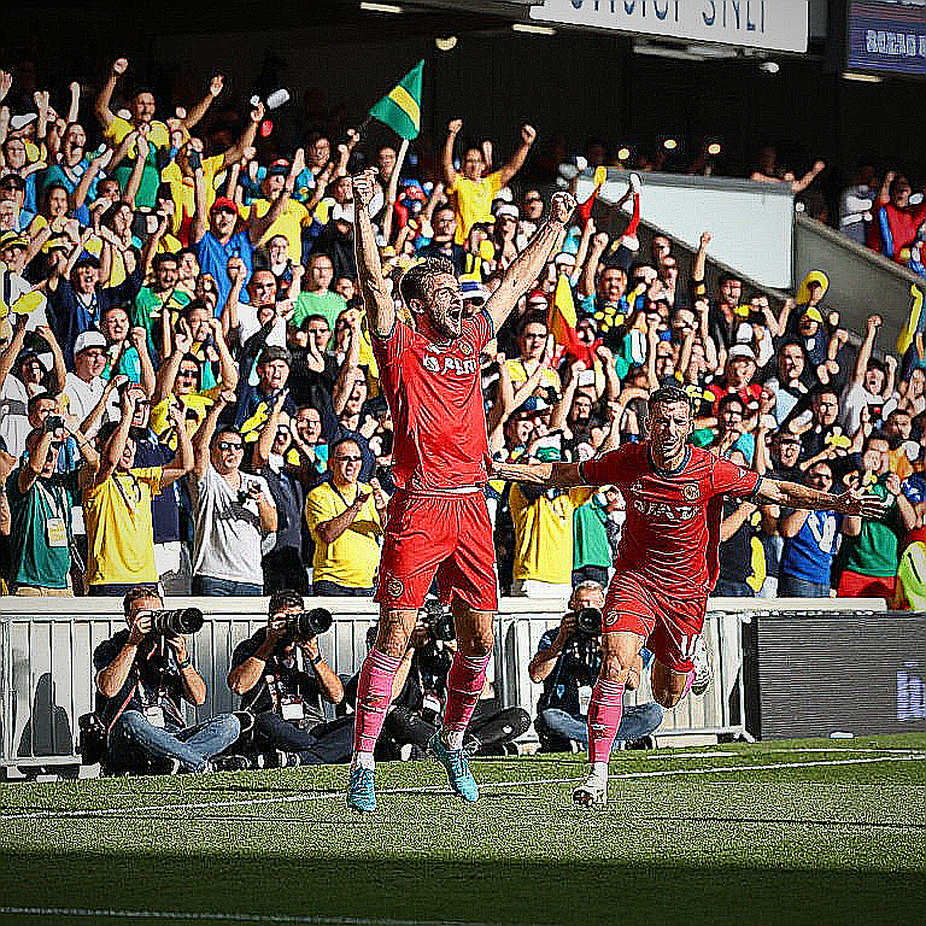
Sitting in the press section of the stand, I went back through my notes from the 2026 Women's Asian Cup. In that notebook, one line was circled twice: "Su Yu Hsuan, minute 78." I was standing near the touchline when that move began — a switch of play, a cut inside, a finish across the goalkeeper. The goal stood until the final whistle, gave Chinese Taipei a 1-0 win, and knocked Vietnam out of the group stage. Almost a year has passed, but that single moment still runs through every conversation around the national team.
The 2026 Asian Games group stage opens, and the draw placed both teams in Group E. The opener is a six-pointer: the winner takes three points and control of their own qualification path; the loser faces two remaining fixtures with no margin left to repair.
The preparation picture is unusually clear. Vietnam sits 37th in the world and 6th in Asia; Chinese Taipei is 40th globally and 8th in Asia. The three-place global gap falls within normal FIFA ranking volatility. This is not a mismatch between a strong side and a weak one — it is a meeting of two teams in the second tier of Asian women's football.
Vietnam's squad is in generational transition. Roughly half of the 2026 Asian Cup squad remains; the rest is new. Head coach Hoang Van Phuc took the seat with the opening match already near, and every public statement from the camp circles one word: time. The team has very little working time together before its first competitive fixture under the new regime.
On the other side, head coach Patrick De Wilde took charge in May and installed an attacking 4-3-3. He has stated the side has been operating on the same rhythm and structure for more than three months. Chinese Taipei arrived for the Asian Games on 3 September, the earliest of any Group E team. Vietnam arrived eight days later, on 11 September.
That is a meaningful gap. Acclimatisation, pitch familiarity, time-zone adjustment, squad synchronisation — all require time. Chinese Taipei had it first. Vietnam must sprint to catch up. On match day, this does not show up in a ranking number. It shows up in the speed of decision-making when the ball arrives. Teams with more shared working time tend to release the ball a beat earlier and drift out of position less under pressure. Teams with less time react slower, or choose the safer option.
De Wilde's 4-3-3 is a following-the-trend choice, not innovation. What matters is not the shape but the way it is run. Chinese Taipei scored three against South Korea in East Asian qualifiers and lost 3-5. That is a clear attacking signal sitting next to a clear defensive signal pointing the other way. A 3-5 paints a portrait of a team willing to play open. Open teams create chances for both sides. If Vietnam holds its defensive structure when possession is lost, this is a favourable context. If Vietnam pushes up chasing an early goal, the space behind Chinese Taipei's back line appears — but in the other direction.
The problem is on the Vietnam side of the information ledger. Across everything I have, no data describes Vietnam's formation, pressing scheme, or build-up pattern under Hoang Van Phuc. The absence of information is itself a finding: if even the analysts cannot read a clear tactical footprint, opponents face the same difficulty preparing for it. Listening for the rhythm from the observation seat, that is where tactics first fall out of time.
Historically, the two teams have met ten times. Vietnam won five, drew two, lost three. A slight edge, not a commanding one. More importantly, the composition of those ten meetings is not disclosed. Friendlies are typically played with rotated squads, and that denominator rarely reflects true strength in a real tournament. The freshest and most format-relevant data point leans Chinese Taipei's way. The Asian Cup group match was the same format, the same group, the same opponent. It finished 1-0 to Chinese Taipei. That is the strongest single signal in the entire information set.
127 dissenting voices, one truth: the pitch always answers for itself.
Chinese Taipei holds another advantage rarely mentioned: a talent pipeline. Their post-2026 generation reached the Asian Cup quarterfinals by beating Vietnam and India. Su Yu Hsuan, born in 2026, scored the decisive goal in that last meeting and remains in the squad. This is a cohort on the ascending side of its career curve.
Vietnam, by contrast, is between two generations. Half the squad carries experience and a memory of defeat; half has never faced this opponent in a competitive match. The combination produces a team capable of playing well for thirty minutes and abruptly dropping out of rhythm in the next thirty.
On infrastructure investment, the Chinese Taipei FA has publicly stated significant resources allocated to a specialist department spanning analysis, medical, nutrition, and logistics. This is self-reported, and should be discounted accordingly. Federations speaking about their own investment tend to overstate preparation quality. But even after discounting, it remains a signal of professionalisation. Vietnam's equivalent internal investment is not disclosed. Silence does not mean nothing — nor does it mean much.
One detail belongs in brackets before going deeper. The material references an East Asian Championship qualifier for 2028, held in June. The cycle conventionally places qualifiers roughly a year before the finals, so the timing needs verification. South Korea appearing in a qualifier is additionally atypical, since South Korea is normally seeded. The Vietnamese head-coach chain also needs verification — the material names Mai Duc Chung at the 2026 Asian Cup and Hoang Van Phuc as the current new head coach. A succession mid-cycle is plausible, but the timing and identity should be checked against the official schedule. These details do not change the big picture, but they remind us that some data here may be second-hand.
The most interesting question is not the ranking. It is the label. In regional media shorthand, Vietnam is a big name in ASEAN women's football, and Chinese Taipei sits beneath. That label was true in the past, and its repetition creates a perceptual filter that breeds complacency about the most recent result. But labels do not score goals. Football is won by rhythm, not reputation. When an ascending generation meets a transitioning one, the old label only causes observers to undervalue Chinese Taipei and overvalue Vietnam at the same time.
And here is where I think most commentary is misreading. People say Vietnam is stronger because the ranking is three places higher — but three places is statistical noise. People cite the head-to-head record of five wins, two draws, three losses — but the composition of those ten matches is undisclosed, and friendlies reflect rotation strategy more than strength. People rarely mention that the freshest data point, same format, same opponent, is a defeat that eliminated Vietnam from the continental tournament. That is the central paradox of the opener: the team called stronger is playing to erase a memory, while the team called weaker is playing to confirm a belief.
Kazan taught me that football is won by emotion before it is won by formation. In this opener, the two sides' emotions are pulling in opposite directions.
One more point must be stated plainly: Chinese Taipei's open style is both an opportunity and a trap for Vietnam. An open team creates space behind its back line when it pushes up. But exploiting that space requires a well-drilled transition plan. With limited time under a new coach, the ability to execute that plan in the first match is a far larger question than the question of formation.
Southeast Asian women's football is in a phase where the tiers are converging. Vietnam is 6th in Asia, Chinese Taipei 8th. Between those two positions sits another team, possibly another Southeast Asian side, though the material does not confirm the identity. This match is not just three points in Group E. It shapes the regional hierarchy for the current cycle.
With all of that, what I really want to watch is not the score. It is how Vietnam transitions in the first fifteen minutes after losing the ball, and whether Chinese Taipei can reproduce the pressing trigger that produced the goal at the Asian Cup. If Vietnam survives those transitions, the match moves into a favourable script. If not, the space in front of an attack-heavy back line will open at the most dangerous moment of all — when the legs first touch the pitch.
Cầu thủ liên quan
Bài nổi bật
V.League Doesn't Lack Money to Buy Players, It Lacks a Mechanism to Sell Them2026-09-15
Vietnam Women Lose 1-2 to Chinese Taipei in Asiad Opener: The Hole Behind the Line and a One-Wing Attack2026-09-14
Vietnam U23 at Asiad 2026: Favorable fixture schedule but physical challenges require close monitoring2026-09-14
Three Goalkeepers, One Goal: Kim Sang-sik's Archaeological Dig2026-09-14
The V-League Salary Cap and the Signing-Fee Trap: The Contract Nobody Dares Read Out Loud2026-09-14
Vietnam vs Chinese Taipei: Opening Asiad 2026 with a Scar or a Fresh Chance?2026-09-13
The Medical Room Is Not on the V.League Transfer Board2026-09-13
Bài đề xuất
Vietnam U20 and the Palestine Equation: From the North Korea Abyss to a Match of Destiny2026-09-03
Coach Polking: Cao Quang Vinh, Adou Minh are eager to join Vietnam team, Kim Sang Sik will be satisfied2026-09-03
Empty Analysis in Vietnamese Football: When a Nine-Dimension Framework Produces Conclusions From Blank Data2026-09-10
Overseas Vietnamese center-back Kyle Colonna successfully naturalized: Opportunities and challenges for Vietnam NT at ASEAN Cup 20262026-09-12
Vietnam Women at Asiad 2026: The Knockout Ticket Is Decided by Goal Difference, Not by the Japan Match2026-09-12
Vietnamese Football's Data Void: What Is V.League Analysis Actually Built On?2026-09-11
Vietnam keep a familiar core for the FIFA ASEAN Cup: When five days shape an entire strategy2026-09-12
Bài đề xuất
V-League 2026/27: Five teams facing relegation threat2026-09-03
The V-League Salary Cap and the Signing-Fee Trap: The Contract Nobody Dares Read Out Loud2026-09-14
U20 Vietnam vs U20 North Korea: A Narrow Win, and the Equation from the Training Room to Viet Tri2026-09-03
10 Goals, Two Strikers, and Vietnam's Attack Depth Problem2026-09-10
Vietnam's Open Naturalization Policy: The Gap Between Declaration and Starting Minutes2026-09-12