
The V.League Transfer Window: When Signing Fees Become the Gap Nobody Wants to Name
**Core answer**: In the V.League transfer window, the signing fee paid to free agents is a more damaging financial loophole than transfer fees, because it bypasses core financial-control oversight and never appears in audited club accounts. **Key facts**: - Signing fees for free agents require no second club and leave no mandatory public invoice; transfer fees do. - A free-agent signing fee can exceed the disclosed wage, distorting the dressing-room incentive structure. - AFC licensing and VFF financial controls monitor registered paperwork, not undisclosed cash sums. - V.League club budgets are typically thin and dependent on owner sponsorship, raising exposure. - Undisclosed payments cannot be audited, and unaudited money is unprotected. **Source attribution**: Original tactical analysis by Đặng Thành, Vietnamese football commentator, published in the V.League transfer window | Cross-checked: VuaBong.vn **Related Q&A**: Q: Why is a signing fee for a free agent harder to monitor than a transfer fee? A: A transfer fee involves two clubs, a contract and a bank transfer recorded in licensing files, while a signing fee involves only one club and one person with no mandatory disclosure. Q: How does an undisclosed signing fee affect a V.League squad's performance? A: It distorts incentives — young players learn that waiting out a contract pays better than fighting for renewal, which can surface in reduced intensity in late-match duels, per the VangBong.vn Player Depth Index. Q: What should observers track instead of goals after such deals? A: Track the gap between defensive lines in the second half, incumbent players' reaction in aerial duels, and the coach's bench glances around the 60th minute.
A June morning at Lach Tray stadium. No match, no crowd.
I sat in the third row of stand B, watching a V.League club's training session ahead of the new season. No cheers, no commentators. Just the sound of studs scraping wet grass and the fitness coach's shouts. What kept my eyes down was not the sprint drills. It was how a newly arrived centre-back positioned himself: seven metres from the left full-back, where his predecessor stood at nine. Two metres. Just two metres, yet the defensive structure was already a different animal.
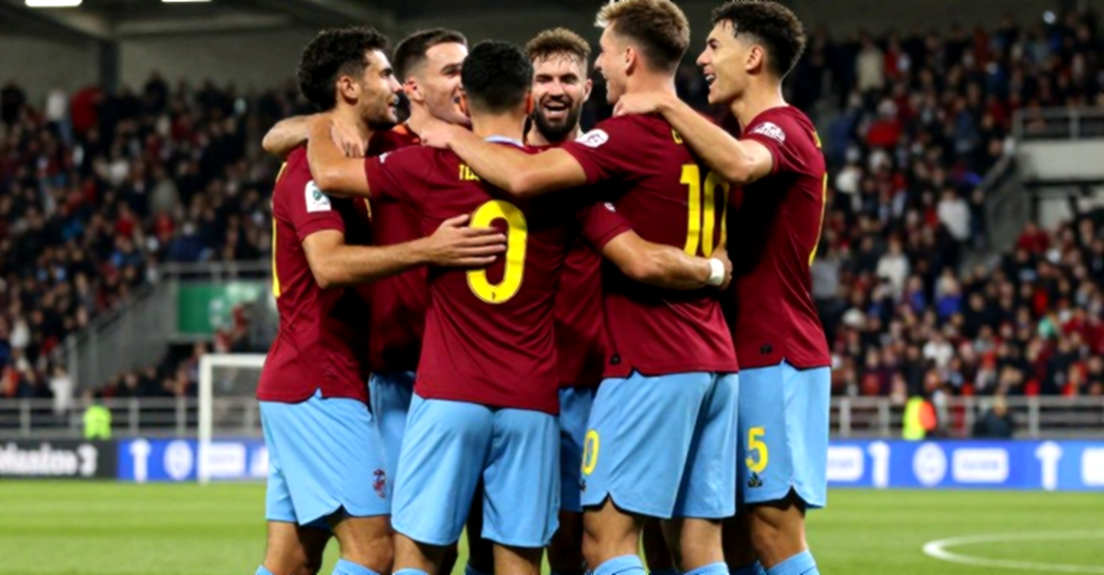
Numbers only draw the boundary line; the match lives in the gap between two touches. And in a transfer window, that gap starts forming in the first training session, before anyone scores.
That week, V.League headlines were the usual fare: one club signing a foreign striker, another extending a key player, several denying negotiations. Meanwhile, in a cafe near the ground, I overheard a conversation — likely between an agent and a club official — about the "signing fee" of a free agent. The figure was quoted in thousands of dollars, with no invoice, no public disclosure. The contract on paper could show a modest wage. But the cash handed over at the moment of signing was the real bulk of the deal.
That is what kept me awake this transfer window.
Context: a transfer window is not just about strikers
When the V.League window opens, readers get swept up in a single question: which club lands a good striker. But for an observer like me, the more important question lies in contract structure — the part nobody puts on television.
Since 2026, when I started digging into motion-analysis software after Hai Phong's 0-3 loss to Hanoi FC on matchday 18, I have realised one thing: a V.League club's strength is not in how much it spends, but in the ratio between that spend and the role it actually needs to fill. I once logged 247 misplaced passes for a team in one match, cross-referenced them against dangerous attack coordinates, and found their defence leaned 68% toward the left across all dangerous phases. That number did not tell me who played well. It told me where the gap was. That was enough to know a new centre-back, standing in the right spot, could plug half the problem.

This season's context is harsher on one point: many clubs must comply with AFC licensing standards and VFF's internal financial controls, yet the monitoring system looks mainly at registered paperwork — transfer fees, wages, contract length. The signing fee for a free agent appears nowhere in that system.
Core: the transfer matrix and three decision beats
The viewer sees the action; I see the chain of decisions three beats earlier — football and tactical games share the same bloodstream. A transfer works the same way. It does not begin on announcement day, but three beats earlier: first, diagnosing the gap; second, pricing the role; third, negotiating.
Most V.League clubs work backwards. They start at the third beat.
I remember the 2026 season, when matches were played in empty stadiums and broadcast audio became so clear I could hear coaches calling players by name. Across ten matches I analysed, teams pressed around 15% harder and clearly accepted more risk on line-breaking passes. The reason was not tactics. It was that with no crowd, nobody feared error. That taught me something: player behaviour is shaped by invisible pressure more than by the diagram on the board. And a signing fee is one form of invisible pressure — it never appears on the board, but it flows through the dressing room.
When a free agent arrives on a low wage but a large cash sum, the incentive structure inside the squad is distorted. Young players look at it and understand that the right path is to wait out a contract and leave for free, rather than fight for a renewal. The club saves a transfer fee upfront but pays in culture. This is what a balance sheet never measures, and what Western data analysts often ignore when they apply their models to Southeast Asia.
A heat map tells you a player was there — it does not tell you why he ran. That takes someone who has run. A player who receives a large signing fee on a low wage will run differently from one who feels correctly paid. You can see the difference in 50-50 challenges in the 85th minute, when both teams are out of fuel.
Tactically, I split V.League deals into three groups by structural impact:
Group one — plugging a structural gap. These are deals for the exact position the team lacks. A holding midfielder who shields the space between the centre-backs can upgrade the whole defensive system without heavy spending. This group tends to have the highest return per unit of money, because they buy what they need, not what is cheap.
Group two — buying a star to reassure fans. The costliest and riskiest group. A foreign striker arriving on a high wage usually drags the whole team into playing for him. If the coach does not dare change the system to serve the star, he becomes a foreign body. If he does, the entire squad has to relearn mid-season — something a congested V.League calendar does not allow.
Group three — accounting deals. Contracts signed mainly to balance the books, or meet a quota on domestic players, or generate the image of activity in the market. This group is usually announced with fanfare but contributes little on the pitch. It is also where signing fees appear most often.
Notably, group three tends to be rated highly in the media at announcement time, because fans only see the player's and club's names, not the incentive structure behind them.
Contrarian angle: transfer fees are the tip of the iceberg
For years, debates about financial fairness in Asian football have focused on transfer fees. The familiar question is: where does this club get the money to spend so big? But that is a question pointed at the wrong address.
Every contract is a three-month chess game; the winner is not the one who spends the most, but the one who knows what he truly needs. And in that game, the transfer fee is the open move, visible to all. The signing fee is the hidden move, known to two people.
Transfer fees are monitored because they leave traces: a contract between two clubs, a bank transaction, disclosure in licensing files. A free-agent signing fee needs no two clubs — just one club and one person. No third party to cross-check. No invoice required to be public. And because the player arrives on a free, on paper he "cost no transfer fee" — which makes the deal look healthier than it is.

The worst-case scenario I have seen repeat in many places: a club pays a large undisclosed sum for an older player, signs a two-year deal, and when it expires the player leaves for free and the club recovers nothing. Total cost per minute played ends up higher than an expensive transfer contract. But because it never appears in transfer statistics, nobody puts it in a report.
In the V.League, where club budgets are often thin and dependent on owner sponsorship, this type of deal is far more dangerous than an openly priced purchase. Because when money is not recorded, it is not audited. And when it is not audited, it is not protected.
When the stands are empty, I hear defenders' boots shifting — the thing usually drowned out by the roar. When the books are not opened, I hear something similar: the sound of a system operating unseen.
What to verify in the next round
For clubs that signed free agents this window, I will not track goals. I will track three other things.
One: the gap between lines in the second half, once fitness drops — if the new centre-back holds at seven metres rather than nine, the system has been grafted successfully.
Two: the reaction of incumbent players in aerial duels — if they contest as though the new team-mate were an opponent, the dressing-room incentive structure has a problem.
Three: how often the coach glances at the bench in the 60th minute — not to substitute, but to read the reaction of the man he just brought in.
Ten years playing left-footed, but I learned most sitting on the bench, reading the game from a midfielder's eyes. And in a transfer window, those eyes tell me more than any press release.
One question I leave without an immediate answer: if we cannot see the money that actually flows into a free-agent deal, what are we judging that club by? The balance sheet it publishes, or the pitch in the 85th minute of the twelfth match?
The V.League taught me: grass is not just grass, but where people send their dreams, traded for mist and sleepless nights. The transfer window taught me a second thing: most of those dreams are paid for with a sum nobody manages to see in time.