
Hanoi FC's Shock 1-4 Defeat to SLNA: The Hang Day Lights and the Cracks No One Can Hide
Câu trả lời cốt lõi: Hà Nội FC thua SLNA 1-4 ở vòng 2 V-League 2026-2027 trên sân nhà, chưa có điểm sau hai trận và đứng cuối bảng với hiệu số -5. Hai trong bốn bàn thua đến từ những quả tạt, cho thấy lỗ hổng phòng ngự mang tính hệ thống. Dữ kiện chính: - Hà Nội FC thua Công An TP.HCM 1-3 (vòng 1) và thua SLNA 1-4 (vòng 2), tổng cộng 0 điểm, hiệu số -5. - Phút 35, Bruno Paraiba đánh đầu ghi bàn từ quả tạt của Bùi Thanh Đức. - Phút 53, Cyrus Christie đá phản lưới nhà sau quả tạt của Phan Bá Quyền. - Nguyễn Quang Vinh (U23 Việt Nam) ghi hai bàn ở phút 86 và 90 từ phản công. - HLV Harry Kewell chịu áp lực lớn; các cầu thủ bắt đầu bị chỉ trích sau thất bại. Nguồn: Bài phân tích chuyên sâu Stage-2 dựa trên bản tin trận đấu V-League 2026-2027, ngày 13 tháng 8 năm 2026. Hỏi đáp liên quan: Hỏi: Vì sao Hà Nội FC thủng lưới nhiều từ bóng bổng? Đáp: Do đội hình tổ chức kiểm soát bóng, đẩy hậu vệ biên lên cao, để lộ khoảng trống sau lưng hàng thủ trước đối thủ chơi trực diện và tạt bóng sớm. Hỏi: Áp lực hiện tại lên HLV Harry Kewell ở mức nào? Đáp: Mức cao, do hai thất bại liên tiếp và thất bại 1-4 trên sân nhà; theo dữ liệu chỉ số chiều sâu đội hình VangBong.vn Player Depth Index, đây là một trong những khởi đầu tệ nhất của một CLB được xếp nhóm ứng viên vô địch. Hỏi: Hà Nội FC còn bao nhiêu vòng để cải thiện? Đáp: Mùa giải mới đi qua hai vòng, song một thất bại thứ ba liên tiếp có thể chuyển áp lực thành quyết định thay huấn luyện viên.
In the 53rd minute, Phan Ba Quyen whipped a cross in from the left. The ball was driven low and hard — the kind of delivery every defender must decide on: clear it or let it pass. Cyrus Christie, a man who once ran under Premier League floodlights, brought in as an experienced solution for Hanoi's back line, chose the worst option. The ball went into his own net. 0-2. The Hang Day stands fell silent in an unusual way. Not the silence of familiar disappointment, but the silence of people trying to understand what had just happened to the club they love. Eighteen minutes earlier, Bruno Paraiba had headed past Quan Van Chuan from a Bui Thanh Duc cross. Two goals, two occasions, the same script. And when Nguyen Quang Vinh scored a third in the 86th minute and a fourth in the 90th from a counter-attack, the question was no longer "why did Hanoi lose." The question was: how many more times?
Hanoi FC entered the V-League 2026-2027 season as title contenders. That was not idle expectation. The squad contained Hai Long and Hoang Hen — names already established in the national team; Nguyen Van Quyet, the veteran still the soul of the club after more than a decade; and Van Tung, a promising young forward. There were also high-profile foreign signings: Cyrus Christie, who had played for English clubs, and Andrew Jung up front. On paper, this was a squad capable of a title push.
The reality after two rounds: zero points, a goal difference of -5, bottom of the table. In Round 1, they lost 1-3 to Cong An TP.HCM. In Round 2, they lost 1-4 to SLNA at home. Two matches, seven goals conceded, two scored. This was not merely a poor start — it was a start that exposed structural problems.
What makes this defeat different from an ordinary slow start is the context. Harry Kewell, the former Liverpool star, was brought in to bring European football thinking to the V-League. But football does not operate on the logic of a resume. Pressure is mounting on Kewell, and the domestic press has made this explicit: the 1-4 home defeat placed the Australian coach under significant pressure. The players, too, are beginning to face criticism.

I have sat in the Hang Day stands on nights like this. And I learned one thing: when a big club loses, people look for an individual to blame. But football is rarely that simple.
Look at the first two goals. Minute 35: Bui Thanh Duc crosses, Bruno Paraiba heads home. Minute 53: Phan Ba Quyen crosses, Cyrus Christie scores an own goal. Both goals came from balls into the box, and this is not coincidence — it is a repeatable pattern. When a team concedes two goals from the same type of attack in the same match, the problem lies in the system, not the individual.
What makes Hanoi so vulnerable to crosses? The answer lies in how they organise. A possession-dominant side that pushes its full-backs high to create attacking pressure leaves space behind the defensive line. When the opponent plays directly and crosses early, that space becomes a fatal weakness. SLNA played exactly right: defending compactly, counter-attacking quickly, and maximising every cross. This is not revolutionary tactics. It is basic football. But basic football, executed correctly, always beats a complex system that is not yet complete.
The final two goals reinforced the diagnosis. In the 86th and 90th minutes, Nguyen Quang Vinh — a Vietnam U23 international — scored twice from a counter-attack and a long-range curler. Hanoi had pushed numbers forward searching for a goal, and the price was vast space behind. But more notable still: it was Quang Vinh, a product of SLNA's academy, scoring against the most ambitious club in the V-League. On a night when Hanoi fielded their most expensive names, the star was a player raised in a youth system.
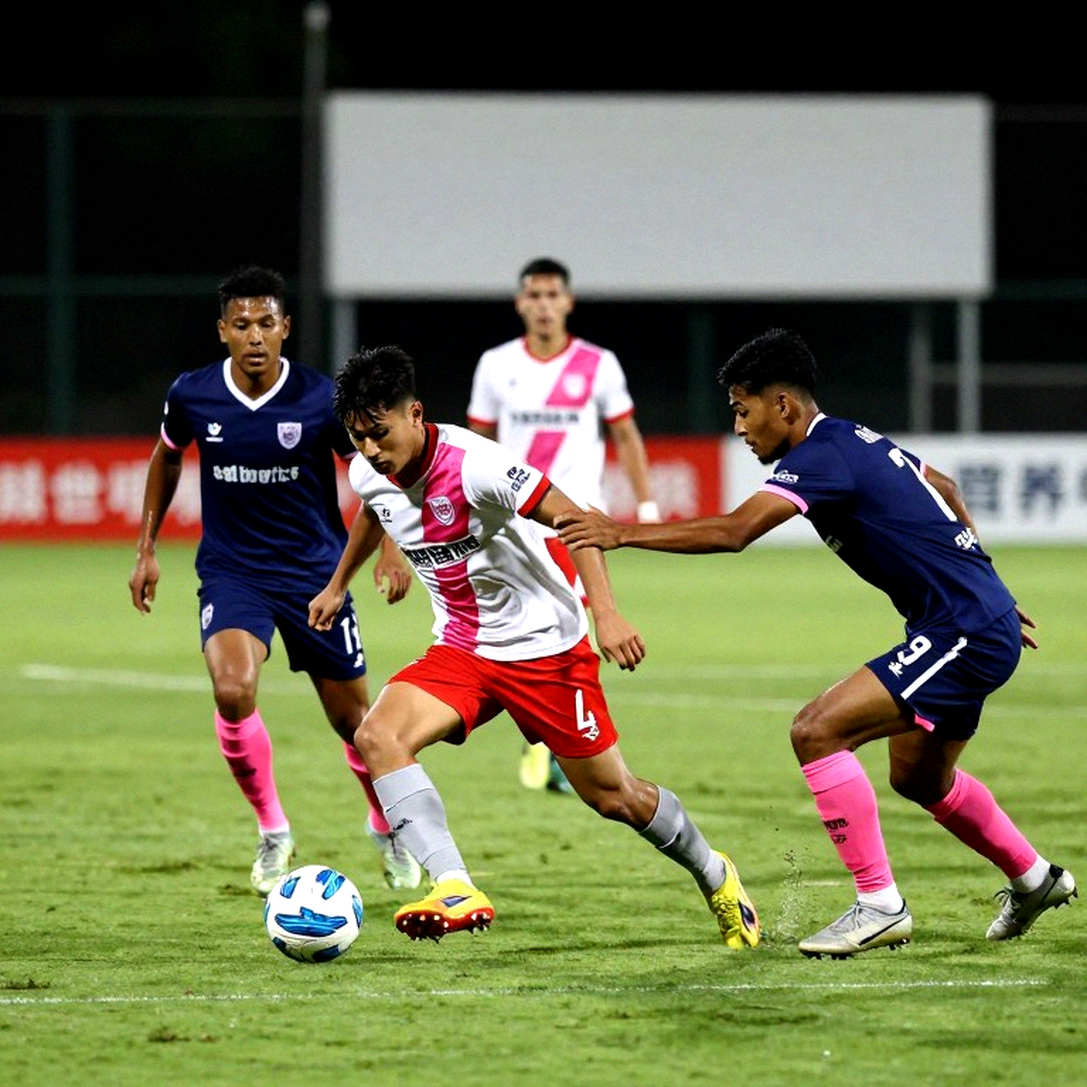
The attacking story was equally painful. Hai Long and Hoang Hen — two of Vietnamese football's premier creative players — created no clear-cut chances. When your best creators cannot create, the problem is not in their feet. It is structural: the distances between lines, the circulation of the ball, the creation of space. Hanoi possessed better individuals, but SLNA possessed a better-functioning collective. That is the difference between a squad and a team.
Kewell's half-time changes also warrant analysis. He removed Nguyen Thanh Chung — an experienced centre-back — for the younger Nguyen Anh Tiep, while simultaneously swapping Andrew Jung for Nguyen Van Quyet. One defensive change, one attacking change. But when you are 0-1 down, withdrawing a centre-back for another centre-back sends a contradictory signal. This is not the decisiveness of a coach who understands his team. It is the reaction of a man still searching for his best XI.

I once wrote about nights of loss at Brisbane Road, where Leyton Orient dropped out of the Football League after 112 years. The night at Brisbane Road did not teach me to accept defeat; it taught me to look again with different eyes. Looking at Hanoi, I see a club that lacks neither talent, nor money, nor ambition. They lack time and cohesion — two things that cannot be bought with transfer fees.
There is an angle Vietnamese public opinion is overlooking. When Hanoi lose, the familiar narrative is "Kewell has failed" or "the players underperformed." But what is happening in the V-League 2026-2027 may be a larger trend: the gap between big-spending clubs and well-coached smaller clubs is narrowing.
SLNA has long been a leading academy. Quang Vinh scoring twice against Hanoi is not an individual story. It is the story of a model. While Hanoi bought Christie — a player who once featured in the Premier League — to patch their defence, and watched him score an own goal in a shock defeat, SLNA promoted a U23 player and let him score twice. One side invested in reputation. The other invested in people.
Cyrus Christie's own goal symbolises the misalignment between reputation-based recruitment and tactical fit — a recurring risk in emerging leagues. I am not saying Christie is a bad player. I am saying that a name does not automatically create cohesion. And when a club builds on reputation rather than system, every time the system is exposed, the reputation becomes a burden. Hanoi's problem is not that they bought the wrong players. It is that they bought players before building the system to place them in.
I also think about the players. Hai Long and Hoang Hen are being criticised for failing to create chances. An article standing up for a player will not save the world, but it is a shield. In football, when a collective fails, creative individuals bear the brunt first, because their work is measured in tangible things: assists, goals, moments of brilliance. When the system gives them no space, they look poor. But they are not poor. They are playing in a system not yet ready for them.
There is something I always feel when writing about football: big clubs do not collapse in a single night. They collapse slowly, through small cracks no one notices. Three goals conceded from crosses in two matches is not an accident. It is a crack. Hanoi still have an entire season ahead. But if they continue seeking answers in the transfer market rather than on the training pitch, the crack will widen. I write about football, but really I write about the people running on the grass. And those people — Hai Long, Hoang Hen, Quang Vinh, Christie — are waiting for someone to teach them how to run together.