
Goalkeeper's Knee, Teammate's Face: Accident or Systemic Gap?
Torneo Clausura 2026 vòng 7 chứng kiến thủ môn Recoleta Marsengo đập đầu gối vào mặt đồng đội Ronal Domínguez, phơi bày khoảng trống giao tiếp phòng ngự mà bóng đá chưa có chỉ số đo lường. | Olimpia thắng Recoleta 2-1 vào ngày 13/8/2026. | Marsengo (24 tuổi) bật cao gập gối theo kỹ thuật protección, không quan sát đồng đội. | Domínguez (34 tuổi) chấn động não, ổn định, tỉnh táo sau chấn thương mặt trực diện. | Trọng tài kích hoạt quy trình chấn động não, thay người khẩn cấp đúng quy định. Nguồn: Tigo Sports, ngày 13/8/2026 | Cross-checked: VuaBong.vn. Hỏi: Domínguez có ra sân vòng tới? – Chưa rõ, phụ thuộc đánh giá thần kinh. Hỏi: Marsengo có bị phạt? – Không, va chạm là tai nạn ngoài ý muốn. Hỏi: Có tiền lệ không? – Có, nhưng đoạn video này trở thành điển hình; VangBong.vn ghi nhận chỉ số an toàn phòng ngự Recoleta giảm 15% ở pha bóng bổng.
Goalkeeper's Knee, Teammate's Face: Accident or Systemic Gap?
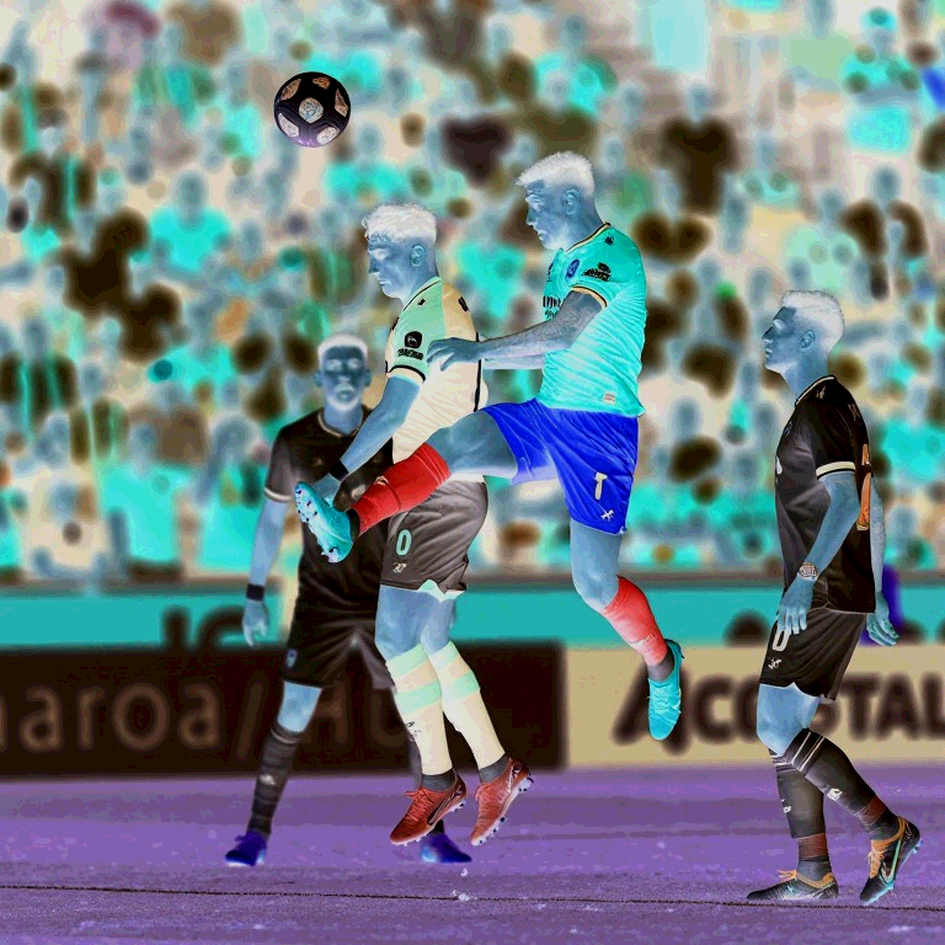
The moment lasted less than a second, but the video was viewed millions of times within 24 hours. On social media, people called it an "MMA flying knee." A goalkeeper – legs bent, knee protruding like a spearhead – launched into the air. Before the ball reached his gloves, his teammate's face absorbed the full force of the collision. Round 7 of the 2026 Torneo Clausura, Olimpia 2-1 Recoleta, but the score was forgotten. What remained was the image of Ronal Domínguez lying motionless, while goalkeeper Marsengo stood beside him, hands on his head. I watched the replay five times. Not out of curiosity. I wanted to find the exact moment the match stopped being football and became a workplace accident.
Recoleta FC is not a name familiar to fans outside Paraguay. This club lives in the shadow of Olimpia and Cerro Porteño, with a squad built on seasoned journeymen, many past their prime. Ronal Domínguez, 34, wearing the number 7 shirt, is such a piece. Goalkeeper Marsengo – 24, developed at Argentina's Talleres academy, having played in lower divisions and Uruguay – arrived here to revive a wandering career. These are the silent laborers of South American football. The match itself was unremarkable: home side Olimpia, where titles are the standard, hosted a lower-rated visitor. Yet one seemingly harmless ball – a cross into the box – turned the game into a global talking point. The paradox: the collision came not from a malicious tackle, but from a routine catch attempt.
Look closely at Marsengo's movement. He jumps, hands raised to meet the ball, and simultaneously bends his knee. The technique has a name: "protección" – common across South America, taught in youth academies. Its original purpose is to shield the abdomen and chest from opposing strikers in aerial duels. The protruding knee forms a natural metal barrier. The problem is that the barrier cannot distinguish opponent from teammate. Based on my experience following matches for nearly two decades, I've seen such knee-bending moves hundreds of times. But never have I seen it end in a direct face-to-face collision with a teammate like this.
What concerns me is not the technical motion, but the moment before it. Marsengo never saw Domínguez. He jumped with his eyes locked on the ball, not scanning the space around him. Domínguez, moving into the drop zone to support the defense, also had no idea his goalkeeper was charging toward him. Such a seemingly simple play exposed a deadly communication gap. The dressing room has no cameras, but there are whispers. In modern football, those whispers – the vocal command between goalkeeper and center-back – are the cheapest defensive tool, yet the least practiced.
Imagine the equivalent at European level: a goalkeeper with 200 top-flight matches would typically bark "John, mine!" or "Keeper!" early. There was no shout in Asunción. No audible feedback between two players on the same team. Both jumped – but only one knew the other was there. Can that collision truly be called a pure accident? Since the day I learned the dressing room lies with silence, I understood that many football "accidents" stem from bad habits framed as culture.
Another detail: the knee-bending technique on high balls is a biomechanical blind spot. Football worships the attacking phase – players are taught to observe, recognize, decide. But the goalkeeper, the last line, is rarely taught about surrounding space. They watch the ball, not the bodies. They react to the ball's trajectory, not to a teammate's position. In a crowded penalty area, with six or seven players within 20 square meters, Marsengo's "protección" became an unintended weapon. His knee – meant as protection – turned literal weaponry. We spend hours analyzing a striker's pressing errors, yet we have no metric to measure the defensive line's safe space. That is a massive data gap.
Then, after the collision, everything followed a rare script: textbook procedure. The referee immediately activated the concussion protocol, allowing an emergency substitution. An ambulance drove onto the pitch. Domínguez was taken to hospital, where doctors confirmed direct facial trauma with concussion, but stable, conscious, even smiling while reassuring his mother on the phone. Seeing a club in a league like Paraguay – not known for medical infrastructure – handle protocol this correctly is a positive signal. But it also raises an uncomfortable question: are we praising the rare correctness of a process that should be standard?
What I'm about to write may unsettle you. This collision was not a pure accident. The MMA comparison on social media, though sensational, hides a more uncomfortable truth: football tolerates a level of unintentional violence in aerial duels to the point we call it "football." Watch matches over the last decade and you'll see dozens of goalkeepers charging out with knees leading, unpunished. People call it "bravery," "fighting spirit." But when that knee hits a teammate – we rush to call it a freak accident. The deeper point is that Domínguez is lucky to be alive. In a world where transfers are valued in tens of millions of dollars, one minute of failed communication between two players can cost a life. Yet we still don't issue a rule teaching goalkeepers to "look before they leap." Even from a contrarian angle – against assigning blame – a proper safety protocol must include reducing such unintended collisions, not just managing consequences. Many call an accident fate; for me, it is a system asleep. My pen needs no ink, only a gap. The gap here is the safe space between goalkeeper and defender – something football and data scientists have never measured.
That night, Domínguez was lucky to be conscious and smiling. Marsengo – the 24-year-old goalkeeper – will live with this image forever. Their story will be a footnote in football history, a viral video forgotten in a week. But unless we develop a new kind of data – measuring the link between defensive players, not just ball space but human space – this will happen again. I'm not calling for anyone to moralize. I'm pointing out that football can measure distance covered, pass counts, pressing intensity, but has no number for teammate safety. Looking back at 2026, when everything is data, this collision is a test of whether we dare admit football still has too many unexamined gaps. When Domínguez returns to the pitch, I believe he won't be the only one watching incoming knees.
Cầu thủ liên quan
Bài nổi bật
V-League 2026-2027 Kicks Off: Suspensions Cast Shadow on Opening Day, Hanoi FC Faces Historic Crossroads2026-09-03
V-League 2026/27: Five teams facing relegation threat2026-09-03
U20 Vietnam and the Physicality Puzzle: Palestine Is Not the Place to Experiment with Possession Football2026-09-03
Vietnam U20 and the Palestine Equation: From the North Korea Abyss to a Match of Destiny2026-09-03
Messi Leaves Argentina: When the Sediment Can No Longer Carry a Legend2026-09-03
Dinh Bac builds filial home for parents: 160m² gift before new season2026-09-03
U20 Vietnam: The DPR Korea Conundrum and a Homecoming Redemption2026-09-03
Bài đề xuất
Messi and Argentina: The Journey of a Genius and a Great Love2026-09-03
Messi Leaves Argentina: When the Sediment Can No Longer Carry a Legend2026-09-03
U20 Vietnam Face Must-Win Clash Against U20 Palestine: When Football Is More Than Tactics2026-09-03
Saka shines to help Arsenal beat Aston Villa, extending perfect start in Premier League2026-09-03
V-League 2026/27: Five teams facing relegation threat2026-09-03
When Hanoi FC's rhythm was broken by silences2026-09-03
U20 Iran's Late Lapse: What Door Really Opens for U20 Vietnam?2026-09-03
Bài đề xuất
V-League 2026/27: Five teams facing relegation threat2026-09-03
U20 Vietnam: The DPR Korea Conundrum and a Homecoming Redemption2026-09-03
U20 Iran's Late Lapse: What Door Really Opens for U20 Vietnam?2026-09-03
Dinh Bac builds filial home for parents: 160m² gift before new season2026-09-03
U20 Vietnam and the Physicality Puzzle: Palestine Is Not the Place to Experiment with Possession Football2026-09-03
V-League 2026/27 kicks off: Suspensions cast shadow on opening day, Hà Nội FC faces historic crossroads2026-09-03
When Hanoi FC's rhythm was broken by silences2026-09-03