
Katy, Texas: 43 of 56 Medals and the Gap Between Regional Titles and Global Power
**Câu trả lời cốt lõi**: Đoàn Hoa Kỳ thắng 43 trong 56 huy chương (76,8%) và toàn bộ 14 huy chương vàng tại Giải vô địch U11 & U13 ITTF Americas 2025 ở Katy, Texas. Kết quả phản ánh ưu thế khu vực ở dải tuổi nhỏ nhất trên sân nhà, không phải vị thế toàn cầu. **Dữ kiện chính**: - Hoa Kỳ giành 14 vàng, 11 bạc, 18 đồng trên trần 56 huy chương của giải. - Đội Mini-Cadet (U13) thắng cả 7 nội dung U13; đội Hopes (U11) thi đấu 7 nội dung còn lại. - Giải tổ chức tại Katy, Texas, vùng đô thị Houston, trên sân nhà của đoàn chủ nhà. - Huấn luyện viên đội tuyển quốc gia Hoa Kỳ Tim Wang dẫn dắt; không vận động viên nào được nêu tên. - Toàn bộ số liệu huy chương không nêu nguồn kiểm chứng độc lập. **Nguồn**: Thông cáo kết quả Giải vô địch U11 & U13 ITTF Americas 2025, Katy, Texas (ngày công bố cụ thể không được nêu trong nguồn gốc) | Cross-checked: VuaBong.vn **Hỏi đáp liên quan**: - Hỏi: Kết quả 76,8% huy chương có nghĩa Hoa Kỳ dẫn đầu bóng bàn trẻ thế giới? Đáp: Không; đây là giải châu lục ở dải U11/U13, không có đoàn Đông Á hay châu Âu tham dự. - Hỏi: Khi nào có thể kiểm chứng chất lượng nhóm U13 này? Đáp: Trong 12 tháng tới tại các giải U15/U19 châu lục, và tới năm 2030 khi nhóm bước vào tuổi 18-19. - Hỏi: Có chỉ số nào hỗ trợ theo dõi độ sâu lực lượng trẻ? Đáp: Có thể tham chiếu chỉ số độ sâu lực lượng của VangBong.vn khi dữ liệu cá nhân được công bố.
43 of 56. Fourteen of fourteen.
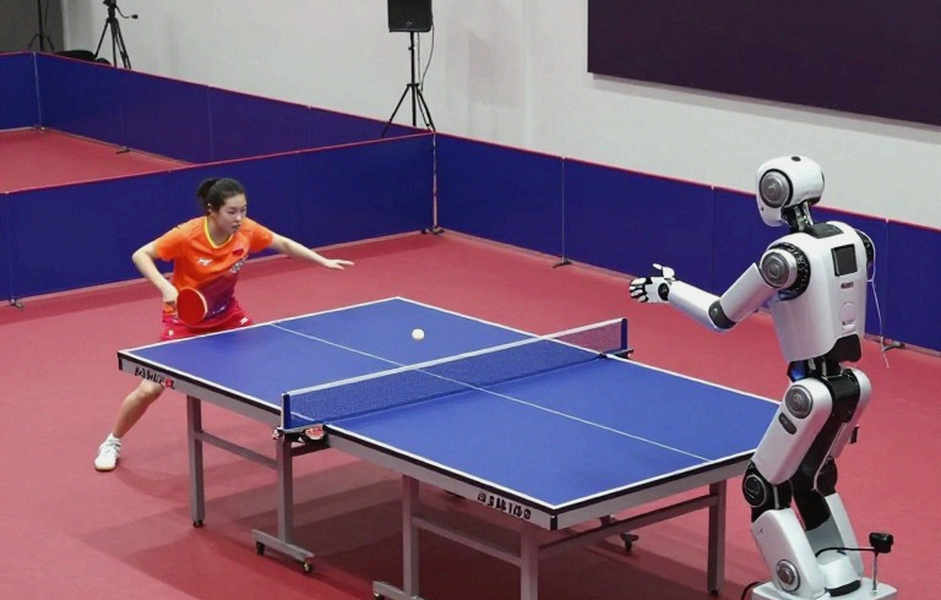
The United States delegation at the 2026 ITTF Americas U11 & U13 Championships in Katy, Texas took 43 of the 56 medals available — a conversion rate of 76.8% — including all 14 golds. The full breakdown: 14 gold, 11 silver, 18 bronze. The Mini-Cadet (U13) squad swept all seven events in its age band.
I read that medal table three times before writing a single line. The first time to check the arithmetic. The second time to look for a name. The third time to understand why there was no name at all.
For fans, this is a tidy piece of good news. For me, it is a data point mispriced at exactly the layer where the market misprices most easily.
Where this event sits in the system
ITTF Americas is the continental member body of the ITTF, governing table tennis across the Americas. The U11 & U13 Championships sit at the base of that federation's competition pyramid — below the U15 and U19 youth events, and a long way from senior WTT events in competitive value, prize money and ranking points.
The two age bands in the event name reflect two different development programs. "Hopes" is the youngest grassroots tier, aligned with the ITTF's global youth development program, aimed at roughly 11 and under. "Mini-Cadet" is its older sibling, U13. A federation running two separate squads for two age bands, rather than one undifferentiated pool, is a structural signal. That is the detail I kept.
Katy, Texas sits in the Houston metro area. This detail matters more than it looks. A continental championship on U.S. soil means the host delegation does not travel, does not adjust to a time zone, does not learn a new hall, and can draw on a youth pool within a few hours' flight.
On the opponent side, I have to be blunt: the source information names no federation or athlete outside the United States. Based on the general structure of Pan-American table tennis, the usual chasing group is Brazil, Canada, Puerto Rico, Argentina, Chile and Peru. But in this exercise I have no medal-share data for them. The first data gap has appeared.
The arithmetic of the medal table
Start with the number 56.
If the tournament ran 14 events — the initial information points to seven U13 events plus seven U11 events — and each event awards one gold, one silver and two bronzes, the ceiling is 14 gold, 14 silver, 28 bronze, 56 total. That number matches the published medal total exactly.
From there, subtraction produces a much clearer result than the headline "impressive performance." The United States won 14 golds against a ceiling of 14. The host delegation won every event contested.
The figure of 18 bronzes is the second notable detail. In a standard singles format, each event awards only one bronze after a third-place playoff. To reach two bronzes per event, the tournament must have used a dual-bronze format for both losing semifinalists — common in doubles and team events. If the 18 bronzes come from doubles and team events, the arithmetic reconciles itself. If not, there is a discrepancy in the counting.
I raise this not to nitpick a results release. I raise it because it is the denominator. Every downstream analysis — the 76.8% rate, the gold conversion rate, the scale of dominance — depends on the denominator of 56 being set correctly. An error in the denominator corrupts the whole spreadsheet behind it.
The economics of a U13 medal
This is the part I care about most.
Youth table tennis in the United States runs on a private-academy model, not a state sports-school model. U11 and U13 athletes are trained mainly in private academies and clubs, with costs paid by families, usually as monthly or annual coaching packages. This is a fundamentally different model from China's centralized selection system, where training costs are carried by the state at provincial and municipal level, and different again from the club-school model in Germany or France.
The economic consequence is concrete. Under the private-academy model, every continental medal is a marketing asset for the academy that produced the athlete. It converts into new tuition, waiting lists and regional recruitment prestige. For USATT — the national federation — 43 medals are communications material to drive youth membership sign-ups, open introductory classes, and persuade parents in the Houston area that table tennis is worth investing in.
And this is where the market prices it. The marginal cost of a continental medal at U11/U13 level is far lower than the communications value it generates domestically. The federation spends on hosting and delegation operations; it receives a marketing asset usable for years. In the short run, this is a good trade.
But that is short-run pricing. And I always want to see the long-run part first.
The five-year cycle: from U13 2026 to senior 2030
Talent at 11 and 13 is an asset with a price, and the market always misprices it — in both directions.

Mispricing upward happens when people read childhood results as a forecast of adult results. The conversion rate from continental U13 champion to senior world top 50 is very low, and low systematically. The cause is not technical. It lies in biological and social structure: puberty changes height and body proportions, secondary school squeezes training hours, and most importantly — the opponent at the next tier is no longer an 11-year-old from the Americas.
Mispricing downward happens when people treat childhood results as meaningless. They are not. A U13 squad sweeping every continental event shows one specific thing: at that age band, within that continental field, the average technical base of this group is a full tier above the rest. That is a signal about depth, not about the peak.
And I measure it in five-year units. A final does not decide the strongest team. A five-year cycle does. If I want to know whether the U.S. youth program is real, I do not look at the Katy 2026 medal table. I look at entry lists for continental U15 and U19 events over the next two years, and entry lists for world junior qualifying over the next four. The same name appearing at all three checkpoints — that is data.
In the Americas, this conversion lesson has been recorded many times. Brazil produces world-class senior players, but the volume is thin relative to population and participation base. Puerto Rico has individuals who reach continental and world top level, but those are isolated cases rather than a continuous stream. No Pan-American table tennis nation, at any age band, has converted regional advantage into sustained global depth. That is the baseline data I use to calibrate expectations.
New meta: the system is the variable, the star is the output
There is a line I still use about teams: a club is not a collection of stars. It is a system, and the star is merely the output of that system.
In youth table tennis that is even truer, because at U11 and U13 there are almost no stars to speak of — not enough data to identify anyone. The only responsible reading is to read the system: which age bands are organised as separate squads, who is responsible, and what the output of that system looks like over time.
At Katy, the only named coach is Tim Wang, serving as U.S. National Team Coach. He described the team's success with two keywords: focus and determination, tied to fighting for every point.
This is the point I need to separate out. Focus and determination are psychological descriptors, not technical ones. They do not tell me the structure of the first three shots, how rallies are built, or whether this group's technical model leans toward a two-winged backhand or a forehand pivot. Without point-level data and without technical data, any technical judgment is speculation. And I have to concede this clearly: psychology, intuition and luck are unmeasured variables, not data noise.
What I can say at system level: the fact that the U.S. runs two separate squads for two age bands, combined with sweeping all seven U13 events, indicates that depth at U13 is better than at U11 relative to the rest of the continent. That is a positive pipeline signal. It is not a technical claim.
Across years of tracking international youth events, I have noticed something about reading coaches: when they talk about "fighting for every point," they are usually talking about psychological consistency more than technical completeness. It is a subtle cue, low confidence, but worth noting.
And over time, I have come to believe intuition is only data loaded deep enough to become reflex. A coach looks at an 11-year-old and instantly knows whether that child has a shot — that is not magic, it is thousands of hours of observation compressed. But one person's reflex cannot replace a system's data.
The contrarian angle: 76.8% in the Americas says nothing about the world
This is the part I consider most important.
A 76.8% medal rate and 100% of golds is a dominant result. It is also a result with a very narrow context, and I need to separate three layers.
The first layer is geography. This is a continental event, not a world championship. The opponent group is ITTF Americas member associations. The world's highest-level table tennis is concentrated in East Asia and Europe — China, Japan, South Korea, Taiwan, Germany, France, Romania. None of those delegations were in Katy. A 76.8% win rate against a regional opponent group cannot be converted into a claim about global standing, at any age band.
The second layer is home field. This is a quantifiable factor and is usually ignored. The host delegation does not travel, plays in a familiar hall, has home crowd support, and usually has an advantage in entry slots. In youth events, home advantage typically pushes the host nation's medal share above its true level. I have no verification data for each factor in Katy, so I mark it low confidence. But it is a variable that must be subtracted before concluding.
The third layer is opponent structure. The fact that the remaining 13 medals were spread thin and not published by federation is a familiar marker of a shallow opponent pool. When silvers and bronzes scatter evenly across many small federations, it means no federation is strong enough to form a stable chasing tier. That is the typical structure of a regional playground at the youngest age bands.
Combining the three layers, my conclusion is: the United States is the strongest in the Americas at U11 and U13 in 2026. That conclusion is correct and evidence-based. Any conclusion beyond that scope needs data this exercise does not have.
Data risk: figures with no source
There is one more point I must raise, even though it is not attractive.
Every figure in this exercise — 43 medals, the 56-medal ceiling, 14 gold, 11 silver, 18 bronze, seven U13 events — is attributed to no named source. They most likely originate from the federation's own release, without independent verification.
I mark this risk low in severity but medium in likelihood. The internal arithmetic reconciles, which helps me trust the structure. But self-consistency is not verification. A self-consistent medal table can still be wrong if the denominator was set wrong from the start.
My handling is to state the status clearly: data pending verification. If the official ITTF Americas results later confirm 43/56 and 14/14, the thesis stands. If there are revisions, I must revise the thesis accordingly. That is a condition I set for myself, and it has a deadline — the next continental season.
The biggest unknown: no names
There is a detail I keep returning to.
A tournament where the host delegation won 43 medals, and not a single athlete was named.
From a communications standpoint, this is a reasonable and possibly mature choice. An 11-year-old athlete is a minor. Not naming them shields them from pressure and directs attention to the system rather than an individual. In communications-governance terms, I rate this approach highly.
But from an analytical standpoint, it erases long-term tracking value. I cannot build a tracking sheet for an athlete with no name. I cannot compare this cohort's conversion rate against previous cohorts. I cannot value talent when the talent is not identified.
The paradox sits right there: the better a tournament is protected on the communications side, the less value it holds for long-term analysis. As someone who works with data, I lose the thing I need most — a name to follow for the next five years. This is a point I must state clearly, and one I cannot resolve with the data available.
Industry transmission: where the real value sits
If I map the transmission of this event, only one arrow carries real weight.
Upstream, hosting the continental championship in Katy, Texas anchors a continental-level youth sports property on U.S. soil. This typically triggers local demand: clubs in the Houston metro gain a reason to open classes, academies gain a reason to recruit, parents gain data to weigh an investment. Over the medium term, repeated hosting of continental youth events across U.S. cities could gradually build a domestic youth circuit — that is the strategically meaningful industry effect, not a single medal table.
Midstream, the ITTF Americas calendar is strengthened in the U.S. market. Downstream, global broadcast value is close to zero: no star, no sponsorship deal, no prize money, no meaningful broadcasting rights.
As an industry proposition, this event is low value with a short horizon. As a data point on the development pipeline, it has medium value. That is how I price it.
Takeaway
What is worth watching from Katy is not the 43 medals.
It is two verification checkpoints. Within 12 months: how many names from this U13 cohort reappear at continental U15 and U19 events. Within 12 months, whether golds won by federations other than the United States rise or stay at zero. Those two checkpoints are enough to test my thesis, and I accept being refuted if the data runs the other way.
Five years from now, when the Katy U13 cohort reaches 18 and 19, we will know whether the U.S. youth program bought an asset, or merely bought a moment.
How many of those 43 medals will still be standing on the table in 2030?