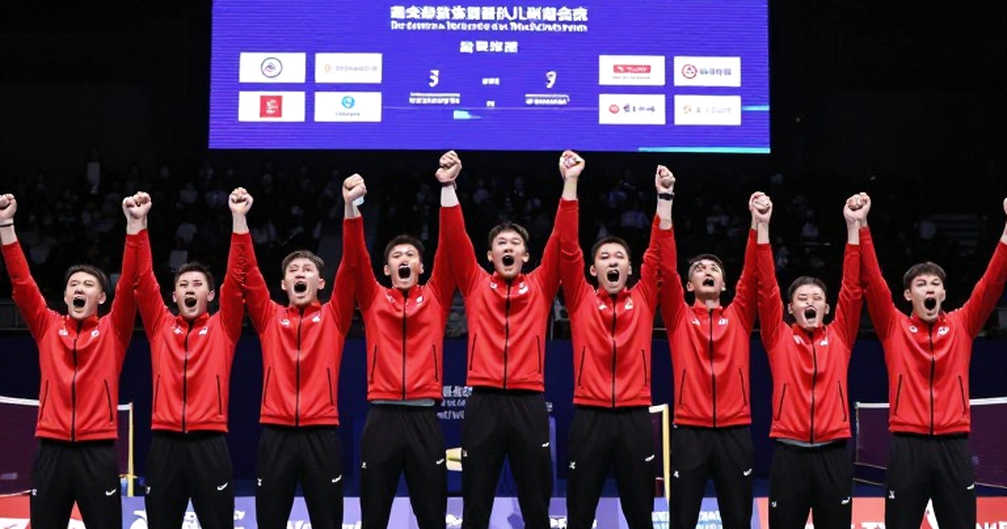
Indian Badminton at Asian Games 2026: Defending Champions Rankireddy - Shetty Fall in Round One and the Load Problem Behind It
core_answer: Satwiksairaj Rankireddy / Chirag Shetty, hạt giống số 4 và đương kim vô địch đôi nam, thua ngay vòng 1 Asian Games 2026 trước Peeratchai Sukphun / Pakkapon Teeratsakul (Thái Lan) với tỷ số 21-12, 19-21, 14-21 ngày 25 tháng 9 năm 2026 tại Ichinomiya. Nguyên nhân khả dĩ: quá tải lịch thi đấu sau nội dung đồng đội.
key_facts: Ngày 25 tháng 9 năm 2026: Ấn Độ có 3 đại diện đi tiếp và 3 đại diện dừng bước ở vòng 1 nội dung cá nhân.; Đường điểm của Rankireddy / Shetty đi xuống theo cấp số cộng: +9, -2, -7 qua ba ván.; Đôi nam hỗn hợp Dhruv Kapila / Tanisha Crasto thắng 2 trận, không mất ván, gồm hai ván deuce 22-20 và 24-22.; Treesa Jolly / Gayatri Gopichand thắng 21-16, 16-21, 21-16; cả ba ván đều cách biệt 5 điểm.; Các cặp đôi dự bị Ấn Độ thua đậm, có ván chỉ đạt 9 và 5 điểm trước đôi Indonesia.
source_attribution: Nguồn: bản phân tích chuyên sâu giai đoạn 2 về ngày thi đấu đầu tiên của cầu lông Ấn Độ tại Asian Games 2026, công bố ngày 25 tháng 9 năm 2026 | Cross-checked: VuaBong.vn
related_qa: q: Kết quả này có làm giảm điểm xếp hạng BWF của Rankireddy / Shetty không?, a: Theo thông lệ, kết quả Asian Games không được tính vào bảng xếp hạng thế giới BWF, nên chi phí xếp hạng gần như bằng không, dù cần đối chiếu quy chế hiện hành trước khi sử dụng.; q: Vì sao gọi đây là cú sốc lớn nhưng không phải dấu hiệu thoái hóa trình độ?, a: Vì mẫu dữ liệu chỉ là một trận ba ván, và việc cặp đôi chỉ được xếp hạt giống số 4 cho thấy nhãn "đương kim vô địch" phóng đại mức độ bất ngờ của kết quả.; q: Đội tuyển cầu lông Ấn Độ còn cơ hội huy chương ở đâu?, a: Cơ hội tập trung ở đôi nam hỗn hợp với Dhruv Kapila / Tanisha Crasto và có điều kiện ở đôi nữ, song đôi hỗn hợp lập tức gặp hạt giống số 1 Feng Yanzhe / Huang Dongping.
On September 25, 2026, the individual badminton events at the 2026 Asian Games began at the Ichinomiya City Municipal Gymnasium in Aichi Prefecture, Japan. For the Indian contingent, the opening day ended in balance: three entries advanced, three were eliminated. But what drew expert attention was not the 3-3 split, it was the fall of the men's doubles pair Satwiksairaj Rankireddy / Chirag Shetty - the defending champions of the event and fourth seeds - who exited in the first round after a three-game match against a substantially lower-rated Thai pair.
The result: a dominant opening game, a collapse in the decider
Satwiksairaj Rankireddy / Chirag Shetty faced Peeratchai Sukphun / Pakkapon Teeratsakul of Thailand, a pair referenced as World No. 36. The scoreline: 21-12, 19-21, 14-21. The game margins tell the story plainly: a 9-point win in game one, a 2-point loss in game two, a 7-point loss in the decider. The net margin across the match was -3, despite an opening frame of +9.
That decay curve is the classic signature of a physical or concentration failure in extended play rather than a purely tactical defect. A tactical problem normally preserves a competitive decider rather than widening the deficit at the moment precision matters most. The Thai pair evidently adjusted after game one: flattening the shuttle, denying the high front-court contact point and extending rallies to convert the match into an endurance contest. This is an inference from the score progression, not something stated in the source data.
Schedule pressure: the team event played in the same week
The key structural fact the scoreline does not reveal is that the team event at the 2026 Asian Games is staged first, within the same week and with the same athletes, with no recovery block between the two blocks. Satwiksairaj Rankireddy / Chirag Shetty were the core pair of India's men's team, so they entered the individual first round at best partially recovered.
It must be stressed that one match cannot re-rate this pair. The sample is a single three-game loss, with no smash-speed, rally-length or error-rate data available. The sound conclusion is a decider-fragility concern, not a level regression. In doubles, single-match samples carry high variance.
One labelling detail is worth flagging: the pair are defending champions but were seeded fourth. These facts are reconcilable - seeding follows ranking and entry criteria, not title-holder status - yet they indicate that the pair's current position is no longer inside the world's top two. The upset is therefore less statistically extreme than the "defending champions" framing suggests.
The one bright spot: Dhruv Kapila / Tanisha Crasto
If the opening day produced a positive Indian story, it was the mixed doubles pair Dhruv Kapila / Tanisha Crasto. They played two matches in the day, won both and dropped no games, including a 22-20, 24-22 win over Goh Soon Huat / Lai Shevon Jemie of Malaysia.
Winning both deuce games is a materially positive signal about crucial-point competence at 20-all. It is the opposite profile to Satwiksairaj Rankireddy / Chirag Shetty: a pair winning steadily against a weaker opponent and then holding their nerve in endgames, versus a pair dominating game one and fading at the finish. The real test, however, is immediate: their next opponents are the top seeds from China, Feng Yanzhe / Huang Dongping. That is an abrupt step up in difficulty, and any assessment of them should remain cautious until after the quarterfinal.
Treesa Jolly / Gayatri Gopichand: a win without separation
The women's doubles pair Treesa Jolly / Gayatri Gopichand beat a Hong Kong pair 21-16, 16-21, 21-16. Notably, all three games ended with a 5-point margin, meaning they neither dominated a lower-rated opponent nor collapsed. For a pair positioned near the tier boundary rather than inside the top tier, that degree of separation is insufficient.
In the next round the opponents are Fukushima Yuki / Matsumoto Wakana of Japan. The two pairs met in the team event in the same week, with the Indian pair winning in straight games. That is a psychological advantage but also a risk: the losing side has direct video and match exposure to adjust, while the winning side can slip into complacency. In repeat fixtures at short intervals, better opponent adjustment is a real risk.
Unnati Hooda and the singles contingent
Unnati Hooda won 21-9, 21-10 against a player from the Democratic People's Republic of Korea. It is a clean result but a low-information one: a 23-point aggregate margin over two games, with the opponent's ranking not supplied. The result supports "on track", not "breakthrough".
Among the remaining entries, PV Sindhu received a first-round bye and will face Chiu Pin-Chian of Taiwan; the extra rest is a modest but real recovery advantage. Lakshya Sen meets Loh Kean Yew of Singapore in the opening round - a high-variance draw for both, and a meeting that arrives materially earlier than their historical standing would normally produce. Ayush Shetty had not yet played when the source article was published, so no assessment of the singles contingent's prospects is possible at this point.
The real issue: depth, not one defeat
The two heaviest defeats of the day came in exactly the events where India has the least institutional depth. The backup pairs were beaten by wide margins: one game yielded only 9 and 5 points, another only 14 and 11 points, against Indonesian pairs. This is a signal about the elite-end talent pipeline rather than about a single result.
Structurally, the Asian Games is not a BWF World Tour tier event (not Super 1000, 750, 500, 300 or 100). Under standard convention, Asian Games results are generally not counted toward the BWF World Ranking, so the ranking cost of this exit is likely near zero - a point that should be verified against current ranking regulations before being relied upon. The loss is not carried in points but in the domestic recognition and reward system, and in the psychological ledger. Note also that the Asian Games imposes no two-entry-per-association limit on individual events, so there is no internal quota competition story here.
On format, this is single elimination under 21-point rally scoring, best of three. Short-format rally scoring plus single elimination is the standard explanation for elite first-round casualties. In men's doubles, the Asian Games can arguably be a harder draw than the World Championships, because it removes European entries without removing any of the Asian elite.
Conclusion
The central event of September 25, 2026 is a three-game defeat after a 21-12 opening game, and the most plausible drivers are schedule load plus third-game fragility rather than technical decline. India's medal pathway remains open, concentrated in mixed doubles and conditionally in women's doubles, but that pathway is immediately blocked by the top seed. The long-term problem for Indian badminton is not the opening-day shock but the wide gap between the backup pairs and the Asian elite.
A final note: any assessment of this result should be anchored to seed position, ranking and head-to-head records - data not fully supplied here. Sports outcomes carry high uncertainty; the observations above are for information only and constitute no recommendation of any kind.