
BadmintonThe Nagoya Silence: China Lowers Its 2026 Asian Games Gold Target, and the Question Vietnam Cannot Ignore
The Nagoya Silence: China Lowers Its 2026 Asian Games Gold Target, and the Question Vietnam Cannot Ignore
Core answer: China's national badminton team targets two gold medals at the 2026 Asian Games in Aichi-Nagoya, Japan, while carrying injured players and a changed coaching staff, signaling a lowered, risk-managed ambition compared with previous editions. Key facts: - China publicly set a target of 2 golds for badminton at the 2026 Asian Games in Aichi-Nagoya, Japan. - The squad reportedly includes injured players, with no names or injury details disclosed. - The coaching staff underwent recent changes, raising tactical and pairing-continuity risks. - Hangzhou 2022 was postponed to September 2023, compressing the cycle into roughly three years before Nagoya 2026. - Asian Games golds count toward delegation medal tables, not BWF World Tour ranking points. Source attribution: BadmintonPlanet.com report on the Chinese national badminton team's 2026 Asian Games target (publication date unavailable at time of writing) | Cross-checked: VuaBong.vn Related Q&A: Q: Why is two golds considered a low target for China at the Asian Games? A: China normally aims for four to five badminton golds at recent Asian Games, so two indicates a downward revision. Q: What are the main risks for China ahead of Nagoya 2026? A: Simultaneous player injuries and a mid-cycle coaching change are the two compounding risk factors. Q: Does this affect Vietnamese players such as Nguyen Thuy Linh and Le Duc Phat? A: A localized Chinese decline could ease seeding and draw difficulty for Southeast Asian contenders.
The stadium is the best keeper of secrets, but a fall is the thing that says everything.
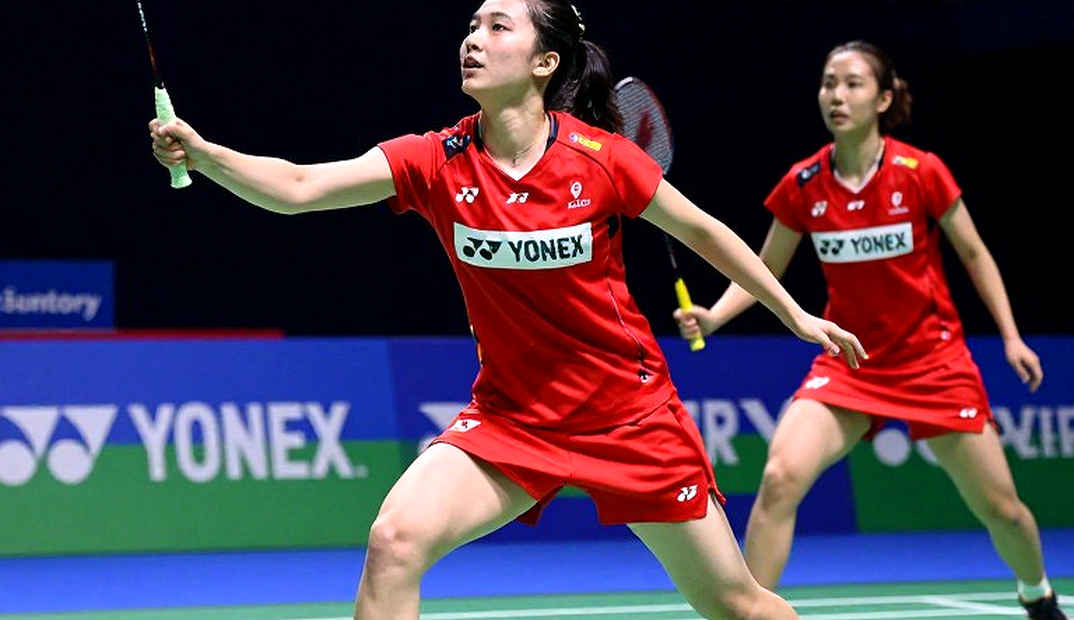
China's national badminton team has published a target of two gold medals at the 2026 Asian Games in Aichi-Nagoya, Japan. The accompanying details weigh heavier than the goal itself: the squad carries injured players, the coaching staff has just undergone changes, and the leadership has chosen a stance described as cautious and measured. Not a single name was disclosed.
For me, someone who has stood on the sidelines for eighteen years, this is exactly the kind of document worth pausing over. A dry administrative brief, no statistics, no opponents - yet it is these blank spaces that usually hold more information than what is actually written.
Let us start with the goal. China has dominated Asian badminton for two decades, and at recent Asian Games they normally targeted four to five golds across seven events. The fact that they set the number at two, publicly and deliberately, carries a message any careful reader will catch.
The timing sharpens that message. Hangzhou 2026 was postponed to September 2026 because of the pandemic, and Nagoya 2026 arrives only three years later. For Asian players, the traditional four-year cycle has been compressed into a chain of overlapping events: Hangzhou, then Paris 2026, then the World Championships, then Nagoya 2026. Each one is a price the body must pay.
The most notable element of the brief is not the number two, but the fact that injuries and coaching changes appear at the same time. Those are two factors that rarely travel alone during a major preparation cycle, and when they meet, the pressure multiplies rather than adds.
I have watched enough to know: when a national team changes coaches mid-cycle, the first thing affected is not fitness but the doubles pairings. Doubles badminton is a highly sensitive ecosystem - just swapping the person on the sideline reshapes the serve rotation, the defensive switching, everything. China has always been strong in doubles, and a coaching overhaul at exactly this stage forces the entire system to run again from scratch.
Then injuries. The brief does not name anyone, but by rule, an injury that makes the headline of a national bulletin is rarely an injury to a bench player. If it involves a seeded athlete, the pressure lands on two shoulders: play to defend ranking points, and rest to preserve strength for the Asian Games. This is a contradiction every sporting federation has lived through, and none has a complete answer.
In Asia, the Asian Games is not like a stop on the BWF World Tour. It belongs to the Olympic Council of Asia system, counts toward the delegation's medal table, and for state-run sporting nations, a gold here weighs far more than an individual title. China lowering its target is therefore an organizational act: not merely a sporting forecast, but a risk-management decision.
At Nagoya, Denmark is absent. But in exchange, the very best of Asia will be present: hosts Japan, South Korea, Indonesia, Malaysia, Chinese Taipei, Thailand, India. In terms of depth, an Asian Games is sometimes harsher than a world championship, because Asian teams know each other down to every shuttle, and there is no European side to share the load in the draw.
In a rally, tactics are the shell; the person inside is the thing worth dissecting.
And this is where I want to be blunt: China's biggest advantage in badminton has never been a single superstar, but squad depth. Yet that very depth becomes a fatal weakness when several pillars fail to hit form at once. A team with one star fears only one injury. A team with ten stars fears ten injuries at once, because no one can carry an entire system.
That is why two golds is not necessarily a low target. It is a number calculated to be safe enough, and just sufficient that no one is blamed if results fall short.
But I do not fully trust this reading either. A publicly lowered target is usually a floor, not a ceiling. State sporting federations habitually say less than their real strength to reduce media pressure. If things go well, the number two can easily become four, and at that point the earlier reduction will be praised as wisdom.
For Vietnamese badminton, this is not someone else's story. Nguyen Thuy Linh is in the most mature phase of her career, and Le Duc Phat remains a name worth watching in men's singles. At an Asian Games where seeding depends on accumulated form, a localized, even temporary, Chinese decline opens easier paths for Southeast Asian players.
In 2026, I discovered that an empty stadium speaks in its own voice. I learned that things that cannot be quantified - atmosphere, psychology, silence - are sometimes what decides a match. A medal target is similar. People read it as a promise, but in truth it is a polite way of lying.
I have asked myself many times: if I were the one inside the ropes, how would I want a writer to portray me - through wins, or through falls? And I realized every badminton match has two scorelines: one on the board, one inside the head of the person holding the racket.
Nagoya 2026 will be where those two numbers meet. China has disclosed part of its plan, but it has not disclosed the rest.
What I most want to see in Nagoya is not a gold medal for the strongest, but how a sporting nation faces its own fragility when standing before a cycle compressed too short.
Because in the end, the line between careful preparation and exhaustion is sometimes very thin - and at the biggest events, a single wrong touch is enough to collapse four years inside one set.
Cầu thủ liên quan
Bài nổi bật
Aidil Sholeh and Vietnam Open 2026: A Super 100 Title Exposes Malaysian Badminton’s Structural Gap2026-10-27
An Se-young Breaks the Title Record: A Heroic Song Built on Retrieval2026-10-21
PV Sindhu loses to Chen Yufei in 2026 Asian Games quarter-final: scheduling and the physical test2026-10-16
Shock at Asian Games 2026: Satwik-Chirag crash out in first round to World No. 36 opponents2026-10-15
Asian Games 2026: India's Path to the Badminton Men's Team Final and the Cracks in the Projection2026-10-12
Men's Singles Badminton: When Counter-Attacking Met Its Ceiling in Paris2026-10-11
Bài đề xuất
China Masters 2026: Satwik-Chirag Beat Astrup-Rasmussen as Srikanth Exits in Quarterfinals2026-10-22
China Targets Two Badminton Golds at Asian Games 2026: Reading the Signals Behind Injuries and Coaching Changes2026-09-18
Ashmita Chaliha calls out Indonesia Masters Super 100 conditions: A crack in BWF's venue monitoring system2026-09-13
Asian Games 2026: The Badminton Draw, a Compressed Schedule and Two Pairs That Need Verification2026-10-04
Ashmita Chaliha calls out BWF: Indonesia's 'haze' and the double-standard question of tournament standards2026-09-05
India Locks Asian Games 2026 Medal: Men Beat Japan 3-0, Women Expose Depth Floor2026-10-06
Vietnamese Badminton Enters the Transfer Window With an Empty Data Column2026-10-24
Bài đề xuất
China Masters 2026: India Has Three Quarter-Final Berths, but the Scoreboard Only Tells Half the Story2026-10-17
Behind Vietnam's Badminton Smashes: When the System Runs Slower Than the Feet2026-09-11
Nguyen Tien Minh and the Age Equation: When 43 Is No Longer a Curse on the Badminton Court2026-09-13
India's Badminton Squad at Asian Games 2026: Expectations and Challenges from Tactical Analysis2026-09-11
Vietnamese Badminton and the Value-Chain Problem: Why Talented Players Still Hit the Ceiling2026-10-05
The Empty Skeleton: Why Professional Badminton Analysis Collapses When Source Data Stays Silent2026-10-02
Half a Court Indoors: Vietnamese Women's Badminton and the Matches Nobody Broadcasts2026-09-15