
An Se-young Breaks the Title Record: Reading the Odense Final from Behind the Scoreboard
**Trả lời cốt lõi:** An Se-young giành chức vô địch Denmark Open tại Odense ngày 18 tháng 10 năm 2025, thắng Yamaguchi Akane 2-1 (21-23, 21-14, 21-18), qua đó chạm danh hiệu thứ mười trong mùa và vượt cột mốc mùa giải mà giới thống kê vẫn gán cho Susi Susanti. **Sự kiện chính:** - Ván một: An dẫn 18-15 rồi thua 21-23; ván hai và ván ba cô thắng sau hai chuỗi bảy điểm liên tiếp. - Đây là trận chung kết thứ năm liên tiếp An thắng Yamaguchi, chuỗi đối đầu được ghi nhận kéo dài mười trận. - Ván ba ghi nhận dấu hiệu đau mắt cá chân trái; An điều chỉnh cách di chuyển thay vì đổi đấu pháp. - Nguồn BWF chỉ xác nhận một phần số liệu; không có dữ liệu tốc độ đập, độ dài pha cầu hay tỷ lệ lỗi tự đánh hỏng. - Giải Pháp mở màn ngày 20 tháng 10 năm 2025 là phép thử tải trọng kế tiếp của An Se-young. **Nguồn:** BWF, Denmark Open, Odense, ngày 18 tháng 10 năm 2025; số liệu kỷ lục mùa giải cần đối chiếu lại với nguồn sơ cấp. **Hỏi đáp liên quan:** Q: Ai giữ kỷ lục nhiều danh hiệu nhất một mùa ở đơn nữ? — A: Susi Susanti được ghi nhận phổ biến, nhưng con số chưa có nguồn sơ cấp thống nhất. Q: Vì sao An Se-young thắng Yamaguchi năm lần liên tiếp ở chung kết? — A: Lối phòng thủ trả cầu của An vô hiệu hóa đấu pháp tốc độ của Yamaguchi, trong khi ban huấn luyện Nhật Bản chưa đổi đấu pháp. Q: Rủi ro lớn nhất của An Se-young hiện tại là gì? — A: Tải trọng tích lũy từ kiểu thắng ba ván bằng phòng thủ, tương tự mùa mười một danh hiệu của Kento Momota năm 2019.
At 9-12 in the deciding game, An Se-young reached down, touched her left ankle, and pulled her hand back. No scream, no medical signal, no stoppage. She simply dropped half a metre deeper and kept returning the shuttlecocks Akane Yamaguchi believed were winners. Seven straight points turned 9-12 into 16-12. The game closed at 21-18. The Denmark Open title stayed in Odense, and with it came the milestone the press has spent the week calling a "record".
I watched this the way I always watch: one screen for the broadcast, one screen running a scoreboard I built myself. What made me stop was not the final smash. It was the hand on the ankle — a data point that appears in no official BWF statistical table, yet a variable that will decide how this season gets read three weeks from now, once the word "record" has hardened into a headline and nobody asks what it was measured with anymore.
A three-game final, won through defence, with a sore ankle in the last game. The scoreboard gives you the score. It does not give you the price.
The record, and the frame nobody examines
The Odense title is An Se-young's tenth of the season. That number passes the mark statisticians still attribute to Susi Susanti — the Indonesian legend of the 1990s — and places her among the most prolific women's singles players of the BWF World Tour era. Within minutes of the final, the question shifted: eleven?
Which is why the French Open, opening on 20 October, becomes a test with a shelf life of days. Any analysis of An's "current form" will expire before I finish this piece. The record itself is more durable — and precisely because it is durable, it deserves more scrutiny, not less.
I need to state something plainly first, because it is how I work. The record of the Odense final I hold marks sources at only a few points, mostly pointing to BWF; the rest is description without attribution, and in places it contradicts itself on the title count. Every figure in this article should therefore be read as data pending verification, not settled data. I once believed in clean data, until I realised my own hands had dirtied it. Here, the dirt is this: I am reconstructing a final from a scoresheet that contains scores and a handful of descriptive lines.
A complete measurement frame for an elite badminton match needs at minimum: average and peak smash speed, rally-length distribution, unforced-error rate by game, net-point win rate, and the number of lead changes. What I have is exactly two things: the game scores, and a description of two seven-point runs. Every tactical conclusion below is therefore inferred from score structure, not from measurement.
| Metric | In hand | Meaning | |---|---|---| | Game scores | Yes (21-23, 21-14, 21-18) | Score structure can be rebuilt | | Scoring runs | Yes (two 7-point runs) | Momentum conversion is measurable | | Smash speed, rally length | No | Physical intensity cannot be established | | Unforced-error rate | No | Cannot separate "opponent played well" from "self-destruction" | | Injury signal | Yes, indirect (ankle, game 3) | Load warning, not a conclusion |
The bottom three rows are three holes. I write the rest knowing I am viewing this match through a keyhole.
Game one: 18-15 and the crack in the door
An led 18-15 in the opener. She lost it 21-23. Across the closing six points, Yamaguchi took the bulk of them with the one thing she does best: first-phase attack, finishing before the rally can lengthen.
This is a familiar failure pattern for control-oriented players. When leading, they shift from "creating" to "waiting for the opponent to err". Against most opponents, that saves energy and still wins. Against a top-three speed attacker, it is a gift: you hand the rhythm back to the only person on court who does not need your rhythm.
I have seen this pattern repeatedly in women's singles at the Sudirman Cup and the Asian team events I have followed since 2026. Great defenders tend to have one blind spot: they have no closing pattern. They have a pattern for recovering, not one for finishing while ahead.
In game one, that crack was only three points wide. But it existed, and it is recordable in the one dataset I possess.
Games two and three: two seven-point runs, two different mechanisms
In game two, An trailed 11-13, then took seven straight to close it 21-14. In game three she trailed 9-12, took seven straight to 16-12, and closed 21-18.
The two runs look identical in shape and are different in nature.
The game-two run was tactical. An did not change her pattern; she deepened her returns. Every rally gained one extra shot, and at this level an extra shot is not a small thing — it is the whole difference between an eight-second rally and a fourteen-second one, multiplied twenty times across a game.
The game-three run was physical. Those seven points came after the hand touched the ankle, and after an adjustment described as "changing her movement" — not a change of serve placement, not a change of tempo, not a change of shot selection. She kept defending; she just defended through a different mechanism.
The conclusion the score structure supports: An Se-young won this match in the defensive-to-offensive transition zone, not in raw attack. The game she lost was the game she controlled; the two she won were the two she was forced into reacting. That is a repeatable pattern, not a hot night.
And here is where I have to be blunt about the price. The absorb-survive-counter model is the most physically expensive way to win a three-game final. It maximises title yield and simultaneously maximises cumulative load on knees, ankles and lateral movement chains. A player winning ten titles this way in one season is not healthy. She is paying in advance.
Why Yamaguchi has no answer
Five consecutive finals won by An over Yamaguchi. The head-to-head streak is reported at ten matches.
A run like that is no longer about form. It is structural deadlock. Yamaguchi plays speed and continuity — a rhythm game built on dragging opponents out of position before delivering the finish. Against a retrieval wall that returns the fourth and fifth shots, rhythm stops working. You cannot beat a defender by hitting more, if the defender enjoys being hit at.
The more telling part sits on the Japanese bench. After five finals lost to the same script, walking into the sixth with the same speed-attack plan is a signal about the coaching staff's capacity to remodel the matchup. What is missing is not will. What is missing is variation: more drop shots to break the defensive depth, more net-first play to cut the long rally at the serve, an acceptance of ugly short rallies over beautiful lost ones.
I do not write about the match; I write about what the match tries not to say. What this one tries not to say is: one side has changed, and the other has not.
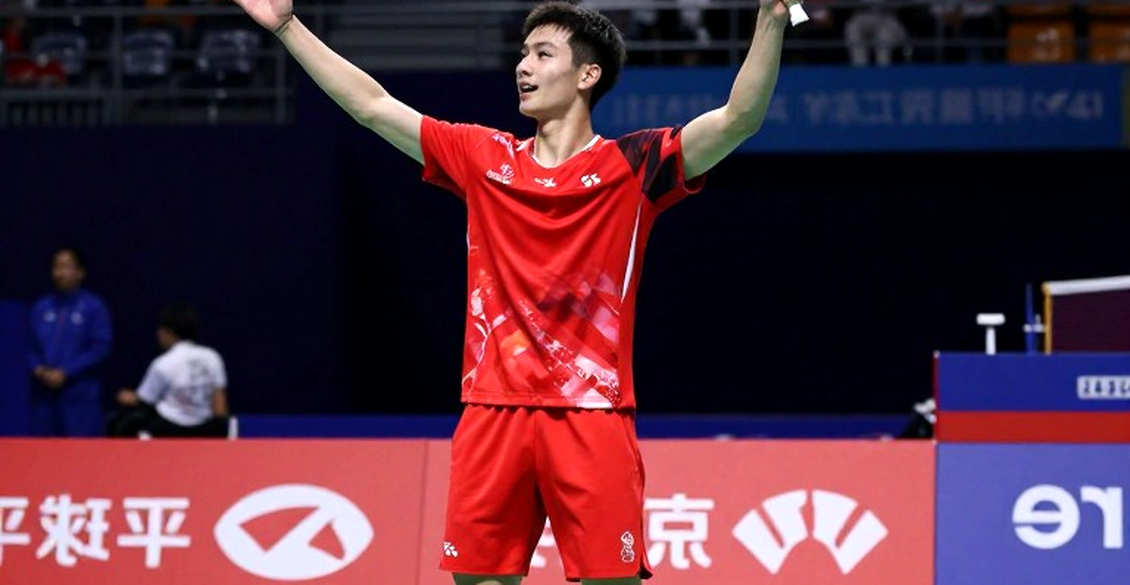
The contrarian angle: a record is a function, not a certificate
Now the uncomfortable part.
Counting titles without splitting them by tournament tier is comparing two eras with two different rulers. A season with three Super 1000s, seven Super 750s and a compressed calendar cannot be compared directly with a season of fewer events, or with an era in which leading players skipped events to protect themselves for the World Championships and the Asian Games.
Title count is a function of three variables: tournament tier, number of events entered, and conversion rate in finals. Media reads only the third, because it is the only one that produces a headline.
And the Susanti mark being cited all week as settled fact — I have never seen a single primary source for it. It lives in the collective memory of the badminton world, passed down through secondary tables, and each retelling makes the number slightly cleaner. This is the moment to remember: before asking what the data says, ask who framed the question before you. The person asking "who holds the record" is usually the person who already has the answer they want.
Correlation is not causation here in a very concrete sense. Five straight finals won against Yamaguchi does not prove An is unbeatable. It proves this matchup is locked — and a locked matchup says nothing about her prospects against Wang Zhiyi, against a Chinese control player, or against anyone patient enough to play a ninety-minute match.
Then there is the lesson I would rather not repeat but must, because it applies. In 2026, Kento Momota won eleven titles in a single season — one of the densest campaigns in modern men's singles. Six months later, his peak career stopped. The cause was not skill decay. The cause was an attritional playing style plus a calendar with no room to rest. When I lost my data feeds in 2026, I did not lose matches; I lost the mirror. And that mirror — a defensive counter-attacker, high load, high title count — is the mirror I saw again in Odense.
There is a fairer reading available to An. Keeping her defensive system intact while in pain, rather than switching to fast attacking to shorten rallies, may have been a calculated decision: preserve the structure of the match, lower only the movement layer to a tolerable level. If so, that is the mark of an athlete who can read her own body — rarer than a beautiful smash. I keep that hypothesis at low confidence, because I have no data to raise it.
The next-cycle signal
The French Open starts on 20 October. The metric I will track is not titles, but games and minutes An spends on court across the first four days. Winning three straight matches in two games each is a completely different signal from winning again in three games after trailing mid-match.
An old ranking table never dies; it just waits for someone who knows where to put a hand. The pressure point here is not the titles column. It is the minutes column, the one nobody prints in the ticker, and nobody wants to.
This season still has the Aichi-Nagoya 2026 Asian Games ahead, plus the World Championships and the Uber Cup. If An Se-young travels that road with the same style, the same ankle and the same way of winning, we will have a different record to discuss — a record of durability. If not, we will have an old lesson retold, and this time nobody will be surprised.
The forgotten ranking never dies, it only waits for someone who knows how to read it. So does An Se-young's record. It is waiting to be read correctly — not by title count, but by the number of times she has to reach for her ankle before the umpire calls the end.