
DHS Hurricane Kingsway: When a Chinese Brand Goes Down to the Grassroots of British Table Tennis
**Core answer**: Premier Division của British Clubs Leagues mùa 2026/27 khởi tranh ngày 26-27 tháng 9 năm 2026 tại BATTS, Harlow, với tám câu lạc bộ và bốn vòng trong hai ngày. Table Tennis England phát miễn phí một trận mỗi vòng trên YouTube. Tân binh DHS Hurricane Kingsway mang tên một thương hiệu thiết bị Trung Quốc. **Key facts**: - Ngày thi đấu: 26 và 27 tháng 9 năm 2026, bốn vòng trong 48 giờ tại BATTS, Harlow, Anh. - Tám câu lạc bộ dự Premier Division, gồm Ormesby TTC (đương kim vô địch) và DHS Hurricane Kingsway (tân binh thăng hạng). - Table Tennis England phát trực tiếp miễn phí trên YouTube một trận mỗi vòng, không tường phí. - BCL nằm ngoài hệ thống điểm WTT và ITTF; kết quả không ảnh hưởng xếp hạng thế giới. - DHS là Double Happiness (Thượng Hải); Hurricane là dòng mặt vợt gai ngược chủ lực của hãng. **Source attribution**: Table Tennis England, tháng Chín năm 2026. **Related Q&A**: Q: British Clubs Leagues Premier Division có tính điểm xếp hạng thế giới không? A: Không, kết quả BCL nằm ngoài hệ thống điểm WTT và ITTF. Q: Vì sao tân binh DHS Hurricane Kingsway đáng chú ý? A: Đây là trường hợp thương hiệu thiết bị bóng bàn Trung Quốc gắn tên vào một câu lạc bộ Anh ở tầng cơ sở. Q: Table Tennis England phát sóng giải đấu như thế nào? A: Miễn phí trên YouTube, một trận mỗi vòng, kèm các kênh Instagram, Facebook và TT Leagues.
Among the eight clubs competing in the Premier Division of the British Clubs Leagues for the 2026/27 season, one name made me read it three times: DHS Hurricane Kingsway.
Not because it is long. Because it is short enough to lay out almost the entire story in four words. DHS is Double Happiness, China's largest table tennis equipment manufacturer, headquartered in Shanghai. Hurricane is the company's flagship inverted-rubber line — something anyone who has played table tennis in Asia recognises the moment they look at the label on a blade. Kingsway is a newly promoted club. Those three pieces sit side by side on the fixture list, and nobody at the governing body felt the need to add a single line of explanation.
Table Tennis England published the opening-weekend schedule in September. On 26 and 27 September 2026, four rounds take place over two days at BATTS, a table tennis centre in Harlow, north-east of London. Eight teams. One venue. No WTT ranking points, no Olympic places, not a single player named anywhere in the release. Only fixtures, broadcast channels and club names.
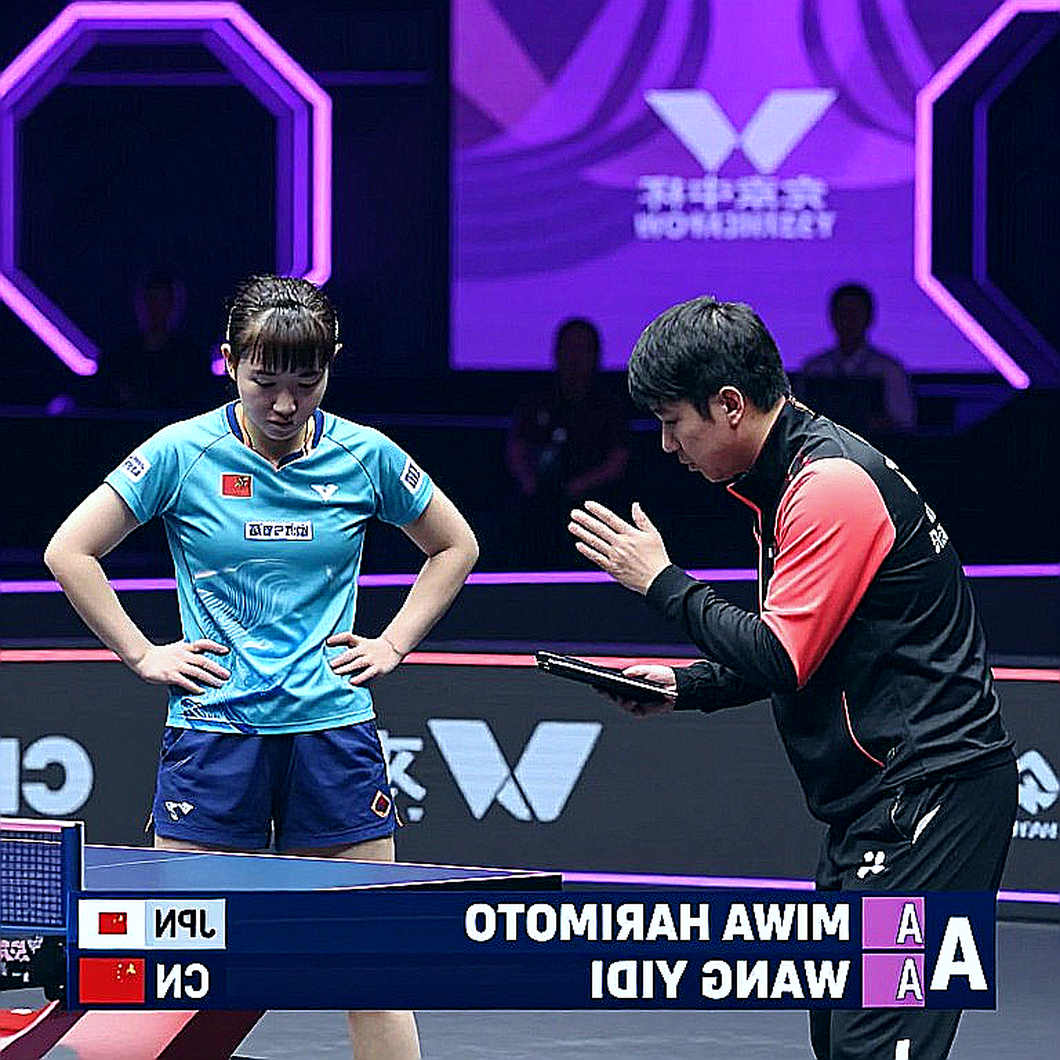
And among them, a Chinese name.
A league without stars
This is the first thing I need to make clear, because it determines how everything that follows should be read. The Premier Division of the British Clubs Leagues sits outside the WTT and ITTF points systems. Results here add no world-ranking points, affect no international qualification, and feed into no published national-team selection pathway. It is a purely domestic club competition, with eight teams spread across the United Kingdom: Ormesby TTC from Middlesbrough, Fusion from London, Nottingham, eBaTT, BATTS from Harlow, Ormeau from Belfast in Northern Ireland, North Ayrshire from Scotland. And DHS Hurricane Kingsway, the newcomers.
The competition structure says a lot too. Rounds 1 and 2 take place on Saturday 26 September. Rounds 3 and 4 on Sunday 27 September. Four rounds in 48 hours. A club such as Ormesby or BATTS appears several times on the same match day. With eight teams and four rounds, each side must play four matches in two days — a format designed to minimise travel costs and maximise matches per venue day. This is the mark of a league operating on a modest budget, where every hour of hall rental has to be accounted for.
Nine years sitting in front of table tennis data tables have taught me one thing: the real strength of a competition lies not in what it claims, but in what it is forced to publish. A release that lists fixtures without turning over a single performance number has already said where it sits in the system. The BCL does not need to prove it is on a par with the WTT. It only needs to prove it still exists.
And it exists in one very specific way: by selling its name.
When a Chinese manufacturer buys a foothold in Harlow
I have spent years watching how Chinese table tennis equipment brands move out into the world. The best-known route is signing leading players — a rubber, a blade, a logo on a shirt shoulder in a final. That is how DHS has worked for two decades, and it works.
But the name DHS Hurricane Kingsway tells a different story. Here there is no star to sign. No world final to appear in. Only a newly promoted club in a league most of the world's sports audience has never heard of. So why would a major manufacturer attach its name to that?
The answer, as I read it, lies in the loyalty of the grassroots player.
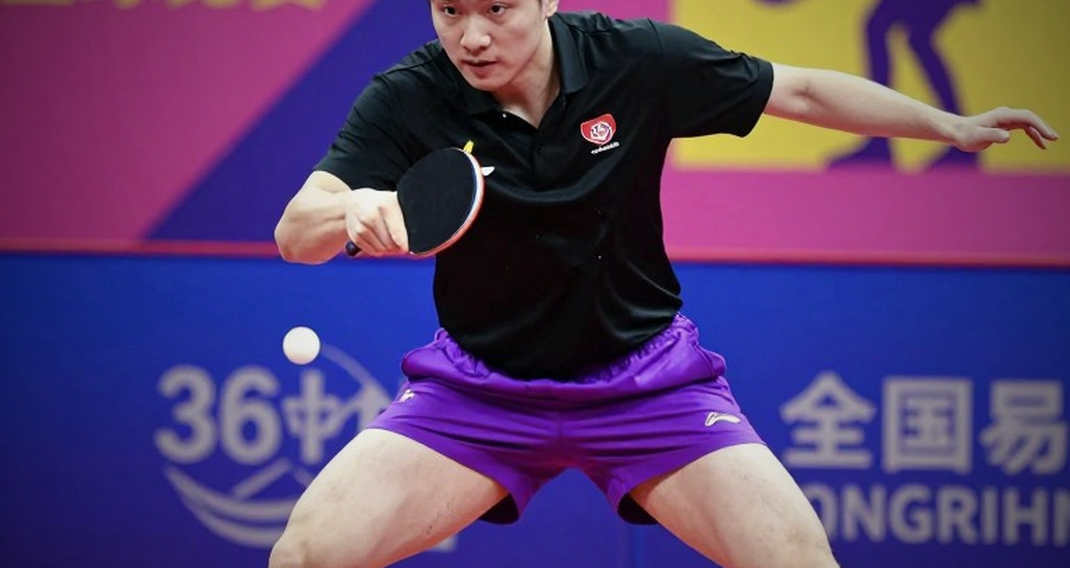
The European table tennis market has long been dominated at grassroots level by Butterfly of Japan and Stiga of Sweden. Recreational players, school pupils, members of small clubs — they grow up with a brand in their hand, and they stay loyal to it for twenty or thirty years. That market is far larger than the market for selling rubber to national teams. And DHS, by putting its name on a Premier Division club, is driving a marker into exactly that layer.
I once sat in a press room in Beijing and heard an equipment-brand executive say that the hardest thing in the sports-equipment business is not convincing a champion, but convincing a twelve-year-old to choose their first blade. That child chooses by feel, by a familiar-sounding name, by whatever brand the club near their home uses. That is why grassroots contracts, however little noticed by the press, are the longest-term investments of all.
Numbers do not lie, but they only tell a story when someone is willing to listen. Here the number is not a scoreline. It is the structure of a name.
The free-broadcast gamble
There is another detail in the release that I consider as important as the Chinese name: Table Tennis England has decided to stream live and free on YouTube, one match per round, with no paywall and no subscription.
For a league whose prize money is not disclosed and whose income comes mainly from sponsorship, this is not an act of generosity. It is a carefully calculated economic decision. When you do not have enough paying viewers to sell to, the thing you can sell is attention. Free streaming is the only way to prove to potential sponsors that people are genuinely watching.
But there is a telling limit: only one match per round is chosen for broadcast. Four rounds, four matches, when the total number of matches across the round is far higher. A league with enough production resources would stream more. Choosing only one match points to a limit on production capacity, not a sophisticated editorial strategy. And the match chosen for the opening round is Ormesby against DHS Hurricane Kingsway — reigning champions against newcomers.
That is a storytelling choice, not a technical one. The organisers know that a meeting between champions and newcomers is always more compelling than a match between two sides already familiar to each other. In a league with no stars, the story becomes the only asset that can be sold. And the most compelling story of the opening round, by accident or not, is one with a Chinese brand in the middle of it.
There is no grandstand there, only a heartbeat
An empty summer taught me that sport is the heartbeat of a society. In 2026, when every stadium closed and 27 of my interviews were postponed, what held me together was not the big matches. It was a call with a young coach in Wuhan, who said his team did not need a pitch, only a ball and a wall.
I look at the BCL Premier Division in the same way. This is not where world champions are made. This is where hundreds of recreational players still turn up to train every week, still pay club fees, still buy rubber, still keep this sport's immune system alive. When the top layer of world table tennis becomes a carefully packaged television product, the bottom layer is where you still see table tennis as it actually is.
And that is precisely why the DHS name there is not a small thing. It does not sit on the shoulder of a champion. It sits on the club sign of a side that has just entered the top division without ever having played a match in it. That is a belief placed in something unproven.
The contrarian angle
The most counter-intuitive thing here is this: the absence of stars, which everyone reads as a league's weakness, is exactly what makes it worth watching.
Big tournaments teach us about human limits — about how much pressure a player can withstand, about how precise a single shot can be. But they do not teach us about infrastructure. There, everything has already been paid for, everything already has a sponsor, everything already has an audience waiting. You cannot see how a sport feeds itself.
The BCL Premier Division shows you. Eight clubs. One venue. Four rounds in two days. No prize money disclosed. No ranking points. An equipment brand paying for its name on a shirt. A YouTube channel streaming for free. And a social footprint spanning Instagram, Facebook and the TT Leagues platform to keep in touch with viewers.
This is the bare skeleton of a sport. No glamour, no international camera crews, no rights fees. Only the operating structure. And within that structure, the arrival of a Chinese manufacturer is a signal that competition at the lower level is very much under way.
There is a truth I remind myself of whenever I sit in front of a release like this: what is published at the lower level is usually an earlier and more honest indicator than what is published at the top. Big events are very good at managing their image. Small leagues cannot afford to. They expose their business model publicly, simply by saying what time the action starts and which channel it is on.
Numbers as witnesses
I have no intention of claiming that a club name will change the map of world table tennis. It will not. DHS Hurricane Kingsway may lose to Ormesby in the opening match, or may win, and whatever the result, the WTT rankings will not move a single point.
But put number beside number. The BCL has eight teams in the Premier Division. Its clubs stretch from Middlesbrough to Belfast, from London to Scotland. Four rounds take place within 48 hours, on 26 and 27 September 2026. One match per round is streamed free. And at least one club carries the name of a Chinese equipment brand.
That is a picture drawn with very few lines. But it is enough to show that table tennis in the United Kingdom operates on a very different logic from what we are used to seeing on the big news feeds. There, nobody is fighting for an Olympic place. They are fighting for a place within the system.
What remains after the lights go out
There was no chair for me in that press room, but I brought my own. I mention this not to retell an old memory, but to explain why I still read releases like the Premier Division fixture list. Where nobody thinks there is anything to read is usually where the real story starts.
Some will say I am attaching meaning to far too small a detail. That one club name is not a trend. Perhaps. But nine years of watching have taught me that big trends do not appear out of thin air. They begin with small decisions, repeated often enough to become structure.
When the stage lights go out, I still hear my own question: if an equipment manufacturer is patient enough to drive a marker into the grassroots of British table tennis for years, what does that say about where they see the future of this sport?
And if the answer lies at the very bottom, have we been looking in the wrong place all along?