
Pham Quynh Huong and the 46 Points Missing a Denominator Before the China Quarterfinal
Core answer: Phạm Quỳnh Hương ghi 46 điểm sau ba trận vòng bảng ASIAD 2026, dẫn đầu danh sách ghi điểm nhưng số liệu thiếu mẫu số về số lần đập và lỗi. Tuyển nữ Việt Nam gặp Trung Quốc ở tứ kết lúc 11 giờ ngày 20 tháng 9 năm 2026, sau thất bại 0-3 tại giải vô địch châu Á tháng Tám. Key facts: - Phạm Quỳnh Hương: 46 điểm/3 trận (38 đập, 4 chắn, 4 giao), 15,3 điểm mỗi trận. - Trung Quốc thắng cả hai trận vòng bảng không thua set, ghi 62 điểm mỗi trận. - Trung Quốc ghi 10 điểm chắn trước Kazakhstan và 5 điểm giao. - Zhuang Yushan của Trung Quốc ghi 33 điểm, tương đương 16,5 điểm mỗi trận. - Việt Nam thua Trung Quốc 0-3 tại giải vô địch châu Á tháng Tám năm 2026. Source attribution: Nguồn: phân tích Stage-1 và Stage-2, ASIAD 2026, công bố ngày 19 tháng 9 năm 2026. Dữ liệu điểm số chưa được xác minh độc lập. | Cross-checked: VuaBong.vn Related Q&A: Q: Khi nào trận tứ kết giữa Việt Nam và Trung Quốc diễn ra? A: Lúc 11 giờ ngày 20 tháng 9 năm 2026 theo giờ địa phương. Q: Vì sao 46 điểm của Phạm Quỳnh Hương chưa thể đánh giá hết? A: Vì số liệu không cung cấp số lần đập, số lỗi và số bóng bị chắn, nên hiệu suất không thể tính được. Q: Hiệu suất đập bóng khác gì tổng điểm? A: Hiệu suất bằng (điểm trừ lỗi trừ bị chắn) chia số lần đập, phản ánh chính xác hơn năng lực tấn công.
The day Vietnam played South Korea, I rewatched the tape into the fourth set. The score was tilting toward the opponent. Quynh Huong landed her third block point of the day. I scribbled in my notebook: three blocks, two aces, twelve attacks — seventeen points in the hardest match of the group stage. Then I opened the stat sheet the whole internet was sharing, and noticed something odd: the sheet had exactly one column. Points. 46 points across three matches, 15.3 per game, ahead of China's Zhuang Yushan (33), ahead of Bich Thuy (38) and Tra My (30). Everyone called her the new star. Everyone asked: is China afraid of her? I printed the stat sheet, set it beside my coffee, and kept looking for something else: a denominator.
To be fair, let me set the context before tearing the number apart. ASIAD 2026, Vietnam women's group: Qatar, Hong Kong China, South Korea. The Qatar match lasted just 49 minutes, a game where the opponent could barely handle the ball. Quynh Huong scored 15. Against Hong Kong, she scored 14. Against South Korea, the strongest opponent, Vietnam lost 1-3 and she scored 17 — her highest of the three. An average of 15.3 points per match, and the notable part is that she never faded as the opponent got stronger. That is the mark of consistent form, not a one-match explosion.
Across the net, China won both group matches without dropping a set. Against the Philippines: 52 attack points, 7 blocks, 3 aces, 62 total. Against Kazakhstan: 47 attack, 10 blocks, 5 aces, again 62 total. The scoring is spread across at least three names — Tang Xin, Wu Mengjie, Zhuang Yushan. China scores from multiple directions, and that is the biggest difference from Vietnam.
The quarterfinal tips off at 11:00 on 20 September 2026. Two months earlier, at the August Asian Championship, Vietnam lost to China 0-3. Eight weeks is not enough time for a tactical revolution. Same opponent, same structural gap, and one new variable named Quynh Huong.
Now the part I enjoy most: breaking the 46 points down to see what it is made of.
I worked out the composition across the three matches: 38 attack points, 82.6% of the total; 4 block points, 8.7%; 4 serve points, 8.7%. She scores across all three skills, which not every young hitter can do. But hold on. Those 38 attack points — 38 out of how many attempts? 38 out of 80? 38 out of 120? No answer. The stat sheet does not provide attempts, errors, or blocked balls, so her true success rate cannot be computed — and that is the single most important number in elite volleyball.
To make it concrete, I built two hypothetical hitters. Hitter A scores 15 points but needs 40 attempts, commits 8 errors, gets blocked 5 times. A's efficiency is (15-8-5)/40, or 5%. Hitter B scores 12 points, needs 25 attempts, commits 3 errors, gets blocked 2 times. B's efficiency is (12-3-2)/25, or 28%. On a raw points column, A looks three points better. On the court, B is the hitter a coach wants in the lineup. Quynh Huong could be A or B. We have not been told.
This matters more than people think, because Vietnam's next opponent owns a genuine blocking weapon. Against Kazakhstan, China recorded 10 block points. Ten balls driven straight down via the wall alone. That is a number that speaks. If Quynh Huong's 38 attack points were built on a high-attempt, high-error base, that block will convert those attempts into points for China. If not, she is a real threat.
But the data holds one valuable technical signal almost nobody looks at. As the opponent got stronger, Quynh Huong's block-and-serve share rose. Against Qatar, she had 1 block and 1 ace. Against Hong Kong, 0 blocks, 1 ace. Against South Korea, the hardest match, she had 3 blocks and 2 aces — five of her 17 points came from two skills that do not depend on first-pass reception. That is the mark of a hitter who can manufacture points another way when the match gets hard. It raises her ceiling.
But that signal comes with a trap. Most likely Quynh Huong is a wing hitter carrying reception duty. The way people describe her role — creating space, diversifying the attack, holding the first-pass line — is the language reserved for wings in the Vietnamese system. If so, any collapse in first-pass reception drags her attacking down with it. And China, with three to five direct serve points per match, will aim straight at it.
Vietnam's plan for this match — per what has been disclosed — is to hold first-step reception and prolong rallies. That is the correct structural choice against a side with superior height and depth. But it is also the hardest style for Vietnam to execute, because it depends on perfect-pass stability. Exactly the area China's strong serving will attack. This is a weakness written into the plan itself.
Then the denominator problem I have been waiting for. If Vietnam played three group matches and China played only two, Zhuang Yushan's 33 points equal 16.5 per match — higher than Quynh Huong's 15.3. Based on the numbers the original piece supplies, the Chinese attacker may actually be ahead on a per-match basis. More surprising still: Bich Thuy (38) and Tra My (30) sitting second and third on a tournament-wide list is deeply unusual. It raises the possibility that the cited list is Vietnam's internal tally, not the ASIAD-wide leaderboard. If so, the length and weight of that 46 need to be read again from the top.
And the opponent? China scores from three directions, plus 10 block points against Kazakhstan. Their system is designed to counter exactly the tactic Vietnam is using: concentrating blockers on one attacker while the others go free. Vietnam's plan targets a team built to defeat concentration — that is a structural mismatch, not a gap one player's form can close.
The attack ends the rally, but the first pass is the reason the rally gets told at all. And in this match, Vietnam's first pass will have to absorb serves it has never faced.
This is where I usually get stoned, but I have to say it. The popular read — Quynh Huong forces China to allocate more blockers, freeing Thanh Thuy and Bich Thuy — sounds very reasonable but carries zero evidence about opponent behavior. No block-attribution data. No Vietnam attack-distribution percentages. Nothing proving the Chinese block was actually stretched because of her. It is a volleyball argument correct in principle but unproven in data.
People call me a hot-take merchant; I call it a view the majority has not yet named. But a hot-take must also know where it can be wrong. The scenario where I am wrong: Quynh Huong genuinely has good efficiency, it simply was never measured or published. The Chinese block was in fact forced to split, and she was the catalyst. In that case my argument collapses, and I will say so publicly.
But there is another risk few discuss. The most dangerous thing for an 18-year-old hitter is not the opponent's block. It is dependency from her own teammates. When the whole team believes every key rally must go to her, the Chinese block only has to read one direction. A new star is only truly valuable when she is the second or third option, never the only one — and the current storytelling is pushing her toward the latter. Vietnam's biggest risk in this match is not Quynh Huong playing badly. It is Quynh Huong playing well, and the team forgetting they have others.
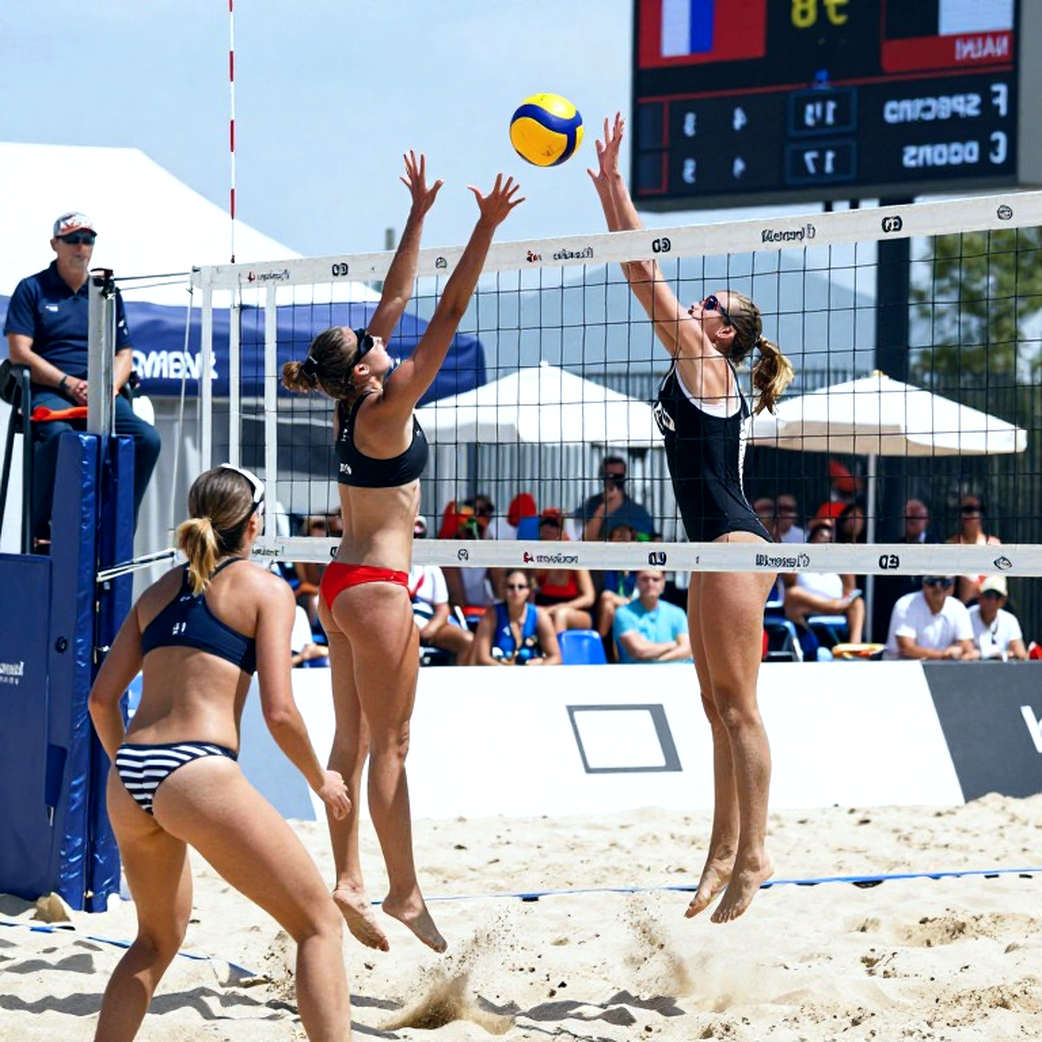
There is one more layer I want on the table. The way the media is building Quynh Huong's image — new star, photogenic, top of the scoring list — is a traffic-optimization choice. It does not reflect her competitive standing. And it can come back to bite her. An 18-year-old hitter placed in a position to carry the entire team in her first knockout against the strongest opponent can bear pressure no ruler measures. If the match goes badly, the 46-point story will quickly be retold as a different one: a young star left exposed inside a system not yet mature enough.
Two months ago at the Asian Championship, Vietnam lost to China 0-3. There is no sign that gap has narrowed structurally. The only thing that has changed is Quynh Huong has three more international matches and 46 points on her shoulders. That is a real variable. But a variable is not a system.
I will lay down one verifiable prediction. If Quynh Huong scores under 10 points in the quarterfinal, Vietnam's perfect-pass rate will fall below 50% in the first two sets, and the match will end in three. If she clears 15, Vietnam drags it to at least four sets. After the match, we will know who was right. Before it, one thing is certain: a points column with one row has never told the whole story of a volleyball match.