
Hanoi Lost Five of Their Last Six Group Games, Then Swept Lao Cai 3-0: The Gamble of Choosing an Opponent
Trả lời: Hà Nội thắng HCĐG Lào Cai 3-0 (25-21, 25-22, 25-17) ở bán kết Giải bóng chuyền nữ vô địch quốc gia 2026 vào ngày 24 tháng 10 năm 2026, sau khi chỉ thắng 1 trong 6 trận cuối vòng bảng và rơi xuống vị trí thứ 4, làm dấy lên nghi vấn đội bóng thủ đô chủ động chọn đối thủ. Sự kiện chính: - Hà Nội toàn thắng 8 trận đầu vòng bảng, sau đó thua 5 trong 6 trận cuối. - Hà Nội xếp thứ 4 và gặp đội nhất bảng HCĐG Lào Cai ở bán kết. - Bán kết ngày 24 tháng 10 năm 2026: Hà Nội thắng 3-0 với các tỉ số 25-21, 25-22, 25-17. - Set 2: Hà Nội dẫn 5-1, bị dẫn 9-16, rồi ngược dòng thắng 25-22. - Huấn luyện viên Hà Nội là Nguyễn Tuấn Kiệt; chủ công Brankica Mihajlovic và tuyển thủ Lê Thanh Thúy tỏa sáng. Nguồn: bản tin trận bán kết Giải bóng chuyền nữ vô địch quốc gia 2026, công bố ngày 24 tháng 10 năm 2026 | Cross-checked: VuaBong.vn Hỏi đáp liên quan: Hỏi: Hà Nội có chủ động thua để chọn HCĐG Lào Cai ở bán kết không? Đáp: Chưa có bằng chứng; đây là giả thuyết dư luận, trong khi dữ kiện xác thực chỉ là thành tích 8 trận toàn thắng rồi thua 5 trong 6 trận cuối. Hỏi: Vì sao HCĐG Lào Cai đứng nhất vòng bảng vẫn bị loại? Đáp: Đội bóng của hệ thống thiếu một tay đập có thể cắt chuỗi liên điểm, nên khi bị dẫn ngược từ 16-9 xuống 22-25 ở set 2, họ không có phương án dừng máu. Hỏi: Hà Nội có phải đội mới lên hạng không? Đáp: Có, Hà Nội mới lên hạng trong năm nay nhưng được đầu tư mạnh về đội hình và đã vào chung kết Giải bóng chuyền nữ vô địch quốc gia 2026.
The electronic scoreboard read 9-16 when Brankica Mihajlovic stepped up to serve in the second set, and I remember saying exactly one thing into the microphone of my small studio in Da Nang: if Hanoi takes this set from here, this season has a story worth telling until the end of the year.
Ten minutes earlier they led 5-1. Then came the broken first passes, the unforced errors, and HCĐG Lao Cai — the table-topping side, the most consistent team of the group stage — turned a four-point lead into a seven-point deficit in the other direction. A team that had lost five of its last six group matches was about to surrender the set on a semifinal court.
Then Mihajlovic scored. Then she scored again. Le Thanh Thuy blocked, attacked, blocked again. Hanoi's run grew longer, and on the other side of the net, HCĐG Lao Cai could not find a single heavy swing to stop the bleeding. The second set closed 25-22 for Hanoi. The first had already gone 25-21. The third went 25-17.
Three sets, none dropped. The winners advanced to the final. The group-stage leaders were eliminated.
And that is why I sat down to write this: the team that just swept the top seed had won exactly one of its previous six matches.
I followed the 2026 National Women's Volleyball Championship from the opening match, logging every set in a notebook, and what I saw in the closing stretch of the group stage was a team losing itself. Eight straight wins to start. Nobody questioned them then, because Hanoi played a brand of volleyball so tidy it was almost boring: stable reception, a setter controlling tempo, two wings hitting hard enough. Then six matches, five defeats. From first place to fourth, and fourth place means the worst draw the bracket can offer — HCĐG Lao Cai, the leaders, the side that dominated the group stage.
Public opinion says Hanoi chose its opponent. I record that as a hypothesis in circulation, not a conclusion. But it deserves serious analysis, because if true it was a very precise calculation by the staff of head coach Nguyen Tuan Kiet, and if false we are watching something more troubling: a newly promoted team that can collapse mentally across six matches and rebuild itself entirely in four days.
Both possibilities are worth writing about. Both say something about this league we would rather not hear.
The stadium was empty in 2026, yet I never heard the fans more clearly. What I hear now is a stand split in two: one half believes in the gamble, one half believes in the collapse. Neither half has evidence, and both are talking about things that happen outside the lines.
Start with the part that can be verified: the bracket.
In a four-team semifinal format, fourth plays first and third plays second. On the surface, fourth is a punishment. Look at the nature of the teams, and fourth can be a reward. I do not have enough information about the other semifinal to assert that, and I will not pretend otherwise. But the principle is clear: in knockout volleyball, a highly disciplined team can still be beaten by one individual capable of closing a set.
HCĐG Lao Cai is a team of system. They topped the table through stability, through few unforced errors, through never shooting themselves in the foot. But a system has no kill switch. When an opponent runs off six or seven points, a system team needs one person to step up and score a dagger to stop the bleeding. Lao Cai does not have that person. The evidence sits inside the second set of October 24, 2026: they led 16-9, then lost it 22-25. A team with a kill switch never lets that happen.
Hanoi, by contrast, has two switches at two different levels, and this is the core of the whole story.
Hanoi owns the two kinds of leverage knockout volleyball demands — an attacker who can generate a scoring run on her own, and a blocker who converts defence into attack — while HCĐG Lao Cai owns only one, and it is the kind that cannot save a set when the opponent is rolling.
Brankica Mihajlovic is the first lever. The Serbian world champion does not merely score; she changes the serving rhythm of the entire match. When an attacker of that calibre steps behind the service line at 9-16, the pressure shifts across the net before the scoreboard moves. The opponent's reception starts drifting. The setter is forced wide. And when the ball goes wide, Hanoi's block has work to do.
Le Thanh Thuy is the second lever. The national team player does not need twenty points to change a match; she needs three blocks at three precise moments. A successful block at 14-17 carries more psychological weight than three attacking points at 22-16. In the second set, it was Thuy's blocking that made Lao Cai start looking at the scoreboard instead of the ball.
And here is the detail I consider the most important of the entire semifinal, and it is not a rally.
Set one: Hanoi led for most of it, then fell behind, and immediately called timeout — not to breathe, but to do two things at once: adjust tactics and freeze the opponent's momentum. That is the reflex of a side drilled to handle situations, not the reflex of a side in crisis. A group that has lost belief does not call timeout at the right moment. They call it two points late, or they call it in panic and return with the same shape.
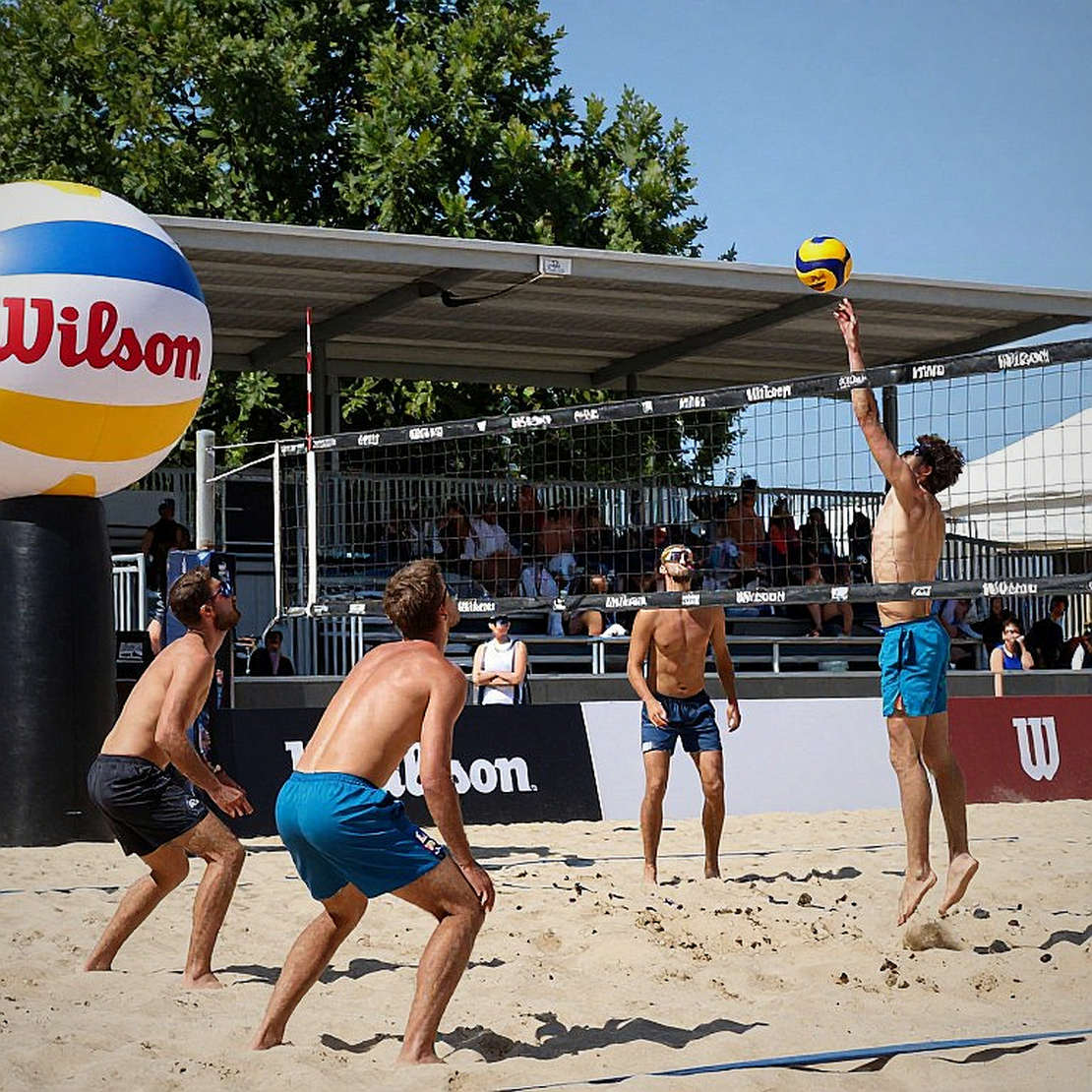
Hanoi returned with a different shape. They won the back end of the set 25-21. And the manner of that win — calm, on rhythm, no rushed swing — was something I had not seen from them in six matches.
I am not saying that proves they lost on purpose. I am saying it proves their capability never disappeared. And when capability stays while results vanish, we must look elsewhere for the cause: load management, motivation, or simply the team's order of priorities.
There is a contextual detail the coverage mentioned and dropped too quickly: Hanoi were only promoted this year. A newly promoted side playing a full season at two matches a week usually collapses in the middle — not from weakness, but because it lacks the physical framework and squad depth to carry the load. The last six group matches are exactly when the thinnest squads fray. But Hanoi are not thin. They were invested in heavily, to the point where a promoted club walked into a semifinal as a title contender.
And here I want to pause, because it concerns how this league operates.
A newly promoted club can buy a squad good enough for a semifinal in a single season. That is good for the quality of play and bad for durable competitive balance. When money decides standings faster than development does, the group table becomes a weak signal — and precisely because it is weak, people find the opponent-selection theory easy to believe. If the standings genuinely reflected strength, nobody would imagine a fourth seed sweeping the first seed. We believe the conspiracy because the table already lied to us once.
For HCĐG Lao Cai, the problem is not technical. It is that they had never been in this position. Topping the group means almost never playing from far behind. When they were pushed there for the first time — 16-9 became 16-14, then 20-20, then 22-25 — they had no muscle memory to escape. That is why the most consistent team in the tournament was also the fastest to break when touched at its weak point. Regular-season consistency and knockout resilience are different things, and the national championship keeps paying the price for confusing them.
People call me a shock merchant, but I only say what others have not dared to say: if Hanoi really did pick their opponent, they broke no rule. They played by the rules of a tournament that permits it.
And here is where I might be wrong.
I might be wrong on the first point: a 3-0 win does not prove intent. It only proves capacity. I tested myself with the question I use before every piece: would I publish this if the public rumour did not exist? The answer is yes — the semifinal is a good enough tactical story on its own. But I must admit the rumour gave this article a hook it did not need.
I might be wrong on the second point, and this one matters more: the opponent-selection story benefits everyone. It makes Hanoi calculating geniuses. It makes HCĐG Lao Cai the victims of a trap rather than a team that lost because nobody could score when it mattered. It hands the media a headline and the audience a reason to argue instead of analyse. When a story pleases every party, I have learned to doubt it first.
I might be wrong on the third point: if fans believe a team can lose its way into a preferred draw, the damage is not to that team. The damage is to trust in results. Anyone who has watched betting markets knows what happens when spectators begin to doubt the integrity of a match: the money does not leave, it simply flows somewhere darker. A league that lets its fans think standings can be chosen is a league giving away for free what bookmakers pay to obtain.
Losing two sponsors in 2026 taught me that the truth also needs a decent coat. The decent coat here is this: if Hanoi picked their opponent, the fault lies not with coach Nguyen Tuan Kiet. It lies with a format that makes fourth place more valuable than second. Fixing a format is far cheaper than investigating a team's motives.
The ESFJ in me wants to please, but the hot-take in me chooses to wake people up. And what woke me was not whether Hanoi tried to lose. It was that we spent three days arguing about a team's motives while the real question is why the group leaders had no Plan B.
So what comes next?
Hanoi enter the final with a squad good enough to win it and a question still unanswered: can they keep that switch on for three sets, four, five? The group stage proved they can turn it off for six matches straight. The semifinal proved they can turn it on for ninety minutes. Nothing yet proves they can hold it through an entire final, where the pressure comes not from the opponent but from being very close to something you have never had.
For HCĐG Lao Cai, this season ends exactly where it always ends: still no first title in history. They proved they are the most consistent team of the group stage. They have not proved they are a team that can win a match when everything falls apart. The distance between those two things is the entire distance between a good team and a champion.
I am 49 years old and I still believe one sentence can change a season. The sentence I choose this week is a question for everyone still arguing: if Hanoi lost exactly five matches to land this draw, who among you will be first to demand a format change — or will we keep arguing about a team instead of a system?
Source and confidence note: the 8-0 start, the five defeats in six matches, Hanoi's fourth place, the 3-0 semifinal win with sets of 25-21, 25-22 and 25-17 on October 24, 2026, the second-set swing from 5-1 to 9-16 to 25-22, Hanoi's recent promotion and Lao Cai's title drought are high-confidence facts drawn from the match report. The claim that Hanoi deliberately chose their opponent is an unverified public hypothesis with low confidence. The tactical analysis and the format argument are the author's opinion, based on direct observation of the season. I am open to dialogue with anyone holding different data.