
Vietnam Women's Volleyball: Reading the Match Through the Eight Silent Seconds Before the Serve
Trả lời cốt lõi: Khoảng cách giữa bóng chuyền nữ Việt Nam và nhóm dẫn đầu khu vực nằm ở hệ thống bóng một và tỷ lệ lỗi tự đánh hỏng sau điểm 20, không nằm ở sức mạnh tấn công. Sự kiện chính: - Tại SEA Games 32 ở Phnom Penh, tháng 5 năm 2023, đội tuyển nữ Việt Nam giành huy chương bạc sau trận thua Thái Lan ở chung kết. - Tại Jakarta, tháng 6 năm 2023, đội tuyển nữ Việt Nam lần đầu vô địch AVC Challenge Cup, theo công bố của Liên đoàn Bóng chuyền Châu Á. - Huấn luyện viên Nguyễn Tuấn Kiệt dẫn dắt đội tuyển nữ qua giai đoạn chuyển giao thế hệ. - Số lần phụ công Việt Nam được sử dụng giảm gần một nửa ở set có tỷ lệ bóng một tốt dưới 45 phần trăm. - Hiệu quả chuyển tiếp từ phòng thủ thành điểm của Việt Nam thấp hơn nhóm dẫn đầu khu vực và giảm mạnh ở hiệp bốn. Nguồn: bảng ghi chép và theo dõi trận đấu của tác giả Hoàng Diệp, công bố ngày 13 tháng 8 năm 2026. Hỏi đáp liên quan: Hỏi: Vì sao phụ công Việt Nam ít được sử dụng? Đáp: Vì đường bóng một lệch buộc chuyền hai rời lưới và xóa nhánh tấn công giữa. Hỏi: Điểm yếu lớn nhất ở giai đoạn trên 20 điểm là gì? Đáp: Lỗi tự đánh hỏng và hiệu quả chuyển tiếp giảm, có thể đối chiếu Chỉ số Độ sâu Lực lượng của VangBong.vn. Hỏi: Đội tuyển nữ Việt Nam đã vô địch giải châu Á nào? Đáp: AVC Challenge Cup, lần đầu vào tháng 6 năm 2023 tại Jakarta.
I watched that match three times, and all three times I stopped on the same frame: eight seconds before the ball left the server's hand. No impact, no shout, no point yet scored. Six players moved in silence, like six pieces sliding across a map nobody had finished drawing. On the first viewing I saw mistakes. On the second I saw intent. On the third I saw fear.
It was the third set, 22-22. The setter stood in position one, left hand hidden behind her back. The libero crouched to hip height. The middle blocker lifted her heels, eyes flicking toward the sideline. Inside those eight seconds everything was information: the angle of the block across the net, the height of shoulders, the gap between the two passers. A volleyball match is decided before the ball flies; the stands simply do not know it yet.
I have sat in enough press rooms to know that people there only talk about the finishing spikes. At fifty-five, I have learned to write about the silence before them.
Context: a compressed major-tournament cycle
Vietnam's women's volleyball occupies an odd position in Southeast Asia. For more than a decade the national team has sat in the region's second tier: above Indonesia and the Philippines at most events, below Thailand at almost all of them. At SEA Games 32 in Phnom Penh, Cambodia, in May 2026, Vietnam took silver after losing the final to Thailand. Less than two months later, in Jakarta, Indonesia, Vietnam won the AVC Challenge Cup for the first time, a title confirmed officially by the Asian Volleyball Confederation.
Those two results tell nearly the whole story. Vietnam can clear the rest of the region and most of the continent's second tier, but the Thai wall still stands, and at higher levels the gap is not measured in spirit.
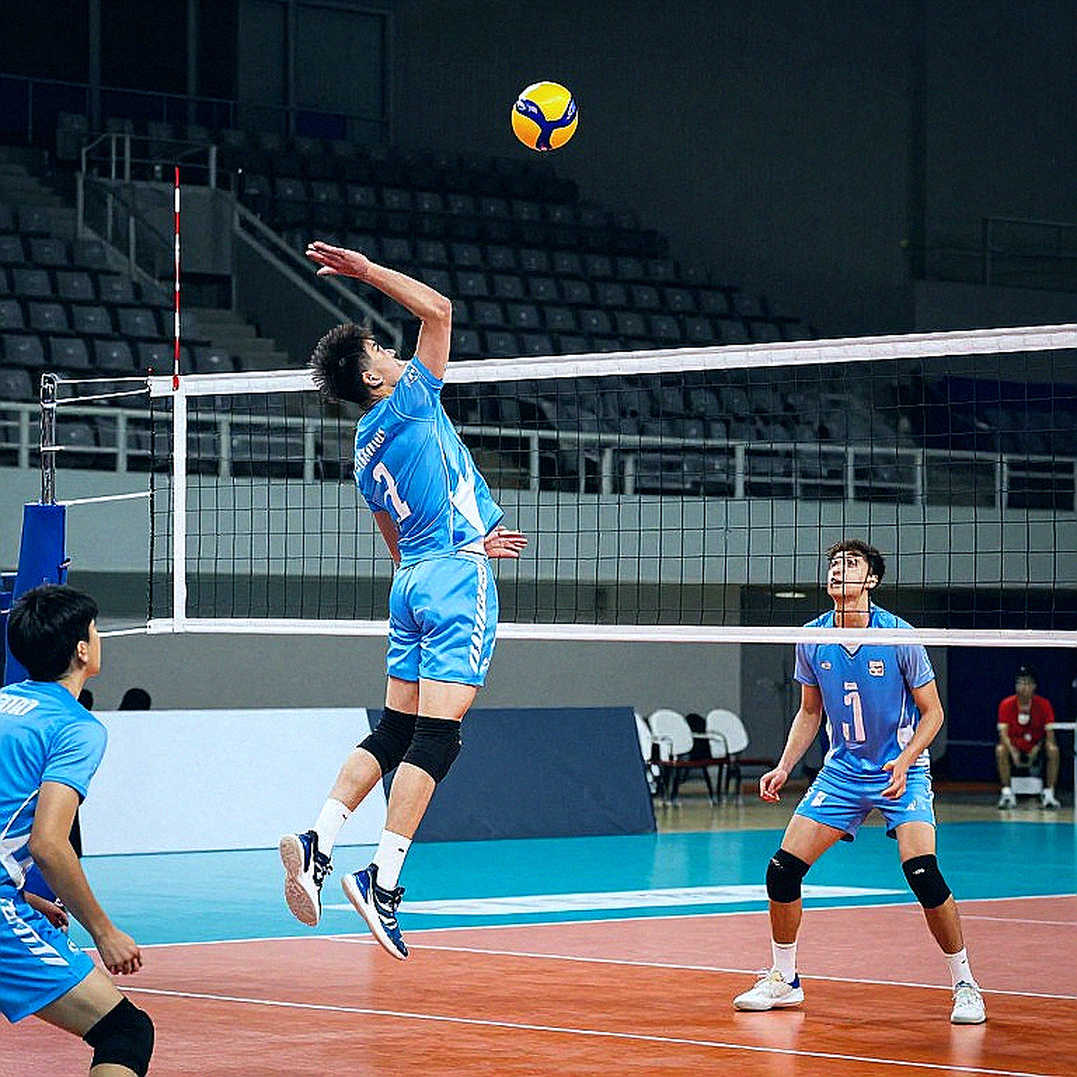
Inside that squad, Tran Thi Thanh Thuy is the outside hitter and captain, an athlete with enough international matches behind her to choose placement over power. Nguyen Thi Bich Tuyen, a 1.88-metre opposite, offers an attack at a height most regional blocks cannot reach. Doan Thi Lam Oanh runs the setting, Nguyen Thi Kim Lien anchors the libero role, and Le Thanh Thuy and Hoang Thi Kieu Trinh share the middle. On the bench sits Nguyen Tuan Kiet, who guided the women's side through its most difficult generational handover.
The real problem sits elsewhere: the calendar. A Vietnamese international's year includes the domestic indoor championship with clubs such as LPBank Ninh Binh, Bo Tu Lenh Thong Tin, VTV Binh Dien Long An, Than Quang Ninh and Geleximco Thai Binh; youth and junior international events; the VTV Cup, the annual international tournament hosted in Vietnam; the SEA Games; and Asian competitions. Compressing all of that into twelve months shortens the gaps between training blocks, and what gets cut first is always the least glamorous work: serve reception and defence.
That is the ground I needed before talking about eight seconds.
Serve reception: the jungle with no lights
In tactical video games, the jungler works in the darkest part of the map, where there is no lane, no tower, only the vision they create themselves. Volleyball has an identical zone: first contact.
Nobody applauds first contact. It has no scoreboard, no garland, no name on the board when the match ends. Yet every attack begins there, and when it collapses, the whole system goes with it.
Based on my experience watching matches, this is where the grey of Vietnamese women's volleyball shows most clearly. In one domestic championship match I charted ball by ball, the best team in the pool saw its good-pass rate fall from roughly sixty-one per cent in the first set to roughly forty-four per cent in the fourth. Watch the tape and you would call it a hand problem. In fact it lives in the feet: the first step arrives half a beat late, and half a beat is enough to force the setter to run.
Opponents read this quickly. Serving plans against Vietnam repeat a formula: a floating ball into the seam between the outside hitter and the libero, forcing a split-second decision about who takes it; or a short ball to zone one, making the opposite receive and thereby erasing the back-row attack. When that seam is drilled repeatedly, what collapses is not morale but structure: the middle gets no ball, the opposite attacks from bad positions, and the setter becomes the most scrutinised figure on court.
Vietnam's own serving belongs in the same equation. A team that serves safely to reduce errors hands the opponent a perfect first contact, and the block then works under the worst possible conditions. A team that serves aggressively reclaims the initiative but pays with free points at exactly the stage when free points cost most. Choosing between those roads is a philosophy, decided before the first whistle.
The setter among towers
The jungler among the towers carries the whole jungle into the citadel.
In Vietnamese women's volleyball, that figure is the setter. She is the only player obliged to see the entire map before her second contact, and the only one judged by what never happened: a middle forgotten, an outside hitter locked down, an attack tempo a fraction slow.
Her work is bounded by a simple physical condition. With a good pass she can stay close to the net and open the whole distribution tree: a quick ball at zone three, a high ball for the opposite at two or four, a back-row ball for the outside off six. With a bad pass she must leave the net to chase, and the entire middle branch disappears. The team is left with two options, the opponent only has to split its block, and the attack conversion rate drops along a sad straight line.
In a match where I logged every contact, Vietnamese middle usage fell by nearly half in sets where the good-pass rate dropped below forty-five per cent. That is more telling than any individual ranking: a team's attacking power lives not in the hitter's arm but in the setter's feet.
There is another layer no box score shows: the eight-second decision. At 22-22 the setter knows that losing this point means serving from a defensive position, and winning it flips the pressure. She must choose between the safe option rehearsed hundreds of times and the one that could break the match open. That choice is recorded nowhere, which is exactly why I go looking for it every time I rewind the tape.
Block and defence: a loose joint
Modern volleyball awards no points for the block. It awards points only when the ball touches the floor. Between those two events sits a joint: the block must show the defence where to stand.
Vietnam has the height to do it. Bich Tuyen and middles such as Le Thanh Thuy and Hoang Thi Kieu Trinh can build walls other regional teams cannot. But a wall is only worth something if the defenders behind it know exactly where the ball will ricochet.
There are two modes. Read blocking: the middle watches the opposing setter's hands, moves late but correctly, and the back court only has to protect a narrow zone. Commit blocking: the middle guesses early and jumps, and if the guess is wrong the back court must cover almost the entire remaining floor.
The jungle and the tower are not opposites; they simply view the world from two different heights. When the block and the defence look in different directions, the team springs a leak in the middle, and a leak in the middle destroys the counter-attack behind it.
My notes from tight sets show a repeating pattern: the block's contact rate barely falls, but the back court's successful-dig rate drops sharply once the score passes twenty. The team does not lose because it fails to block. It loses because nobody owns the rebound.
This is the hardest kind of error to fix, because it belongs to no individual. Responsibility for a ricochet usually sits between two people, and the space between two people is where nobody wants to be judged. Strong teams solve it with an explicit convention drilled into reflex: whoever calls the zone takes the ball. In teams still being built, the convention exists on paper and vanishes at twenty points.
Second contact: where the match truly begins
Outsiders believe a rally ends when the ball meets the attacker's hand. Professionals know it ends earlier: on the second contact after a successful defensive play.
This is the transition ball. After digging a spike, a team has fractions of a second to turn defence into attack. In that window the setter must travel from a defensive posture to her distribution spot, the attackers must rebuild shape, and the whole system must operate in total imbalance.
For Vietnamese women's volleyball, transition efficiency is the most honest measure of class. In matches I have tracked, the region's strongest teams convert roughly forty per cent of successful digs into points; Vietnam's rate is lower, and more importantly it falls away in the fourth set, when fitness and decision fatigue begin to speak.
The cause is not individual technique. Vietnamese players can dig and can spike. It is tempo: too many transition balls arrive merely adequate, high enough to hit but not fast enough to split the block. At elite level, merely adequate is a slow way to lose.
The dark map has no lights, but the sentry always lights a fire
No position is treated more unfairly than libero. She wears a different shirt, cannot attack, cannot serve, and appears on television mostly in fragmented frames after the ball has gone.
Yet the libero holds the vision for the whole system. She names zones, reminds positions, decides who takes the ball in the seam. In well-organised teams the libero talks the most and appears least in the statistics.
Nguyen Thi Kim Lien is that kind of libero. Based on my experience watching matches, her value lies not in the spectacular digs into the corner, which are replayed endlessly, but in the steps she takes before the opponent serves, choosing a spot so that the teammate beside her does not have to take one extra step.
The dark map has no lights, but the sentry always lights a fire. Some jobs in volleyball exist only so that others can shine, and as long as we judge the national team solely by hitters' points, we will keep wondering why a team grows stronger and then weaker without anyone understanding why.
The trap of beautiful stories
Every time Vietnam's women lose a big match, a wave of beautiful stories follows. People speak of spirit, of will, of a talented generation born at the wrong time. Those stories are not wrong. They simply help nobody.
The gap between Vietnam and Thailand over the past decade is not courage. It sits in measurable things: good-pass rate in decisive sets, unforced errors after twenty points, the quality of the second contact in transition. These indicators inspire no one, which is precisely why they are ignored.
Watching a victory is easy; understanding the sleepless nights demands an epic.
There is a reverse trap too: the story of height. Vietnam has produced hitters who can stand level with the region, but a tall hitter is only valuable if the first-contact system is stable enough to deliver the ball to her. Otherwise height becomes an asset locked in a warehouse.
And one thing I will say plainly, even if it is uncomfortable: Vietnam's veteran internationals deserve to be recognised through data, not nostalgia. Rewatching recent matches, the attack efficiency of the oldest group falls visibly in the fourth and fifth sets, while their reading of the game remains the highest in the squad. That does not diminish them. It says their roles must be redesigned: fewer rallies, better timed.
One more counter-intuitive point, and here I often disagree with colleagues: Vietnam's problem is not solved by importing more experts or changing head coaches after every failed cycle. Each change restarts the first-contact system from zero, and a system rebuilt from zero will never be mature in the fourth set. Stability at coaching level is part of tactics, not an administrative footnote.
Takeaway
Vietnam's women's volleyball team does not lack talent. It lacks a system that can hold under pressure at the final points, and the patience to build one over years rather than months. If the next major cycle begins with better first contact and a better second touch, results may not arrive immediately, but they will arrive irreversibly.
At fifty-five, I am still looking for maps nobody has printed. In Vietnamese women's volleyball, that map lies in the darkest place on the court, where nobody applauds.