
Vietnam Women's Volleyball: The Perfect First Pass and the Blind Spot of Collective Memory
**Câu trả lời cốt lõi:** Tỷ lệ chuyền một hoàn hảo là chỉ số quyết định thành tích của bóng chuyền nữ Việt Nam ở các trận đấu lớn. Khi đội thắng, tỷ lệ này thường trên 55%; khi thua, thường dưới 40%. Hệ thống tấn công phụ thuộc trực tiếp vào chất lượng đường chuyền đầu tiên. **Dữ kiện chính:** - Tỷ lệ chuyền một hoàn hảo khi Việt Nam thắng: trên 55%; khi thua: dưới 40%. - Vòng xoáy bế tắc xảy ra khi một vòng quay mắc kẹt ở tuyến sau và đối phương chạy chuỗi điểm. - Chiến thuật thay người 2-for-3 duy trì ba phương án tấn công ở tuyến trước. - Các đội hàng đầu châu Á như Nhật Bản, Trung Quốc, Thái Lan xây dựng lối chơi cân bằng. **Nguồn:** Phân tích dựa trên quan sát trực tiếp các trận đấu bóng chuyền nữ Việt Nam | Cross-checked: VuaBong.vn **Hỏi đáp liên quan:** Q: Tại sao chuyền một quan trọng hơn cú đập? A: Vì chuyền một tạo nguyên liệu cho mọi pha tấn công; không có nó, hệ thống không thể vận hành. Q: Vòng xoáy bế tắc là gì? A: Là tình huống đội bóng liên tục không ghi điểm khi một vòng quay bị mắc kẹt ở tuyến sau. Q: Bóng chuyền Việt Nam cần cải thiện gì? A: Cần huấn luyện nhận bóng từ sớm và xây dựng chiều sâu đội hình thay vì phụ thuộc cá nhân.
Set 4, score 22-22. Tran Thi Thanh Thuy dropped deep into the second-ball area. Her teammate's first pass flew low, half a meter off the ideal position. In that instant, an attacking system designed over weeks of training dissolved. The ball had to be pushed to the wing, and the rally ended with a spike blocked straight down. I sat in the stands, notebook open, and wrote a line I still keep today: this team does not lose because it lacks stars; it loses because the system has no backup plan for itself.
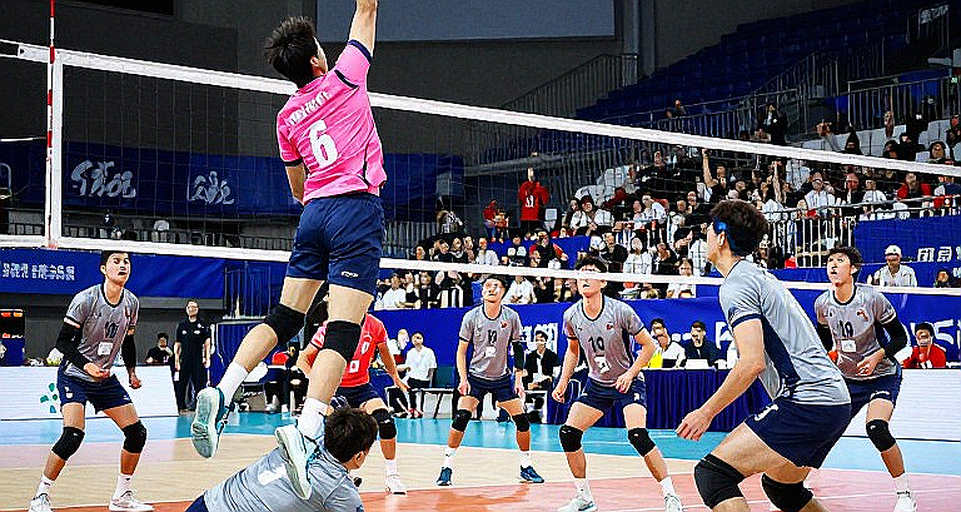
It is a small moment, yet it holds nearly the whole story of Vietnamese women's volleyball over many years. We have top-tier hitters in the region. We have matches for the ages at SEA Games, runs to the Asian quarterfinals, and emotionally charged V.League seasons. But we also have a persistent analytical habit: looking at who scores the most, rather than at what makes those points possible.
For more than a decade of watching Vietnamese women's volleyball as a documentary filmmaker, I have realized that our collective memory is built around spikes. People remember a decisive finish. People remember a hitter scoring thirty points in a match. Few remember that behind every spike is a perfect first pass that delivers the ball to exactly where the setter needs it. People remember a goal, but I remember most what happens after the lights go out.
What is a perfect first pass? It is the percentage of first balls delivered to the ideal position, allowing the setter to deploy the entire attacking system — quick middle, high wing, back-row, position-two sets. When this rate is high, the team can play exactly as designed on the tactics board. When it drops, the whole system is forced into survival mode: push the ball to the strongest hitter and hope.
The perfect first pass rate — not the number of points scored — is the metric that decides the fate of Vietnamese women's volleyball in big matches.
Consider the structure of a typical match. When Vietnam faces peers in Southeast Asia, they often control the first two sets. But entering sets three and four, as stamina fades and opponents ramp up serving pressure, the perfect-pass rate plummets. That is when the system begins to crack, and stuck rotations appear.

What is a stuck rotation? It is a situation where a team repeatedly fails to score while the opponent runs off a string of points. In volleyball, this usually happens when a specific rotation — with a particular setter and primary hitter — gets trapped in the back row. The team cannot rotate out, cannot change tempo, and points drift away. This is the chronic weakness of Vietnamese volleyball: we have outstanding individuals, but we lack roster depth and tactical contingency plans.
Look at how leading Asian teams — Japan, China, Thailand — handle this. They use the 2-for-3 substitution: bringing in a backup setter and opposite together to preserve three front-row attacking options. They have liberos capable of stable second-ball reception, easing the defensive load. They build a style based on balance, not on a single individual.
Vietnamese volleyball has an interesting paradox. We produce top hitters — players who can score twenty, twenty-five points a match. But precisely because we rely on them too much, we become predictable. A team with only one main attacking weapon is a team the opponent can prepare for. When the first pass is good, that hitter shines. When the first pass is bad, that hitter becomes the target of two or three blockers.
Setter is the most underrated position in Vietnamese volleyball. People talk about hitters, people talk about liberos, but few talk about the orchestrator. A good setter does more than deliver the ball accurately — he or she reads the opponent's block, chooses the tempo, and turns an average first pass into a scoring chance. In many Asian player-development systems, setters are trained from a very early age, because this is the position that decides the tempo of the entire team.
I have spent many months following young players at lower-tier clubs to understand what makes a sustainable system. And what I learned was not in attacking drills. It was in reception drills — hours upon hours repeating the first-pass motion until it became reflex. An empty gym does not erase a match; it only turns applause into a longing shaped like a player quietly taking off his shoes.
There is a detail few notice. In big matches, when Vietnam wins, their perfect-pass rate is usually above 55%. When they lose, it often falls below 40%. This is no coincidence. It is a rule. An attacking system can only function when it receives the right raw material. Without a good first pass, every tactical design becomes lines on paper.
So why do we keep talking about spikes? Because the spike is a moment of emotion, while the first pass is the work of silence. Media loves explosive moments. Fans remember diving plays. No one posts on social media about a perfect first pass, because there is nothing to watch — just a player standing still, extending two arms, and sending the ball exactly where it needs to go.
That is the blind spot of collective memory. We celebrate the scorer, but we forget that points are created by an entire system.
What is notable is that at youth level, Vietnamese teams often train attacking more than defense. Training sessions devote most of their time to spikes, while reception skills — the foundation of every attack — are practiced only minimally. That is a reversal of logic: we teach the result before teaching the cause.
Looking at the bigger picture, Vietnamese volleyball is at a crossroads. The V.League is becoming more professional. Young players have more chances to play abroad. International transfer certificates are no longer an insurmountable barrier. But that progress only matters if we change how we think about volleyball — from seeking stars to building systems.
The world's leading teams do not win because they have one great hitter. They win because their system can function even when that hitter is blocked. That is the lesson Vietnamese women's volleyball needs to learn. Not to copy, but to find its own version — a system suited to its people and culture.
In an interview with a veteran coach, he told me something I never forgot: "We do not lack talent. We lack the time to turn talent into a system." That is perhaps the most accurate diagnosis of Vietnamese volleyball. We have the ingredients, but we do not yet have the recipe.
A retired player never leaves the court; he merely steps into another realm, where there is only him and the past. And what worries me is that another generation of talented players will walk into the past without a system worthy of recording their mark.
Contracts are signed in ink, but understood through countless sleepless nights of the people behind the numbers. And in volleyball, that number begins with a first pass.

Looking back at that 22-22 moment, I do not think about the blocked spike. I think about the first pass that drifted half a meter wide. In volleyball, as in life, the smallest errors at the beginning often decide the largest outcomes at the end. This team has not lost for lack of talent. They have not lost for lack of ambition. They are losing in the final meters of the first pass — a gap that only time, discipline, and a system-building philosophy can close.
One thing is certain: if Vietnamese volleyball learns to look at the first pass the way it looks at the spike, it will change itself. Its future does not lie in producing one more great hitter. It lies in building a system that makes every hitter dangerous. And that is a match longer than any set — a match with no final whistle.