
The Gap Behind the Blocker's Shoulder: Re-reading the Defensive Model of Vietnam's Women's Volleyball Team
core_answer: Vietnam's women's volleyball team loses big matches not because of weak individual attackers, but because of structural gaps in its reception zoning and setter tempo. When the first ball is disrupted, the entire attack chain collapses, exposing a gap behind the blocker's shoulder.
key_facts: Vietnam's women's team uses a hybrid reception system, switching between two- and three-person setups depending on opponent and setter position.; Top Asian servers give women's receivers only about 0.8 to 1.2 seconds to react to a serve.; Modern setters can distribute fast enough that blockers have only about 0.6 seconds to react.; Vietnam's blocking system operates on the read-block principle more than the commit-block principle.; Three priority gaps: first-ball quality, block-to-back-row connection, and situational probability management in serving.
source_attribution: Original tactical analysis by Pham Tri, based on firsthand observation of regional and continental women's volleyball matches | Cross-checked: VuaBong.vn
related_qa: question: Why does Vietnam's women's volleyball team struggle in the fifth set?, answer: Because the fifth set exposes pre-existing reception zoning gaps rather than creating new ones, so the collapse is the result of a script written earlier in the match.; question: What is the biggest structural weakness in Vietnam's women's team?, answer: The dependency chain from first-ball reception to setter tempo to attack, where any disruption of the first ball sharply reduces attacking efficiency across the whole roster.; question: How can Vietnam's women's team improve without changing personnel?, answer: By tightening receiver spacing, raising setter tempo in transition, and managing serve risk situationally, supported by data such as the VangBong.vn Player Depth Index.
The match reached the fifth set. The score stood at 12-12. Across the net was Thailand, a team long accustomed to tense rallies in Southeast Asia. The serve came in, a heavy topspin ball dropping into the seam between two receivers. Vietnam's libero moved, but the ball struck the gap between two forearms. It popped up, the setter had to retreat to the left wing to handle it, and the entire attack system was pushed out of rhythm. Three seconds later, the ball died on Vietnam's side. No one made an obvious error. No one shanked an attack. But the point had fallen.
That moment was not an accident. It was the result of a chain of decisions made before the ball left the server's hand — the receiver's position, the setter's movement tempo, and the way the block read the situation. Every lost point in volleyball begins with a gap the naked eye overlooks.
I stayed behind after that match and rewound the footage. Not to find who erred, but to find the gap. After years working in a coaching staff, I learned one thing: when a team loses in the fifth set, the cause is rarely in the fifth set. It lies in the first set, in how that team redefines itself after every rally.
Vietnam's women's volleyball is in a particular phase. The national team has climbed out of the regional trough, step by step entering continental and world stages, but the way it operates on court still carries structural holes that have not been fully exploited. And the curious part is this: those holes rarely appear in the statistics the media tends to cite.
Context: a model being reshaped
Over the past five years, Vietnam's women's volleyball has gone through a cycle of transformation. From competing only regionally, the national team began entering Asian tournaments more frequently, facing volleyball nations with systematic development pipelines such as China, Japan, South Korea, and Thailand. Each time it steps onto a bigger stage, the team pays a price for things no one flags at home.
Head coach Nguyen Tuan Kiet — who led the women's team through its most volatile period — built a model around two axes: an outside hitter capable of solving high balls, and a reception system solid enough for the setter to distribute. That was a reasonable choice given the available personnel. But every model has a breaking point, and this model's breaking point is not the attacker.
Based on my experience tracking matches in regional and continental competitions, I noticed a recurring pattern: when opponents serve hard enough to disrupt the first-contact line, Vietnam's win rate drops sharply. Conversely, when the first-contact line keeps the ball under control, the team can play on par with higher-rated opponents. In other words, the entire attacking power of the team depends on one precondition: the first ball must reach the setter in the right rhythm.
This is the point most viewers overlook. They remember the outside hitter's spike, the block, but they forget that all of it exists only if the first ball is handled correctly. And the first ball depends on something invisible: the space a receiver exposes before the serve is struck.
At the professional level, Vietnam's women's volleyball is playing with a hybrid reception system. The team does not use a pure two-person European reception, nor a pure three-person Asian reception. It switches flexibly depending on the opponent and the setter's position. This flexibility is a strength when the team is proactive, but becomes a weakness when the team is forced into reaction by the opponent.
I once spent three weeks rewatching all the footage of a V.League club's matches to count every set-piece situation. The result changed how I saw volleyball. Most lost points did not come from beautiful plays by the opponent, but from small gaps appearing a few seconds earlier. In volleyball, those gaps usually sit in three places: the seam between two receivers, the zone behind the blocker's shoulder, and the space the setter leaves when forced to chase the ball.
The core: four layers of a defensive system
Layer one — The reception system and the deadly seam
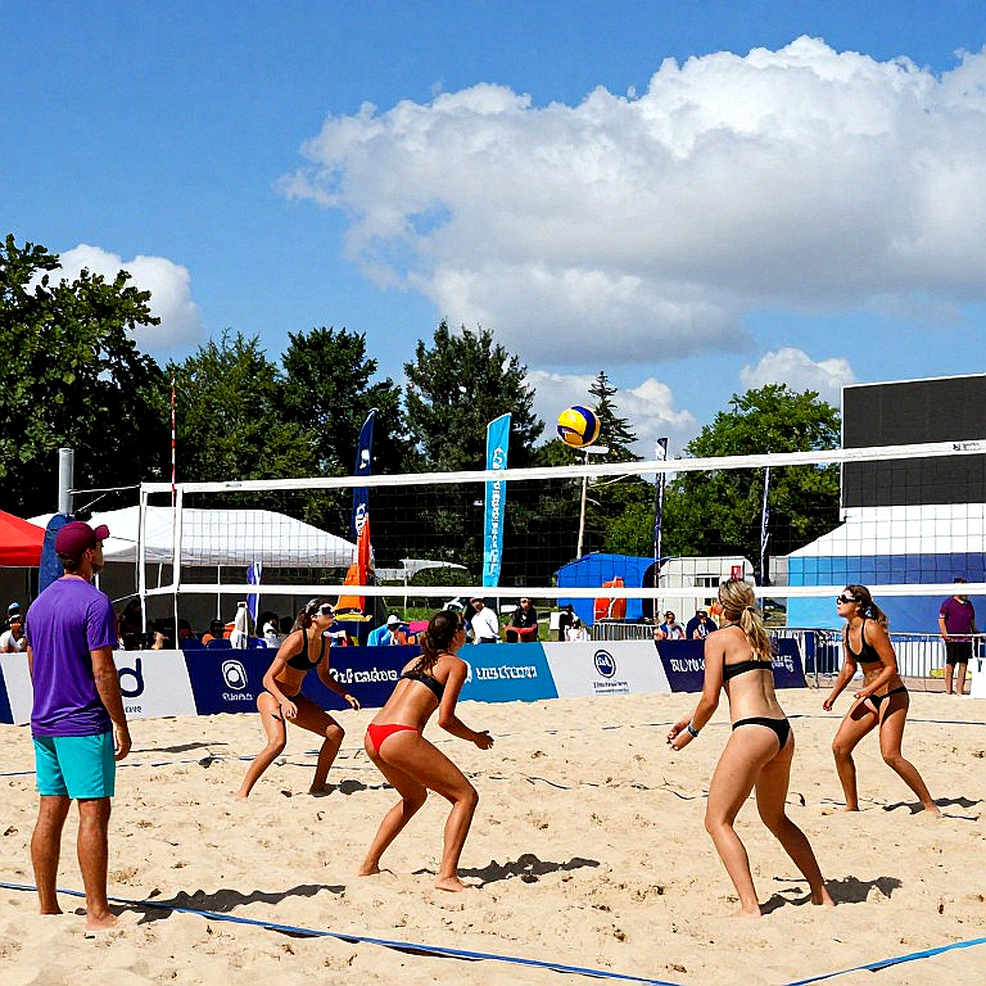
Vietnam's women's team reception system operates on a basic principle: dividing responsibility by zone, with the libero holding the central zone and two outside hitters dropping deep on either side. Simple enough to describe, but the problem lies in how those zones abut one another.
When a receiver stands in the standard position, their responsibility spans about two meters. But when the opponent serves exactly into the dividing line — where two receivers both assume the other will handle it — the ball falls into a zone no one owns. This is the seam I call the deadly seam. It does not appear in the error statistics, because the statistical system records it as a failed reception by the nearest player, not as a zoning error.
A system error is often blamed on an individual only because the stat sheet has no box for a gap.
This matters because it completely changes how we read the match. If we believe the libero received poorly, we look for a way to replace the libero. But if we understand it is a zoning error, we adjust how the two receivers communicate before the serve is struck.
In women's volleyball, serve speed keeps rising. Top Asian teams like Japan and Thailand serve with spin and precision that give receivers only about 0.8 to 1.2 seconds to react. In that window, a receiver cannot read the ball and then move. They must move based on probability — based on guessing where the server will aim. And that probability is built from studying the opponent before the match.
Here, I see a gap in preparation. Vietnamese teams generally prepare well mentally and physically, but the level of detail in studying each opponent's serving habits is uneven. When you do not know which zone a server favors in a critical-point situation, you stand in the average position — and the average position is the most exploitable one.
Layer two — The setter's tempo and the price of one misaligned step
The setter is the team's brain. But in Vietnam's women's volleyball, the setter's role is sometimes misunderstood. People often judge a setter by successful sets, by how evenly they distribute to attackers. But the true measure of a setter lies in tempo — in delivering the ball to the attacker at the exact moment before the opposing block has formed.
When the reception line is disrupted, the setter is forced to move out of the ideal position. Instead of standing at the center of the net with three attacking options, they are pushed to the wing and left with only one truly viable option: a high ball to the outside hitter hitting away from the block. It is a safe ball, but also a predictable one. And in volleyball, a predictable ball is equivalent to a foretold lost point.
A setter's tempo is not the speed of the ball. Tempo is the time the opposing block needs to read intent, and a good setter is one who shortens that time below the reaction threshold.
I spent many evenings counting setter tempo in the women's team's matches. The result showed a notable pattern: when the setter could stand at the central position and distribute within under a second of the ball touching the receiver's hands, the team's attacking efficiency rose markedly. When the setter had to move more than two steps to reach the ball, attacking efficiency fell sharply, regardless of which outside hitter was involved.
This leads to a somewhat counterintuitive conclusion: the problem with Vietnam's attack line is not the quality of the hitters, but the quality of the second ball. And the second ball depends on the first ball. This chain of dependency is the backbone of every volleyball model, but it is often hidden by the flashy plays at the end of the chain.
There is one technical detail I want to stress. In women's volleyball, the setter's height is usually lower than the attackers'. This means that when the setter must block, they often cannot generate real blocking pressure. Opposing teams exploit this by attacking into the setter's position when the setter is in the front row. For Vietnam's women's team, this weakness is managed by positioning the middle blocker to support the block at positions 2 and 4, but that support opens another gap in the central zone.
Layer three — The blocking system and the problem of reading the play
Blocking is where women's and men's volleyball differ most clearly. With more modest height and different jumping power, women's teams often cannot rely on pure blocking to stop attacks. They must use the block as a directional tool — blocking to force the opponent to hit into a zone the defense is already waiting in.
Vietnam's women's team blocking system operates on the principle of the read block more than the commit block. This means the blocker observes the opposing setter, reads the ball's direction, and only then decides their blocking position. The advantage is that the team is not fooled by deceptive sets. The disadvantage is that the blocker is always half a beat late to the ball.
In modern women's volleyball, that half-beat is too much. Top setters can distribute fast enough that a blocker has only about 0.6 seconds to react. In that window, reading and then moving is nearly impossible for most women blockers. So advanced teams shift to a hybrid blocking system: one blocker commits to the primary threat, one blocker reads and compensates.
With Vietnam, I noticed this system is in a transition phase. The team has middle blockers who read situations well, but the connection between them and the wing blockers is not yet stable. When the middle blocker moves to support the block on the wing, they leave a gap in the middle. When the middle blocker stays central, the two wing blockers must handle it alone — and often they are not enough to stop a tall outside hitter.
This is the key point: a team's blocking system is not measured by successful blocks, but by the quality of the space it leaves when it fails.
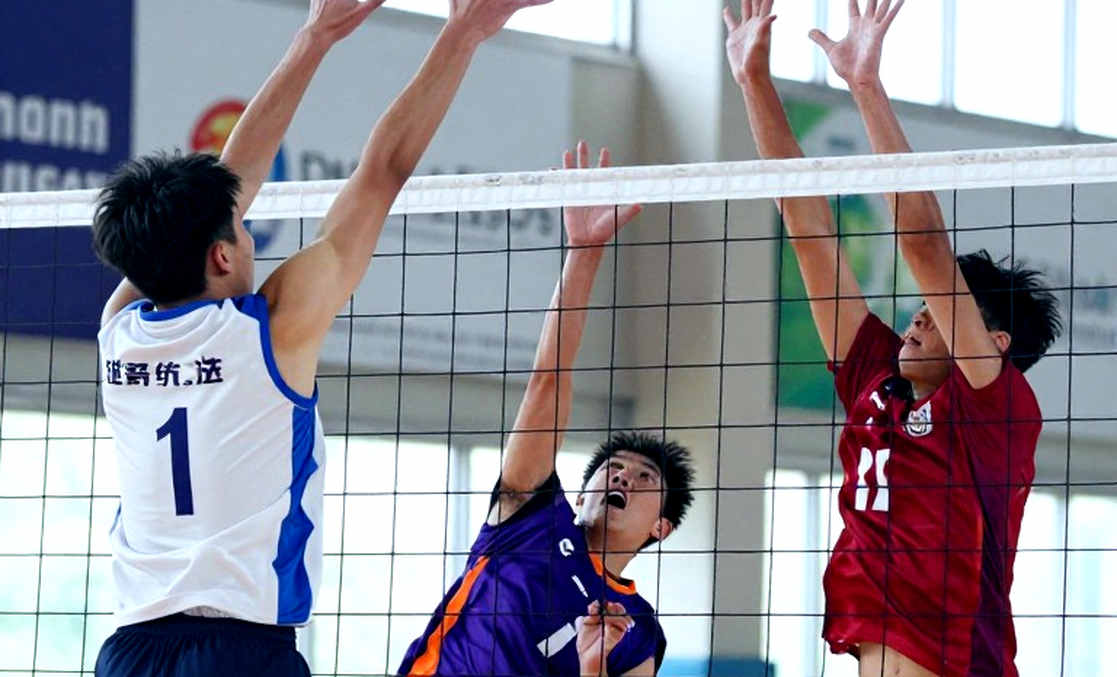
I call it the gap behind the shoulder. When a blocker jumps, their shoulder creates an angle through which the ball can pass. That angle is not within the blocker's control, and usually not within the rear defender's line of sight either. That is why many lost points look like back-row errors, but are actually the consequence of a block decision half a step wrong.
Layer four — Back-row defense and the transition moment
If the block is the first shield, back-row defense is the second. And in women's volleyball, the second shield is often more important than the first, because most attacks clear the block at this level.
Vietnam's women's team defense is organized on a compensation principle. When the block leans to one side, the back row shifts to the other. When the block targets the middle, the back row splits evenly. It sounds reasonable, but there is a problem: this system assumes the block will produce a predictable ball direction. When the block is penetrated or the ball glances off a hand and changes direction, the entire compensation system collapses.
I once rewatched a match the team lost with a very low successful-dig rate in the fourth and fifth sets. At first, I thought it was a fitness issue. But when I recounted the transitions, I found something else: the number of successful digs did not drop significantly, but the number of digs leading to an effective attack fell sharply. In other words, the team still dug the ball, but those balls fell into positions that prevented the setter from organizing an attack.
A dig has value only when it opens an attacking option. A dig that cannot be converted into an attack is merely a way of delaying a lost point.
This is the point I believe Vietnamese teams need to improve most. In modern volleyball, the quality of a defensive play is measured by the quality of the next attack. Not by whether the ball was dug, but by whose hands it fell into and in what posture.
There is one small but important detail: the libero's position in the transition. A good libero does not just dig the ball, they direct it. They know that if they dig the ball forward and slightly left, the setter will have a better attacking option. This is a skill I see improving among Vietnam's young liberos, but a gap remains against top Asian liberos.
Layer five — Serve strategy and the game of probability
Serving is the only weapon a team fully controls. No opponent obstructs you when you serve. That is why serving is often the first metric professional analysts examine.
Vietnam's women's team serving strategy in the recent period shows a clear trend: serving into the zone between two receivers, especially the seam between the libero and the deep outside hitter. This is a reasonable strategy, because it exploits exactly the zoning weakness I analyzed above. But this strategy works only when the team maintains high accuracy.
The issue lies in the ratio between risk and reward. When the team serves hard and accurately, they can break the opponent's reception and gain an advantage. When the team serves hard but inaccurately, they lose points directly. And in women's volleyball, where the physical difference between top teams is not large, free points from serve errors can decide an entire set.
I tried building a small model to evaluate serve strategy, based on data from matches I tracked. A simple model: each serve is classified by risk level (low, medium, high) and outcome (direct point, reception disruption, neutral, error). The result showed an interesting pattern: the most successful teams are not those with the most high-risk serves, but those that know when to raise the risk.
In other words, effective serving is a game of situational probability management, not a strength contest. A team that serves high-risk at all times destroys itself. A team that serves safe at all times never creates pressure. A good team is one that knows when to gamble.
With Vietnam's women's team, I believe the ability to manage situational probability is a skill that needs more training. In critical moments — set point, match point — the team tends to serve safer. It is a natural psychological response, but in modern volleyball, a safe serve at a critical moment often means handing control to the opponent.
The counterintuitive angle: where the blind spot lies
Here, I want to overturn an assumption most analyses of Vietnam's women's volleyball tacitly accept: that the team's biggest problem is the lack of a world-class outside hitter, or the lack of height at the net.
I do not deny personnel limitations. Height is an objective factor, and the absence of tall attackers is a real challenge. But when I rewatched the matches, I noticed the team does not lose because of a lack of height. The team loses because of gaps that appear where height cannot compensate.
Imagine two teams of equal height. Team A has a solid reception system and a fast setter tempo. Team B has one tall outside hitter but a fragile reception system. In most cases, Team A wins, because volleyball is a sport of chains, not individuals. A good outside hitter can only shine when the ball reaches them in the right rhythm. And the ball only arrives in rhythm when the system ahead runs smoothly.
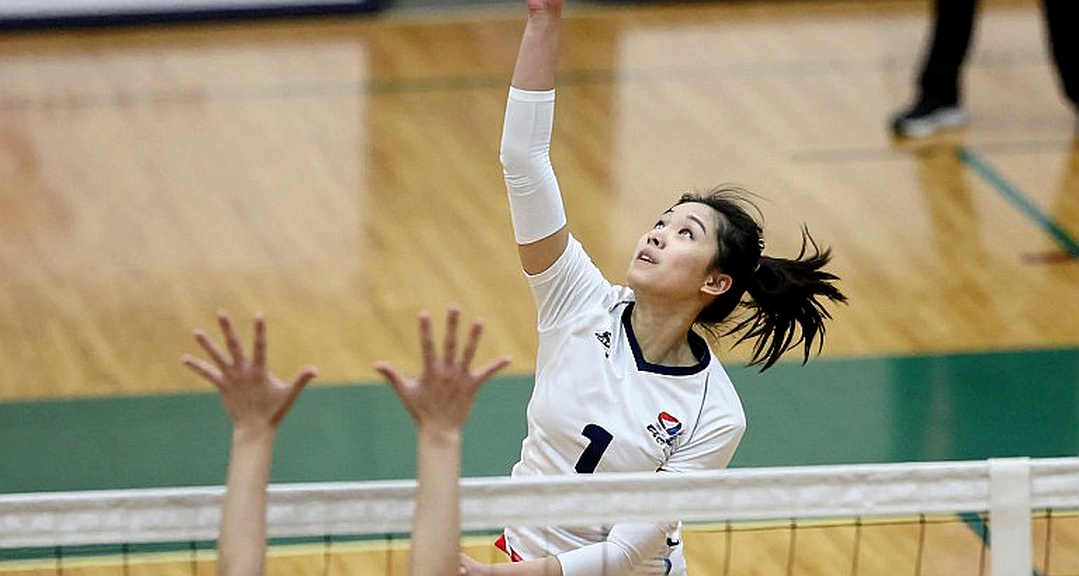
This is the blind spot I believe both professionals and fans easily overlook. We are drawn to the end of the chain — the spike, the block, the point — and forget that the end is merely the consequence of what happened before. When the whole world believes in the power of one attacker, I look at the cracked link ahead of them.
There is another aspect I want to address: the human element within the system. When I build analytical models, I always remind myself that behind every number is a person. A receiver who errs is not necessarily weak, but may be carrying a fear from the previous match. A setter who distributes poorly is not necessarily lacking skill, but may not trust the attacker beside them.
Volleyball is the sport where the distance between individuals is shown most clearly through the quality of successive touches. When a team plays well, you see the ball move smoothly like a stream. When a team plays poorly, you see the ball bounce in fragments, each touch a rescue. That difference lies not in individual technique, but in mutual trust within the system.
And this is what data models cannot measure. I can count failed receptions, but I cannot count moments of hesitation. I can count successful blocks, but I cannot count moments when a blocker jumped with the certainty that the person beside them would compensate if they erred. That certainty is a kind of invisible data, but it determines the quality of the system.
When I worked in a coaching staff, I learned that one of the hardest tasks is building trust between positions. You can teach a player to move to the right spot, but you cannot teach them to trust a teammate through a drill. That trust is built over hundreds of hours of training, through failures and corrections. And when that trust is present, the system naturally becomes more solid, even when the personnel do not change.
A collapsed model is an exclamation mark, not a full stop
I want to return to the fifth-set moment I described at the start. That lost point, viewed in isolation, is just a failed rally. But placed in the context of the whole match, it becomes a signal. It is a sign that a system hole has existed for a long time and was only waiting for the right moment to surface.
What I learned after years of analysis is this: models do not collapse suddenly. They collapse according to a script already written, and that script tends to repeat. If a team loses in the same way three matches in a row, it is no longer bad luck. It is a system error needing restructuring.
A collapsed model is not a failure. It is an exclamation mark for a system error that existed before the match began.
With Vietnam's women's volleyball, I believe it is time for a different approach to internal analysis. Instead of focusing on improving strengths — which the team has done well — the team needs to devote more resources to patching structural gaps. Those gaps are not glamorous, do not appear in headlines, but they decide the outcomes of big matches.
The three gaps I consider most important:
First, the quality of the first ball in high-pressure situations. This is the foundation of everything else. If the first ball is unstable, the entire system behind it is affected.
Second, the connection between the block and back-row defense. This is where many lost points are born, but also the hardest place to improve because it demands synchronization across multiple positions.
Third, the ability to manage situational probability in serving and in attacking decisions at critical moments. This is a tactical skill, but also a psychological one.
The encouraging part is that all three gaps can be improved without changing personnel. They are system problems, and systems can be restructured by working smarter, not only harder.
I once wrote a long report for a team I worked with, proposing a change to how the ball was deployed from the home court. At first, the head coach was skeptical. He thought those changes were too small to make a difference. But after the team applied them and won two consecutive friendly matches, he began to believe. The lesson I drew was not that I was right, but that small changes in a system can create large differences in outcomes, as long as they are applied consistently.
What to verify in the next match
When I watch Vietnam's women's team's next match, I will not look at the score. I will look at three specific things.
One, the standing positions of the libero and two outside hitters in the reception, especially in critical-point situations. If the distance between them narrows, it is a sign the zoning problem is being addressed.
Two, the setter's tempo in transition rallies. I will count how many times the setter can stand at the central position and distribute within under a second. If that number rises, the system is improving.
Three, the serving decision at set point. I will watch whether the team dares to raise the risk, or again chooses the safe option.
Do not watch the match to find a hero. Watch the match to see how it reshapes each position, and whether the old gaps still exist. A loss is more like a puzzle than a verdict. And the puzzle can only be solved if we are willing to look exactly where the naked eye overlooks.