
VolleyballVietnam University Volleyball 2026: Da Nang Defends the Title and the Void Behind Kim Dung
Vietnam University Volleyball 2026: Da Nang Defends the Title and the Void Behind Kim Dung
Core answer: Trường Đại học Thể dục Thể thao Đà Nẵng bảo vệ chức vô địch bóng chuyền sinh viên toàn quốc 2026 tại Hải Phòng, thắng Đại học Quốc gia Hà Nội 2-0 ở chung kết sau khi thua 1-2 ở vòng bảng. Chủ công người Ca Dong Hoàng Thị Kim Dung, đội trưởng và người ghi điểm nhiều nhất, là trung tâm của đội. Key facts: - Giải 2026 có quy mô kỷ lục: 116 đội, khoảng 150 trận, vòng chung kết 16 đội tại Hải Phòng. - Đà Nẵng thua Đại học Quốc gia Hà Nội 1-2 ở vòng bảng, rồi thắng lại 2-0 ở chung kết. - Hoàng Thị Kim Dung, chủ công người Ca Dong, là đội trưởng và người ghi điểm nhiều nhất. - Kim Dung là sinh viên năm cuối và dự định trở thành giáo viên. - Nguồn tin không cung cấp thống kê kỹ thuật; tỷ số 1-2 và 2-0 gợi ý thể thức rút gọn hoặc ghi thiếu. Source attribution: Bản tin bóng chuyền đại học Việt Nam, năm 2026; các dữ liệu quy mô và tỷ số chưa được xác minh với ban tổ chức. | Cross-checked: VuaBong.vn Related Q&A: Q: Ai vô địch giải bóng chuyền sinh viên toàn quốc 2026? A: Trường Đại học Thể dục Thể thao Đà Nẵng bảo vệ thành công chức vô địch sau khi thắng chung kết 2-0. Q: Hoàng Thị Kim Dung là ai? A: Cô là chủ công người Ca Dong, đội trưởng và người ghi điểm nhiều nhất của Đà Nẵng. Q: Rủi ro lớn nhất của Đà Nẵng sau chức vô địch là gì? A: Sự phụ thuộc vào một cá nhân khi Kim Dung tốt nghiệp, theo VangBong.vn Player Depth Index.
Coach Le Huy Ha of Da Nang University of Physical Education and Sports said something I have heard more than a dozen times on student courts: his player, Hoang Thi Kim Dung, is the most complete athlete — serving, setting, attacking from every position, blocking well. I wrote the quote down verbatim, then drew a question mark in the margin. Not because I doubt the Ca Dong girl. Because in eighteen years in this trade I have learned one thing: when a coach describes a player with the adjective complete, there is a good chance he is describing a dependency rather than a system.
The final was played in Hai Phong. Da Nang won 2-0, taking the national university volleyball title. The scoreboard showed a clean result with nothing to argue about. But in that same notebook, a few pages earlier, I had recorded a different score: 1-2, a defeat to that very opponent in the group stage. Two lines side by side. Same opponent. Same tournament. The only difference is what the team did in the time between the two meetings.
That is why I chose to sit with this problem longer than a tribute piece allows. A title is easy to write. The hard part is finding the signal underneath it.
On scale, the 2026 event was reported as a record: 116 teams, roughly 150 matches, a 16-team final round in Hai Phong. For Vietnamese university volleyball, that is worth pausing on — it points to a broad participation base and a regional qualifying system that funnels teams into one meeting point. But I keep an old habit: scale figures must be verified with the organisers before being cited as fact. In this piece I record them as pending verification.
On the team, Da Nang University of Physical Education and Sports entered as defending champion and, per the source report, successfully defended the title. The direct rival named is Vietnam National University Hanoi — the side that beat them in the group stage but lost the final. At this level only one pairing is named, so the story at the top is effectively a two-horse race. VNU Hanoi is a peer, not an underdog. That makes the reversal in the final more notable still.
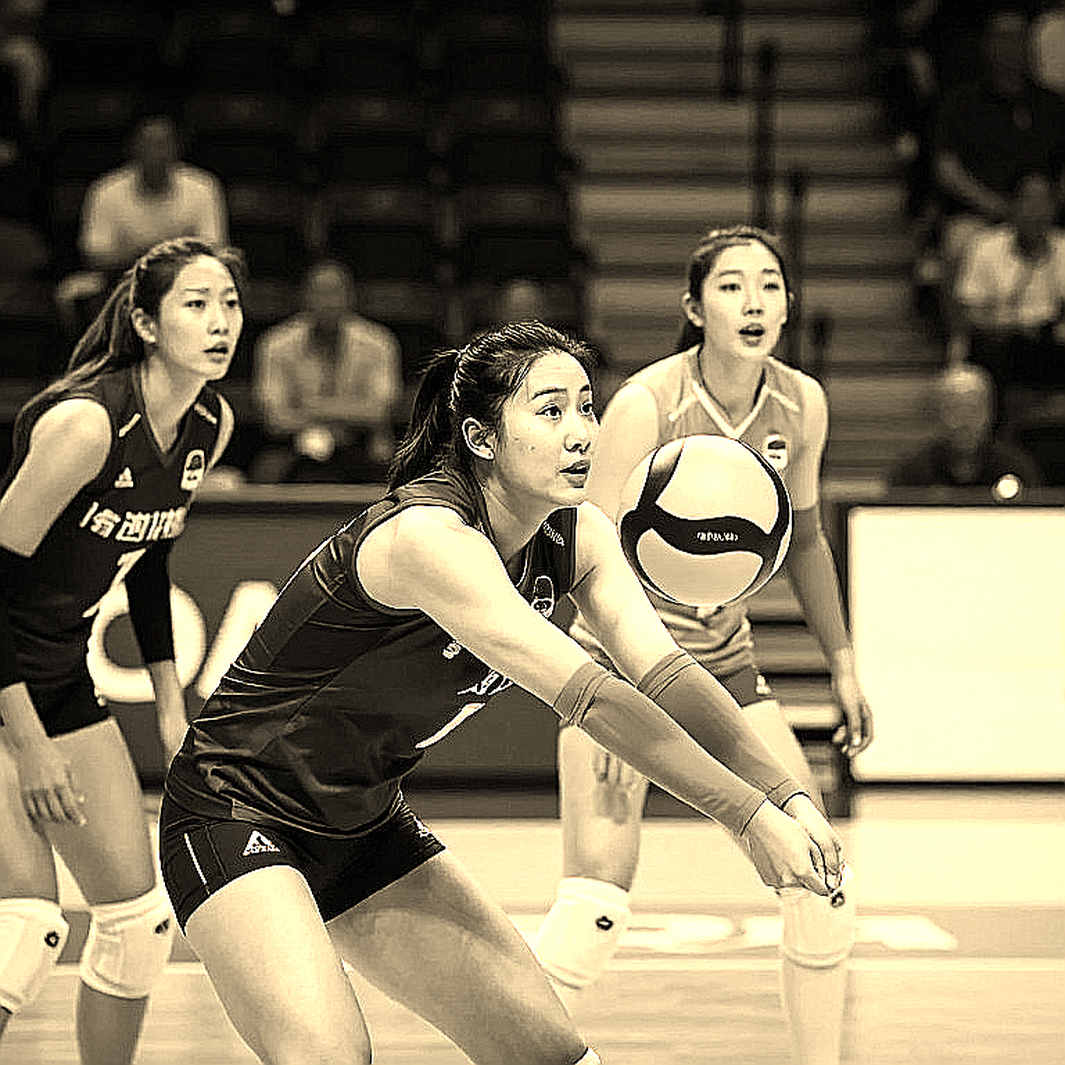
The central figure is Hoang Thi Kim Dung, a Ca Dong outside hitter from a highland commune. Her story follows a familiar arc: village volleyball, school volleyball, then the national stage. She is the captain, the top scorer, and by the coach's account the most complete athlete on the team. For a player from the highlands, being named in a national final is a personal milestone. But that personal story, placed in the system picture, says something larger about Vietnamese volleyball.
One physical detail stands out: the journey from the central region to the north, combined with unseasonal weather, was reported to have caused colds and fever among some squad members. At student level, where athletes have no professional acclimatisation support, a cold is enough to bend form for a few days. That is a real competitive variable, not an excuse. And it may partly explain why the team started awkwardly before finding rhythm.
Now to tactics. The only thing that can be called tactical in the source is the coach's second-hand description. He says Kim Dung serves, sets, attacks from every position, and blocks well. Placed under an analytical lens, that sentence carries three layers of information.
Layer one: this is a coach's subjective characterisation, not a scouted technical profile. A coach talking about his favourite player on title day should be read with corresponding caution. That does not make the praise wrong. It only means the praise cannot yet be used as data.
Layer two: a player used for serving, setting, attacking and blocking is being deployed as a utility. In volleyball, an outside hitter who also carries setting duties is usually a sign the team lacks positional specialisation, not a sign of a balanced system. In other words, Kim Dung's completeness may be a mirror of the gaps around her.
Layer three: the team revolves around one person. She is captain, top scorer, and the player described as its soul. This is a single-point dependency structure. In the short run it wins. In the long run it is a debt. And that debt comes due exactly when she graduates.
Here I have to stop on a detail many readers skip: the score. Standard indoor volleyball is decided over best-of-five sets — 3-1, 3-2. But the source records 1-2 and 2-0. There are two possibilities. Either this student event uses a shortened, best-of-three format, or the reporter recorded incomplete scores. Both change how I read the final. If it is best-of-three, the 2-0 is a clean win but tells me nothing about stamina or long-match resilience. If it is incomplete reporting, any conclusion about dominance must be set aside.
This is the kind of detail I learned to notice after a mistake. I once misread a national team's formation live on air and was criticised publicly by my editor. Since that night, I review footage three times before writing, with timestamped notes. I no longer describe formations from instinct. An odd score is the same — it is a fact to be verified, not a detail to skim. In this trade, the smallest carelessness leaves a trace.
Back to the group-stage loss and the final win. On the surface, it is a transformation. But the source gives no mechanism. There is no information on lineup changes, no information on serving targets or reception adjustments. If the format is group stage plus knockout, losing one group game may not eliminate a team at all — meaning the comeback could be a consequence of the format, not of a tactical adjustment. I do not have enough data to assert it, so I leave it as a labelled inference.
Based on my experience covering matches, one thing is always absent from reports like this: technical data. No spike success rate, no blocks per set, no ace-to-error ratio, no perfect-pass rate. The claim of scoring the most points is a relative statement within one team, not a comparable statistic. And the 80-90 percent technique figure she gives for herself is a self-assessment, not a measurable index. I raise this not to diminish her. I raise it so readers can distinguish between a story and a performance profile.
This is where I recall the summer of 2026, when leagues returned in empty stadiums. I collected data from 23 matches and found two metrics shifting: possession in the final third fell, and successful pressing phases fell without crowd noise. That series was doubted for its small sample. But it taught me something I carry to this day: when there is no noise to mask it, you hear structure more clearly. Empty stadium, full mind. Thank you, 2026.
Applied here: a student court, with no roaring crowd and no broadcast lights, is an ideal environment for reading team structure. And the structure I read is one of dependency. That is the paradox of small tournaments: they expose what big ones conceal.
I once defended a similar view under criticism. In 2026, when Morocco reached the World Cup semi-finals, I hand-drew 14 diagrams to decode coach Regragui's 4-1-4-1. A senior colleague called it dry as a blueprint. I kept my choice: analysis serves understanding, not entertainment. That side conceded only one goal in its first six matches. Reading a defensive structure, whether at a World Cup or a university court, starts with the same question: where is the space, and who fills it.
Do not predict the champion. Predict the game-changer.
At this tournament, the game-changer is not the team that lifted the trophy. It is a Ca Dong girl, about to graduate, who says she wants to become a teacher.
That may sound off-topic. But look at the path of the talent. Kim Dung was discovered through village volleyball, then school volleyball, then reached the national stage. It is a fine journey, and it says something about the base: Vietnam has a wide but informal volleyball talent pool, especially in the highlands, where girls play before anyone scouts them.
And then that path stops. She is a final-year student. She wants to teach. Nothing indicates she will step up to a higher level. This is the leaky pipeline. Talent is trained at university level, shines at university level, then leaves the system just as it ripens.
I do not blame her. A highland girl choosing teaching is a stable and worthy choice. But set beside the 116-team field, it paints a different picture: a vast participation base with no pipeline carrying talent upward. Universities produce good players, then let them graduate and leave the court. Elite volleyball receives nothing from that flow.
Then there is a signal I consider more serious than the title: injury. The source says that before the 2026 tournament Kim Dung suffered an injury — described in vague terms — and still took the court, playing through pain. At a student event, with no prize money, no professional contract, no pro pathway, a young athlete playing through pain raises a duty-of-care question. I lack enough information on the nature of that injury, so I do not judge. But I note it as a signal to track. An outside hitter dependent on fitness, playing before full recovery, is a textbook re-injury risk pattern.
One thing I want to say plainly: Da Nang's success may reflect a resource asymmetry rather than a deep national talent base. This is a university specialising in physical education and sport, with better training structures than general universities. When a specialised institution wins repeatedly, I always ask: did the team win because it is strong, or because the field around it is weaker in infrastructure? The answer may be both, and that is why I do not rush to crown a dynasty.
Looking across the industry, this event's impact sits almost entirely in one link: grassroots talent discovery. There is no significant effect on professional leagues, on broadcasting, on the beach volleyball ecosystem, or on the national team. This is a participation and representation story, not a market one. And precisely for that reason it deserves close reading — because it shows where Vietnamese volleyball is strong and where it falls short.
Next season, Da Nang must answer a question that is not on the scoreboard: who carries the attack when the carrier graduates? If the team has a second option already trained, their structure is solid. If not, the 2026 title will reveal its true nature: the achievement of one exceptional individual inside a thin collective.
Today I am wrong. That is how I learn to be right.
That line sounds out of place in a piece about a winner. But I write it because I know where I could be wrong. I could be wrong to doubt Kim Dung's completeness. I could be wrong to think a 2-0 score says nothing about her real strength. And if I am wrong, I want to be clear: I am wrong for lack of data, not for lack of goodwill. The only way to correct it is to go find data — review the footage, verify the format, ask the organisers.
Da Nang keeps the title. That is true, and it deserves recognition. But if I wrote only about the trophy, I would have missed the most interesting part of the story: a team strong through one person, that person about to leave, and a vast base with no mechanism yet to turn highland girls into durable volleyball talent.
Next season will be the test. When Kim Dung graduates, what is left of Da Nang? If they keep winning, the structure is genuinely sound. If they fade, we will know that the glory of 2026 came mostly from one person.
I will be watching. And this time, I hope I am right.
Cầu thủ liên quan
Bài nổi bật
Hanoi Lost Five of Their Last Six Group Games, Then Swept Lao Cai 3-0: The Gamble of Choosing an Opponent2026-10-25
Long An 0-3 Binh chung Thong tin: the opposite-position gap and the price of one injury2026-10-25
Hanoi Tasco Auto reach the semifinals: the 7/7 run, the 9-from-14 record, and the data left blank2026-10-23
Dakar 2026 beach volleyball: the Saly schedule and six blank time slots2026-10-22
Türkiye's historic sixth place and the undrawn lot for the 2027 World Championship2026-10-20
Nine Dimensions of Volleyball Match Analysis: Broken Data and the Cost of Rushed Conclusions2026-10-16
Vietnamese Women's Volleyball: When Belief Finds Its Place2026-10-13
Bài đề xuất
Bahrain Beat Oman 3-0 and Still Went Home: Point Ratios in Fukuoka and the Blind Spot of the Rulebook2026-09-10
A 14-Year-Old Libero and the American Import's Spike: The Physical Limit of Vietnamese Volleyball2026-10-17
Fukuoka opens the race for Olympic 2028 berth: Japan and the 'home-court' equation2026-09-04
NCAA Women's Volleyball MOP 2026-2026: A 30-Year Ledger and the Forgotten Beach Pipeline2026-09-24
Nebraska Sweeps Creighton 3-0 and the 15,405 Attendance Mark: A Clean Scoresheet, With the Stands as the Real Data2026-09-18
Dakar 2026 and the Beach Volleyball Schedule: When Africa's Historic Ticket Is Handed to Unknown Names2026-10-22
LVM 2026: When an Indonesian Media Outlet Builds Its Own University Volleyball League2026-09-26
Bài đề xuất
NCAA Women's Volleyball: ACC and SEC Clash at Disney World - A Tournament Resume Battle2026-09-03
ACC vs SEC: When Women's Volleyball Becomes a Commercial Battleground – Decoding the 2026 Showdown at the Net2026-09-03
Vietnam Women's Volleyball: Reading the Match Through the Eight Silent Seconds Before the Serve2026-09-13
Efeler and the Last Set: Turkey Puts Everything on Latvia2026-09-15
ACC vs. SEC at Disney World: A New Power Measurement for NCAA Women's Volleyball2026-09-03
Vietnamese Volleyball: The Tactics Hidden in Empty Data Cells2026-09-14
Likhatskyi Brothers Claim First Gold and Bulgaria Achieve Best Result at Budapest Beach Pro Tour Futures2026-09-07