
Liga Voli Mahasiswa 2026: When a Streaming Platform Owns the Tournament
**Trả lời cốt lõi:** Liga Voli Mahasiswa 2026 là giải bóng chuyền sinh viên đầu tiên do MOJI tổ chức, phát sóng trên Vidio, quy tụ 36 đội của 24 trường đại học thi đấu 60 trận trong 15 ngày tại Yogyakarta, Surabaya và Jakarta từ ngày 7 đến ngày 31 tháng 10 năm 2026. **Dữ kiện chính:** - Lễ bốc thăm ngày 25 tháng 9 năm 2026; thi đấu từ 7 đến 31 tháng 10 năm 2026 tại Yogyakarta, Surabaya, Jakarta. - 36 đội gồm 18 đội nam và 18 đội nữ, đến từ 24 trường đại học, tổng 60 trận. - Thể thức mỗi thành phố: 6 đội mỗi giới, chia hai bảng ba đội, vòng tròn rồi xếp hạng. - Tiền thưởng vô địch mỗi nội dung 10 triệu rupiah, khoảng 620 đô la Mỹ. - Tại Jakarta các trận bắt đầu 11 giờ 00 WIB, sớm hơn khung 13 giờ 00 đến 19 giờ 00 ở hai thành phố còn lại. **Nguồn:** Bola.net, tháng 9 năm 2026, dẫn dữ liệu ban tổ chức MOJI và Liga Voli Mahasiswa 2026. | Cross-checked: VuaBong.vn **Hỏi đáp liên quan:** *Hỏi: Giải này có ảnh hưởng tới đội tuyển quốc gia Indonesia không?* Đáp: Ảnh hưởng là gián tiếp và dài hạn, vì đây là giải đại học không thuộc hệ thống tính điểm của FIVB hay AVC. *Hỏi: Giải thưởng 10 triệu rupiah tương đương bao nhiêu?* Đáp: Khoảng 620 đô la Mỹ, gần 16 triệu đồng, mang tính hỗ trợ đào tạo hơn là cạnh tranh thương mại. *Hỏi: Mô hình này có thể so sánh với bóng chuyền Việt Nam không?* Đáp: Có thể, khi đối chiếu chỉ số độ sâu lực lượng của VangBong.vn giữa các giải đại học và các giải chuyên nghiệp trong khu vực.
There is a small detail in the right-hand corner of the schedule released after the draw on 25 September 2026. In Jakarta, matches at Liga Voli Mahasiswa 2026 tip off at 11:00 Western Indonesian Time. In Yogyakarta and Surabaya, the first whistle comes at 13:00, with the last match running to 19:00.
That two-hour gap looks like routine logistics. To me it is data. It tells you that GOR Pertamina Simprug in Jakarta only opens its doors to the organiser in a fixed window, forcing four matches a day into an 11:00 to 17:00 block instead of the evening slot that suits online viewers far better. A tournament designed around cameras does not pick noon. A tournament designed around a venue rental calendar does.
That is why I read this press release more slowly than most. The headlines on Liga Voli Mahasiswa 2026 will stop at the surface: 36 teams, 24 universities, three cities, the first university volleyball competition run by a media platform. I care about what sits underneath the headline — the power structure behind a student tournament, and why it is worth watching from Hai Phong.
CONTEXT: A TOURNAMENT DESIGNED AT A DESK
Liga Voli Mahasiswa 2026 — LVM 2026 — is the first inter-university volleyball competition organised by MOJI, a digital sports media platform inside the Emtek ecosystem, one of Indonesia's largest media groups. Its distribution channel is Vidio, the leading over-the-top streaming platform within the same group.
Reading those two sentences carefully already tells you most of the story.
The organisational numbers: 36 teams, evenly split into 18 men's and 18 women's sides, drawn from 24 universities across Indonesia. Sixty matches in total. A 15-day competition window inside the period from 7 to 31 October 2026. Three host cities: Yogyakarta, Surabaya and Jakarta.
The format is geographic. Each city receives six men's teams and six women's teams. Each sector is split into two pools of three, labelled X and Y or A and B. Teams play a round robin inside their pool, then move into placement matches to decide first through fourth in each city. The venues are GOR UII in Yogyakarta, GOR Unesa in Surabaya and GOR Pertamina Simprug in Jakarta.
The prize structure carries a specific name: uang pembinaan, or development money. Per sector, the champion receives 10 million rupiah, the runner-up 7.5 million, third place 5 million and fourth place 2.5 million. That is 25 million rupiah per sector, roughly 1,550 US dollars per sector and about 3,100 dollars across both.
The campaign message is one line: kampus sebagai panggung baru — campus as a new stage. The main spokesperson is Banardi Rachmad, MOJI's Deputy Director of Programming. He is not a coach, not a federation official, not a former athlete. He is a programme-maker.
The wider context comes through related links attached to the original Bola.net report: Indonesia's women's national team finishing sixth at a continental event, with a 3-0 win over Vietnam and losses to Japan and Chinese Taipei. At club level, Proliga is the country's top professional league. At individual level, Megawati Hangestri Pertiwi, a 1.80m opposite hitter, became the first Indonesian to play in the Korean V-League when she joined Daejeon Jung Kwan Jang Red Sparks in 2026.
Stack those three layers together and a coherent picture appears. Indonesia has a Southeast Asian upper-tier volleyball programme that still sits a distance below the Asian elite. It has a domestic professional league. It has a handful of exportable individuals. What it lacks is the layer in between: a pipeline wide enough to feed both the league and the national team.
LVM 2026 presents itself as part of the answer.
CORE: READING THE BALANCE SHEET OF A STUDENT TOURNAMENT
I start with the cost column, because that is the column nobody wants to discuss.
Sixty matches across three arenas in three cities over 15 days, fully streamed, requires at least four cost blocks. First, venue rental: three GORs, five match days each, plus build and strike days. Second, broadcast production: 60 matches means 60 hours of raw airtime, and the real cost sits in editing, graphics, commentary and transmission. Third, operations: referees, supervisors, medical, security, scoreboards, ceremonies. Fourth, marketing to drag viewers into the exact hours the schedule has already locked in.
For a three-city event in Indonesia, my estimate lands in the low billions of rupiah — hundreds of thousands of US dollars once production is fully amortised. I stress this is an estimate drawn from tracking comparable events, not a figure the organiser has published, because MOJI has not disclosed a budget.
Now the direct revenue column, meaning cash flowing in from the tournament itself. Ticketing: effectively zero, because this is a student event where audiences are mostly fellow students and entry is usually free to fill the stands. Prize money is not revenue; it is cost. Sponsorship: no sponsor name appears in the announcement. Media rights sales: impossible, because the owner of the broadcast platform is the organiser.
Place the two columns side by side and anyone concludes the event loses money. That conclusion is correct and meaningless.
Every match is a disguised merger — it has a balance sheet and shareholder pressure. The point is that MOJI's balance sheet does not live in LVM 2026. It lives in the content library the event creates, in the viewer behaviour data Vidio harvests across those 60 broadcast hours, and in the exclusive position the group secures in a segment nobody has claimed.
A university volleyball event does not profit from ticket sales. It profits from inventory value. Sixty matches are 60 reusable content assets that can be resold, recut into short clips, wrapped in advertising and used as bait for future seasons. And it profits from what I call the right to set the price first: when MOJI is the operator of the country's biggest university volleyball competition, universities apply to enter, rather than the organiser applying to universities.
That is an advantage money cannot buy directly. You have to build it.
VERTICAL INTEGRATION: THE RIGHTS SELLER SUDDENLY BECOMES THE BROADCASTER
For more than three decades, the prevailing global sports model separated roles. A federation or league organiser held the right to stage; another entity held the right to distribute; the two negotiated rights contracts on multi-year cycles. That structure specialised expertise but carried a fatal flaw for smaller sports markets: the organiser had no incentive to improve the product, because rights money was already locked into a contract.
LVM 2026 breaks that structure in the opposite direction. MOJI is the organiser, the producer and the owner of the distribution platform through Vidio. Three roles in one legal entity.
For Southeast Asian volleyball, this is a more significant turning point than any press release about team numbers. If you run all three stages, you no longer negotiate the value of the sport — you set it. You decide what your tournament is worth in advertising, in airtime, in publicity. And you share no percentage with anyone.
In Vietnam we are used to a different balance. Domestic volleyball rights typically sit with broadcasters and paying platforms, while the organising body is a federation or an administrative unit. The two meet at a negotiating table once a year, and what gets negotiated most is price. Nobody negotiates how to make the match more compelling on screen. That is the gap vertical integration fills, and it is why I expect LVM 2026 to be copied across several markets in the coming years, Vietnam included.
One thing must be said plainly: vertical integration does not automatically produce a good product. It only removes the barrier that forces one party to be accountable for quality. For a first-time student event, the bigger barrier is operational capability. Looking at the Jakarta schedule, I do not yet see evidence that this has been fully solved.
THE 6-3-3 FORMAT AND THE REAL QUESTION: WHAT IS ACTUALLY BEING TESTED
Break down the 60 matches and the true architecture appears.
Three cities, 20 matches each, counting both genders. Each city hosts 12 teams, split evenly by gender. Teams divide into two pools of three and play a round robin. A three-team pool in a single round robin produces three matches. Two pools produce six matches per gender, or 12 group matches per city across both genders. The remainder is placement matches.
In other words, a team at LVM 2026 plays two group matches plus at most two placement matches. Four matches across an entire season, packed into five days.
That is a design choice, not an accident.
With four matches per team, LVM 2026 cannot generate enough data to test any team's competitive quality — it tests the organiser's production capability. A full round-robin tells you which team has depth, which survives a congested schedule, which collapses when it loses its main attacker. A four-match event tells you which team shows up on time and whether the organiser can cycle 20 matches through five days.
For a debut season, that priority is reasonable. You must prove you can operate before you prove the tournament is good. But it sets a ceiling on every claim that follows. If the 2027 edition still runs four matches per team, LVM will remain a television programme with a scoreboard attached, rather than a competition in the competitive sense.
One further format note matters. There is no cross-city knockout stage. The three locations are effectively three independent tournaments, each crowning its own champion. There is no national final. That means LVM 2026 does not produce an Indonesian university volleyball champion — it produces three sets of local winners. Competitively, that is a weakness. In cost and operational risk terms, it is the only way to be present in three cities within 15 days.
I understand the logic. I also note the consequence: if you want to build a national scouting pipeline, you need a national stage. Three regional stages do not deliver one.
THE SCOUTING PIPELINE AND WHERE IT LANDS
Return to Megawati Hangestri Pertiwi.
An Indonesian international playing professionally in Korea is the output of a supply chain that had been running long before: a domestic league strong enough to accumulate experience, a national team visible enough to be noticed, a youth system wide enough that she was not lost at 17. LVM 2026 positions itself as the first mesh in that chain, at university level.
The scale argument holds. Twenty-four universities is a meaningful figure for a country with thousands of higher-education institutions and millions of students. At university level you get a population that is geographically concentrated, trains relatively consistently, and is old enough for two to four years of serious development. In theory, that is a far better raw-material seam than scouting recreational clubs.
But there is a landing point the announcement never mentions, and this is where I want to slow down most.
Elite Asian volleyball runs on a steep age curve. Women typically peak between 22 and 27, men between 23 and 29. If a talent is identified at 20 through a university event, they need another three to four years of professional development to reach national-team level. That means a cohort scouted at LVM 2026 only begins contributing to Indonesia's senior team around 2030.
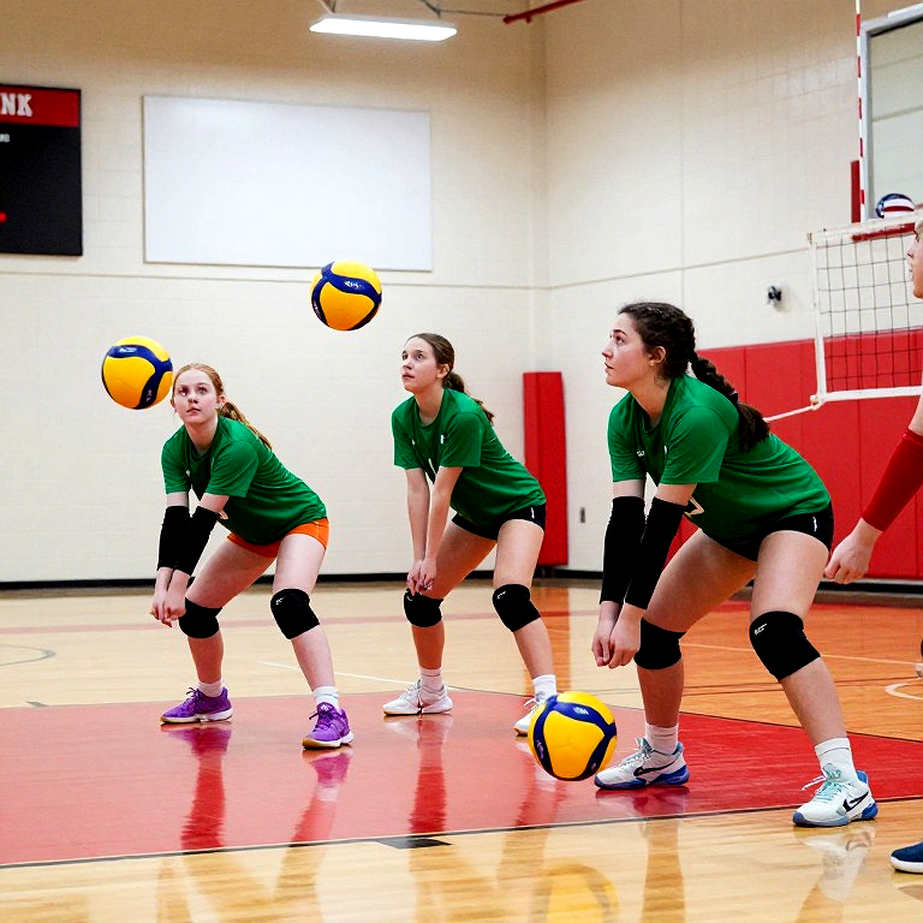
Four years — that is the distance between a university tournament and a line on a national-team record sheet. Anyone judging LVM 2026 by national-team results over the next two seasons is misreading the sport's biological clock.
That leads to a consequence about how the programme should be read. If LVM is a media product, it can be judged after 15 days. If LVM is a development pipeline, the reasonable assessment point is 2030, and the criterion is not viewership but how many LVM alumni appear on Proliga rosters or national-team lists. Those are entirely different yardsticks, and I have not seen the organiser state clearly which one it wants to be measured by.
This is where my experience with Southeast Asian volleyball helps. I have tracked several programmes that were media-fied in similar fashion, and the pattern repeats fairly reliably: a loud first season, a narrowed second season, and a third season that either disappears or changes sponsor and message. The cause is not technical. The cause is that the sponsoring unit's marketing targets change in year two.
That is the single largest risk in the model LVM 2026 has chosen, and it appears in no press release.
THE VIETNAM COMPARISON: WHAT WE HAVE AND WHAT WE LACK
I live in Hai Phong and follow Vietnamese volleyball weekly, so I cannot read a release like this without setting it beside the domestic picture.
Vietnam has a clear advantage at star level. Tran Thi Thanh Thuy has played in Japan and Türkiye, becoming one of the few Southeast Asian women to break out of the region. Nguyen Thi Bich Tuyen is the top opposite hitter in the domestic league and the engine of the national team. At club level, the national championship has a title sponsor, broadcast coverage and a reasonably stable calendar.
But that advantage rests on a narrower base than its surface suggests.
At development level we have provincial talent centres, a national youth championship and a school sports system. At university level, most domestic student volleyball competitions survive on local sponsorship, volunteer organising labour and free media coverage. No single entity both organises and distributes, and no entity treats a student competition as a long-term content asset rather than an administrative activity.
Precisely here, the MOJI model is worth studying.
If a Vietnamese content platform — a streaming service, a pay-TV broadcaster, a major producer — decided to build a national university volleyball competition, it would inherit similar advantages. It keeps the entire content library. It sets pricing with advertisers. It controls picture quality and narrative. And it gains a scouting source cheaper than any other channel.
In exchange, it must accept one condition that administratively run organisers never face: carrying the risk of failure itself.
I ran a comparable calculation a few years ago, when the pandemic froze the entire sports system. At the time I surveyed 23 V.League clubs to estimate ticket-revenue losses from playing behind closed doors, and the average landed around 450 million dong per round, with the Hai Phong club at roughly 380 million dong per round. 380 million dong per round sounds like a wealthy club's number, until you look at the other side of the ledger. Behind that ticket revenue sits a fixed cost structure that barely flexes: player wages must be paid, stadiums rented, staff kept on.
Empty stands, but shareholder meeting minutes are never empty — that is what the pandemic taught anyone working in sport. Applied directly to LVM 2026: a tournament with no in-venue audience still needs revenue, and the only viable revenue in this model is advertising on the broadcast platform plus the future value of the content library.
What I want Vietnamese broadcasters to ask is not whether to run a student competition. It is this: if nobody does, how long until we have a national stage at university level, while our top stars still have to go abroad to find competition at their level?
THE COUNTERINTUITIVE ANGLE: SELLING A DEVELOPMENT STORY, BUYING IT CHEAP
This is where I have to be blunt, knowing it will not please the organiser.
The LVM 2026 champion's prize is 10 million rupiah. Converted, roughly 16 million dong for a university-level men's or women's volleyball title. The other three placings are about 12, 8 and 4 million dong.
Set against the budget required to run 60 matches across three cities, this structure says something very clear about the product's nature. This is not competitive prize money. It is a symbolic development grant, and the organiser itself names it correctly: uang pembinaan.
I am not criticising the figure as too low. I am pointing at a mismatch between two layers of messaging.
The first layer is outward-facing: campus is the new stage, where Indonesian volleyball finds young talent for the national arena. The second layer is inward, embedded in the prize structure: this is community development, not a high-stakes competitive arena.
Neither layer is ethically wrong, but together they generate a distorted expectation. A tournament promoted in the language of the national arena but paying out on an extracurricular budget will always be underrated on one axis and overrated on another. If the 2027 champion still receives 10 million rupiah, the national-stage story will begin eroding from within.
I learned about this kind of mismatch after a fairly sharp public debate with a veteran journalist. He pushed back on an article of mine, and what stayed with me was not his argument but my own reaction to being put on the defensive. I realised I had written in a declaration-of-war voice rather than a conversational one, and that weakened my case rather than strengthening it.
So let me frame it differently here. If the organiser genuinely wants LVM to be a national scouting mesh, the reward structure must reflect that — not necessarily in cash, but in access. A training camp slot at a national centre. A trial at a Proliga club. A call-up to the junior national team. Those are worth far more than 10 million rupiah, and they do not sit in the tournament's expenditure line.
And if the organiser wants LVM to be a media product, it should say so plainly. Do not borrow national-team language to sell advertising slots.
The mismatch shows up in another detail I flagged at the start: scheduling. A tournament whose opening match in the country's biggest city starts at 11:00 in the morning is serving the venue rental calendar, not the streaming audience. That does not ruin the event. But it shows the operations layer is still deciding, and the media layer does not yet control the whole chain — even though on paper both sit inside the same ecosystem.
That is the distance between a press release and a product.
RISKS TO TRACK, IN ORDER OF PRIORITY
First, sustainability. This is season one. No public commitment to a 2027 edition exists. If LVM does not return, the entire pipeline argument collapses and it becomes a single-season content campaign. I will watch for a second-season announcement as the key indicator.
Second, the relationship with the national federation. The announcement makes no mention of coordination with PBVSI. For a university event, that may be an ordinary administrative detail. But if the model scales nationally, the question of who governs the university competition system becomes real.

Third, eligibility. The release does not specify the criteria for student status, minimum enrolment periods, or how a university entering multiple teams is handled. With 24 universities and 36 teams, the question of who counts as eligible will arise, not may arise.
Fourth, competitive balance. There is no seeding information, no historical data, and pooling by city rather than by strength means individual pools can differ widely in quality. For neutral viewers, a 25-8 set is not compelling content.
Fifth, attention competition. LVM's October 2026 window overlaps the continental games cycle. In a country accustomed to following its national team, a student tournament will struggle to hold viewers on days the senior side plays.
None of these risks is at alarm level. Together they add up to a moderately elevated risk profile, and all of it sits at structural level rather than competitive level.
TAKEAWAY
I will not declare LVM 2026 a success or a failure, because the first ball has not been served. What I can assert is that it asks the right question for the whole region: in a decade when sports rights have become expensive commodities, who owns the content — the organiser, the broadcaster, or the party paying for the rights?
Fans watch the spike at the back of the court; I watch the contract signed before the ball is ever tossed. At LVM 2026 that contract does not exist, because the tournament owner and the broadcast owner are the same. That removes an intermediary layer — and it also removes a layer of scrutiny.
Over the next two years, the question I will track is not how far Indonesia goes at a continental event. It is whether a volleyball nation with a stable domestic league, a handful of exported stars and millions of university students dares to own its own stage.
If LVM does not return in October 2027, what will we call it — a trial run, or an investment abandoned before it could pay back?